




“Only 3% of enterprise data meets basic quality standards.”
Yet one of the least discussed enterprise risks is semantic drift. Over time, business units begin using the same data, fails, metrics, and classifications differently without realizing it.
This leads to divergence in revenue definitions between finance and sales. As a result, product hierarchies evolve separately across regions, and customer segmentation, logic changes inside operational systems, but not in reporting layers.
The result is not bad data, but conflicting versions of reality.
The stream of enterprise data management and its solutions address this problem by creating a centralized control layer for governance, metadata, lineage, integration, and quality.
They ensure that definitions, policies, transformations, and ownership remain synchronized across the enterprise, allowing analytics, compliance, and operational teams to make decisions from the same trusted foundation.
Top 11 enterprise data management solutions
Here’s a list of leading data management solutions that business leaders are choosing today:
DataManagement.AI
DataManagement.AI is an AI native data platform built to help enterprises discover, trust, and act on their data faster.
At its core is Damian, an AI assistant for business intelligence that lets users interact with enterprise data using natural language instead of dashboards, queries, or manual investigations.
The platform continuously monitors data quality by validating records, tracking error trends, and surfacing rule violations through unified dashboards. It creates trusted master data by consolidating records from operational systems, detecting duplicates, enriching entities, and maintaining governed golden records.
Damian can also trace data lineage, explain where metrics originate, identify downstream impacts of changes, and enforce governance policies.
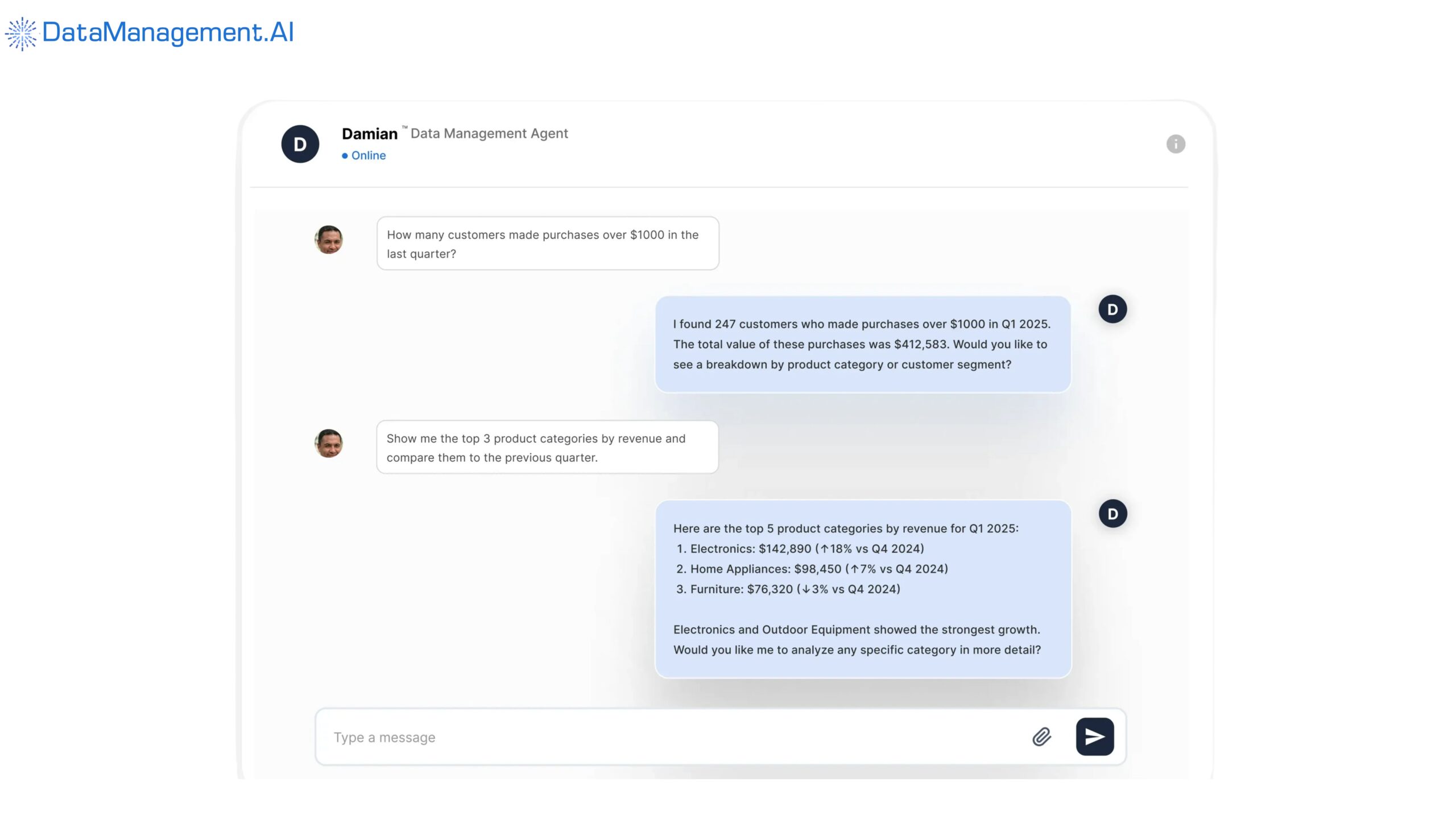
DataManagement.AI’s Damian helps simplify data discovery
Beyond governance, the platform enables customer segmentation, predictive demand forecasting, operational anomaly detection, real-time alerts, and self-service analytics. Business users can ask questions such as, “Why did revenue decline last month?” or. “Which data sets are approved for AI training?” and receive contextual answers in seconds.
By combining AI-assisted insights with governance and metadata intelligence, DataManagement.AI accelerates data exploration by up to 65%, improves processing efficiency by up to 70%, and helps organizations make faster, more confident decisions.
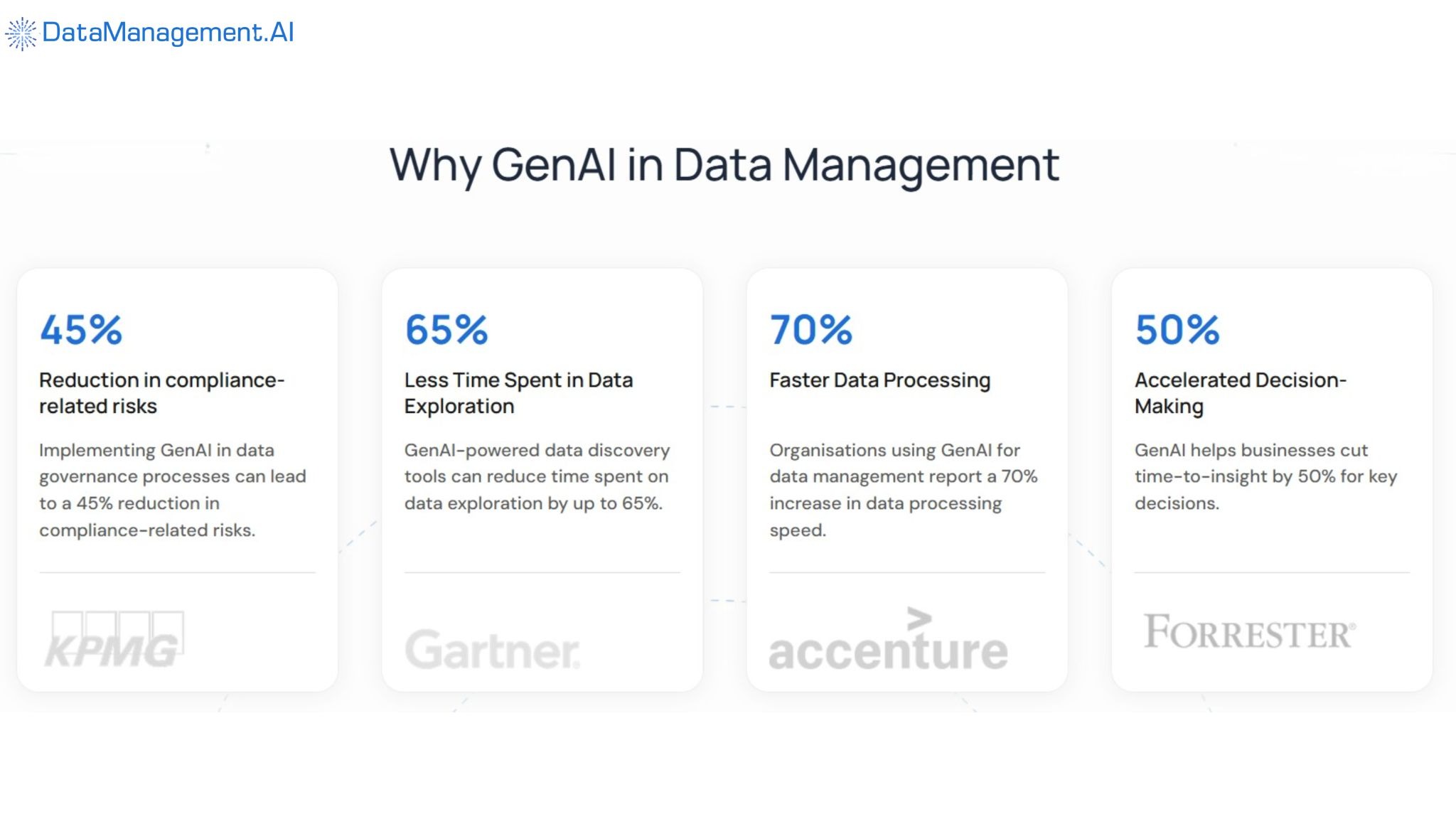
Key capabilities include:
- Conversational BI – You can ask business questions in plain English and receive answers, visualizations, and recommendations without writing SQL or navigating multiple dashboards.
- Cross-system intelligence – The platform connects information across data, warehouses, applications, pipelines, and business systems to provide a unified view of enterprise data.
- Impact analysis – DataManagement.AI understands how changes to data sets, metrics, or schemas affect downstream reports, applications, and users before deploying modifications.
- Policy-aware data access – It applies governance rules and data classifications to help users discover and use data responsibly.
- Operational visibility – It also provides a centralized view of data assets, dependencies, usage, patterns, and critical data flows across the organization.
- Decision support – The platform, surfaces, contextual insights, and recommendations that help teams prioritize issues, identify opportunities, and act faster on business goals.
- Enterprise scalability – The best part of the platform is that it supports large, distributed data environments, and custom pricing is also available.
Informatica Intelligent Data Management Cloud
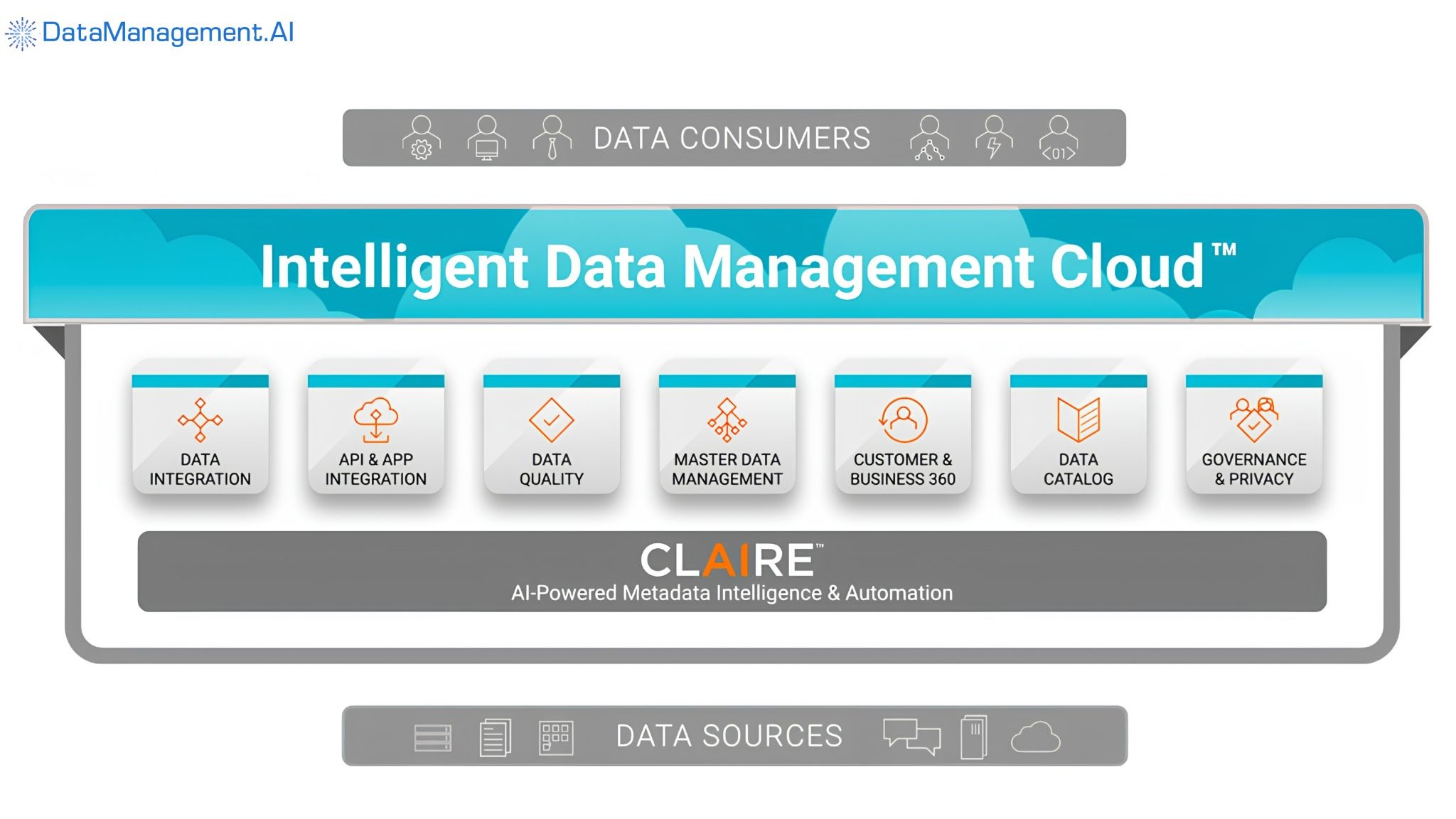
AI-powered enterprise data management platform
Informatica IDMC is a comprehensive enterprise data management solution because it combines data integration, governance, metadata management, master data management, data quality, and AI-driven automation with a single cloud native architecture.
This capability demonstrates why master data management is important in modern enterprises.
Unlike traditional enterprise data management software that treats governance and integration as separate functions, IDMC operates through a metadata-driven control plane that analyses data movement, transformation logic, lineage, and policy compliance across distributed environments.
Core features: Data integration, MDM, data quality, cataloging, governance.
Key strengths: Mature ecosystem and broad enterprise adoption.
Weaknesses: High implementation complexity.
Pricing model: Enterprise pricing available on request.
Best suited for: Large global enterprises.
Collibra
Collibra has evolved from a traditional data catalog into a broader enterprise data management platform that is focused on governance, metadata, intelligence, and organizational accountability.
It creates a governance layer that connects business users, data stewards, compliance, teams, and technical stakeholders through a shared operating model rather than concentrating solely on data movement.
That is why the platform is particularly useful for enterprises struggling with inconsistent business definitions, fragmented ownership, structures, and growing regulatory requirements.
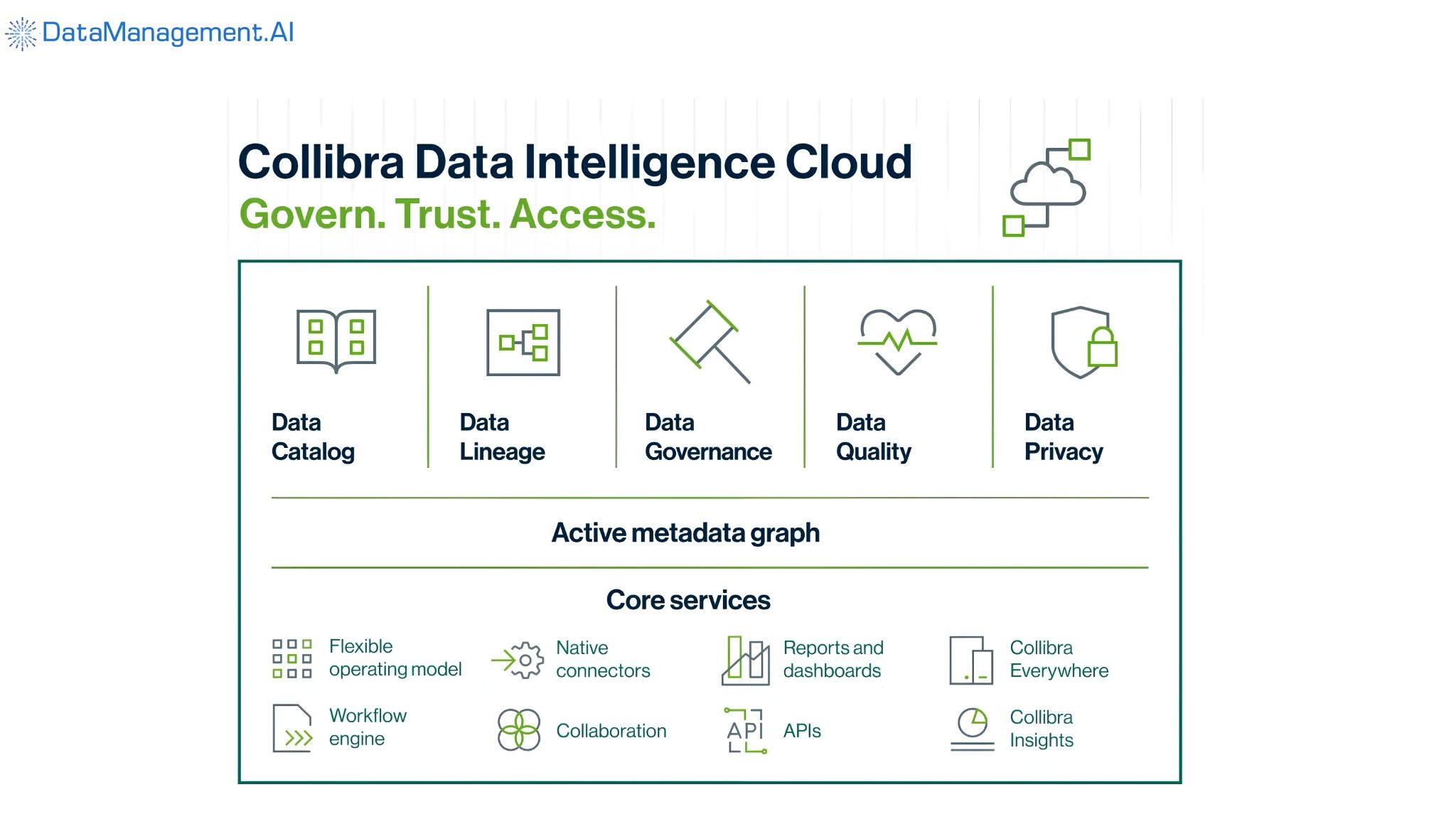
Governed enterprise data management software
Core features: Data catalog, lineage, governance workflows, policy management.
Key strengths: Strong business glossary and stewardship capabilities.
Weaknesses: Requires complementary tools for integration and MDM.
Best suited for: Governance-led organizations.
IBM Cloud Pak for Data
IBM Cloud Pak for Data is designed around a data fabric architecture that helps enterprises manage distributed data environments without physically consolidating all information into a single repository.
This approach is very useful for organizations that are operating across hybrid cloud, on-premises infrastructure, and multiple business units, where master data management solutions and other enterprise data governance tools help maintain consistent, trusted data across distributed systems.
IBM’s platform combines data integration, governance, AI life-cycle management, virtualization, and analytics under a unified control framework.
This means that rather than functioning solely as a data management tool, IBM’s Cloud Pak acts as an enterprise-wide orchestration layer.
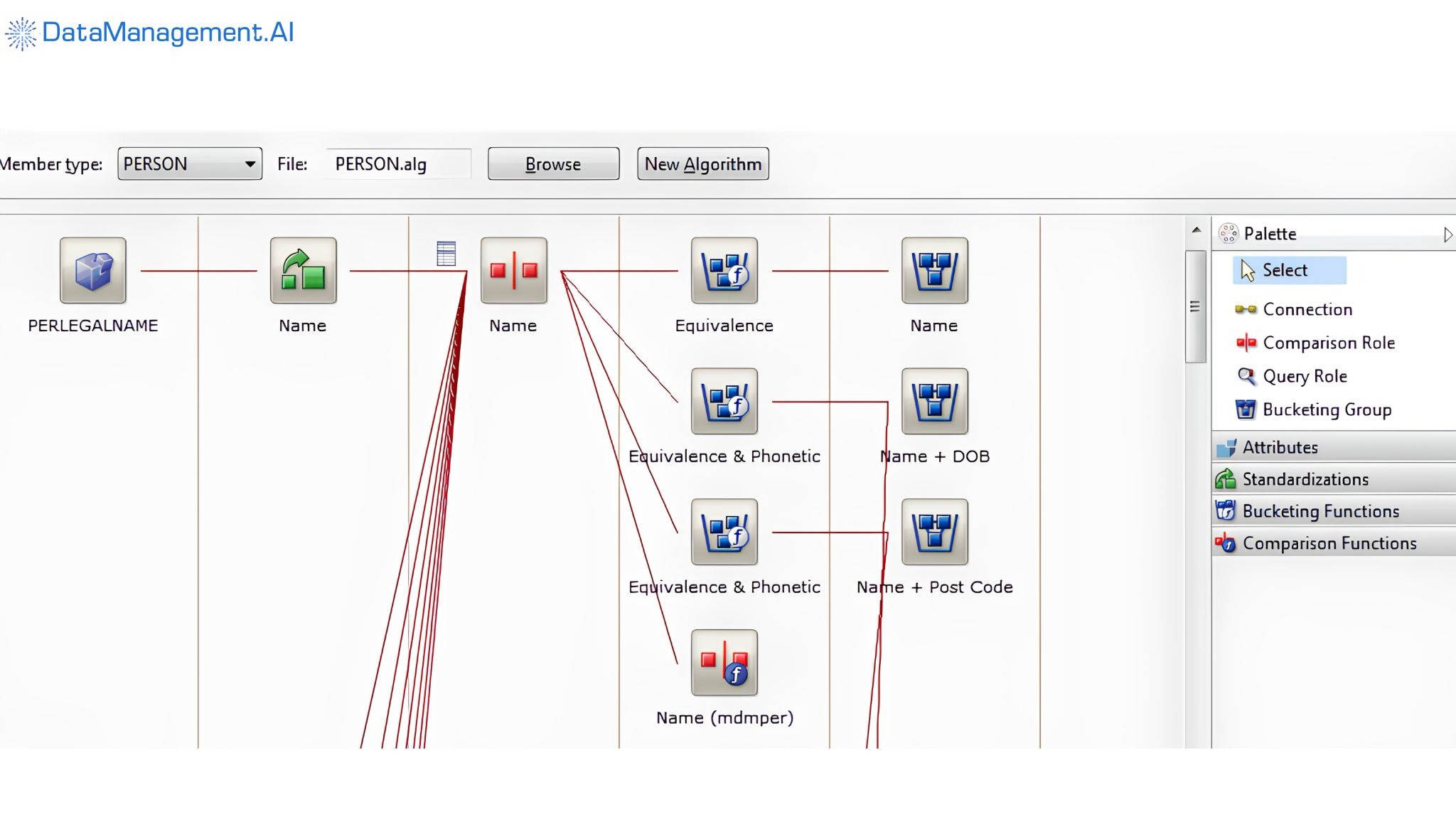
IBM helps manage data fabrics across hybrid environments
Core features: Data fabric architecture, governance, AI governance, integration.
Key strengths: Strong regulatory and hybrid cloud capabilities.
Best suited for: Financial services, healthcare, and regulated industries.
SAP Master Data Governance
SAP Master Data Governance focuses on solving one of the most expensive and most critical operational problems in large enterprises, which is inconsistent master data across business processes.
It is built directly into the ecosystem and centralizes governance for customers, suppliers, products, financial objects, and reference data while maintaining synchronization across transactional systems.
SAP Help organization running large ERP landscapes with reporting discrepancies, compliance, issues, and process inefficiencies that stem from conflicting master records, and not just poor analytics.
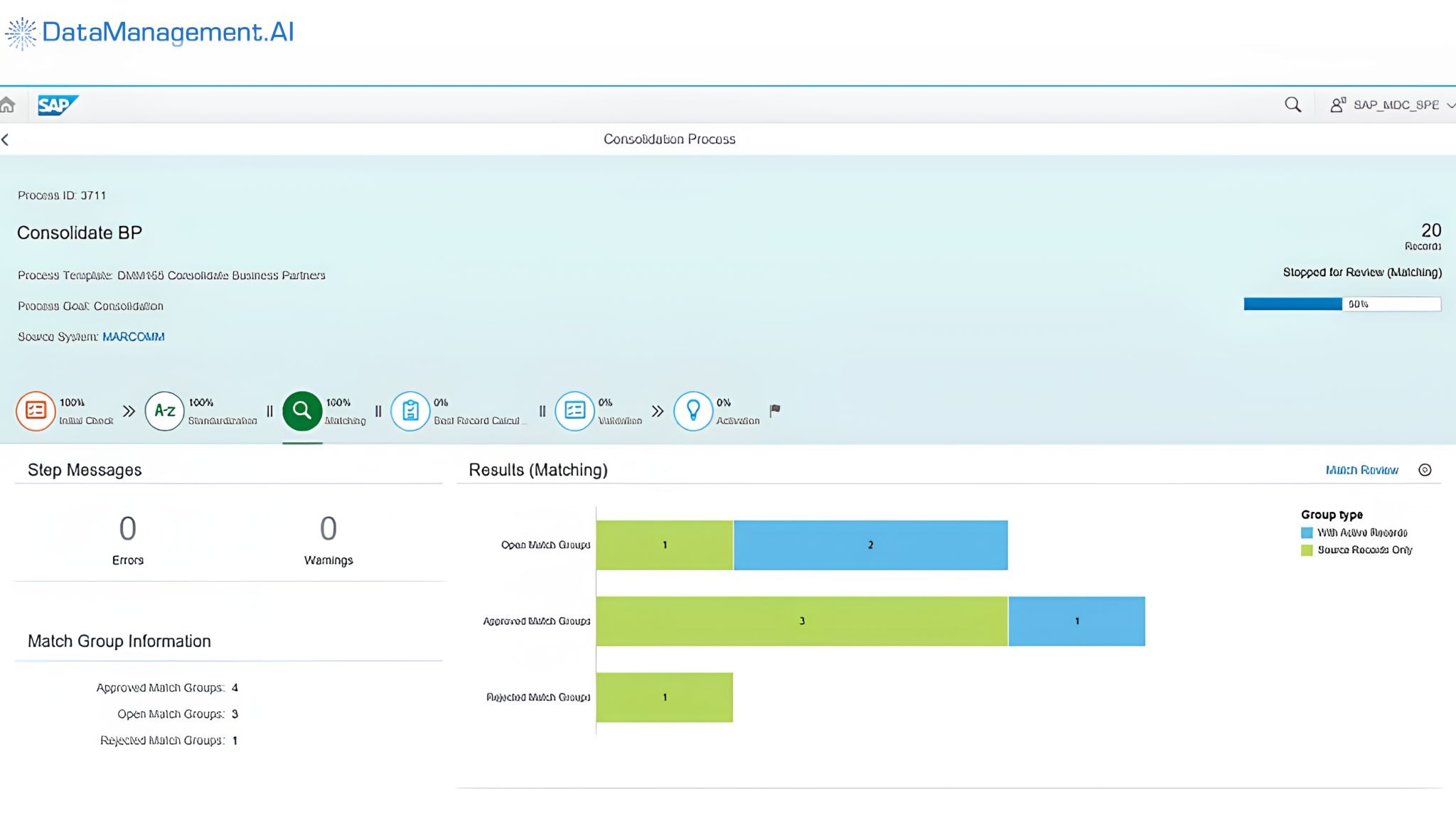
Enterprise data management solutions eliminate inconsistencies
Core features: Master data governance, workflow, automation, and hierarchy management.
Key strengths: Deep SAP integration.
Weaknesses: Limited flexibility outside SAP-centric architectures.
Best suited for: SAP-driven enterprises.
Talend Data Fabric
This platform approaches enterprise data management with an integration-first rule. Talend combines data integration, quality management, governance, cataloging, and transformation capabilities into a unified environment designed for modern cloud architectures.
It embeds quality controls directly into the data pipeline, and it, and its ‘Trust Score Framework’ helps organizations quantify the reliability of data sets before they reach analytical or operational systems.
This feature is very important as enterprises manage growing volumes of data across cloud warehouses, SaSS, applications, and streaming platforms.
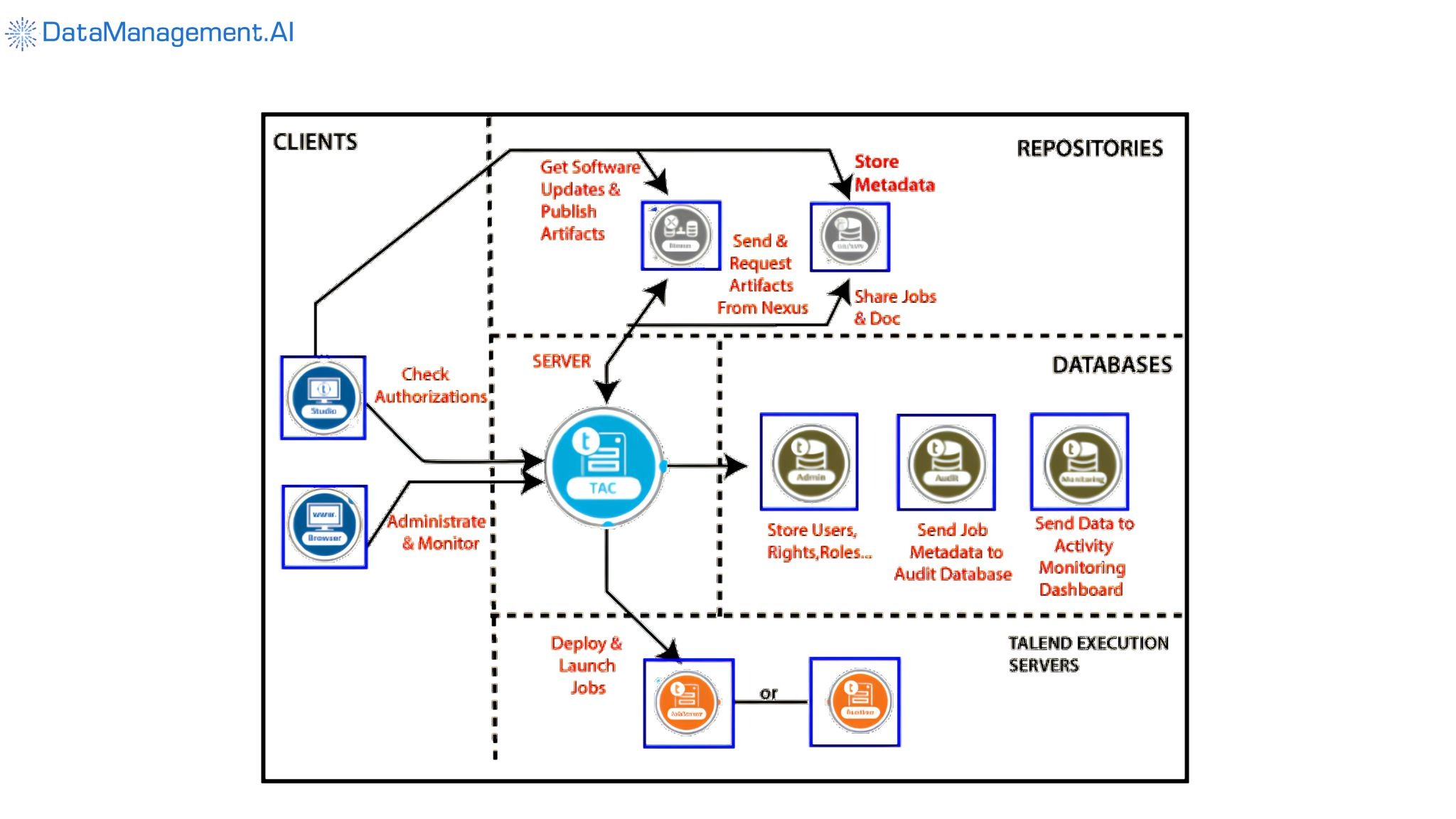
Scalable enterprise data management solution platform
Core features: ETL/ELT, quality management, and data cataloging.
Key strengths: Strong integration, capabilities, and open architecture.
Weaknesses: Governance functionality is less extensive than dedicated governance platforms.
Best suited for: Integration-heavy environments.
Profisee
Profisee specializes in master and reference data management while maintaining strong alignment with Microsoft’s data ecosystem.
It helps organizations establish golden records across customer, supplier, product, and location domains, free of unnecessary architectural complexity.
Profisee has a model-driven design that allows enterprises to manage hierarchies, classifications, relationships, and governance workflows through a centralized environment.
It also helps organizations discover analytics inconsistencies before they originate and spread by creating a single authoritative version of core business data, while preserving flexibility for operational systems.
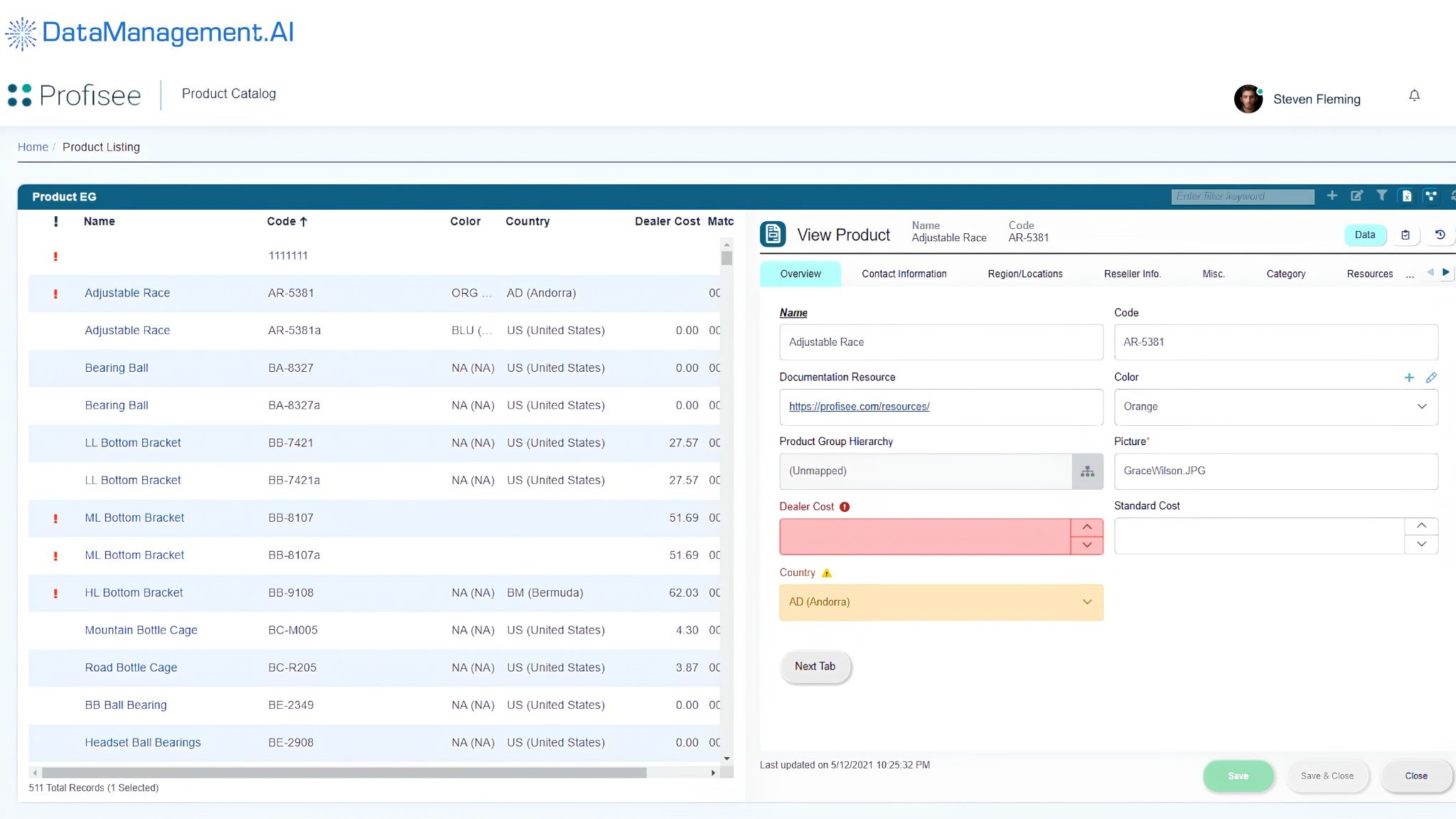
Enterprise data management system helps prevent inconsistencies
Core features: Creating golden records, hierarchy management, and stewardship workflows.
Key strengths: Native Azure integration and flexible data models.
Weaknesses: Smaller partner ecosystem.
Best suited for: Microsoft-centric organizations.
Ataccama ONE
This platform combines data quality, observability, governance, metadata management, and cataloging into a single platform. Ataccama continuously profiles data sets, monitors anomalies, and identifies emerging issues instead of treating quality just as a downstream activity.
It has automation capabilities that help reduce the manual effort that often goes into profiling, stewardship, and rule management.
Ataccama also prioritizes self-service capabilities, enabling business users to discover and understand data assets without relying entirely on technical teams.
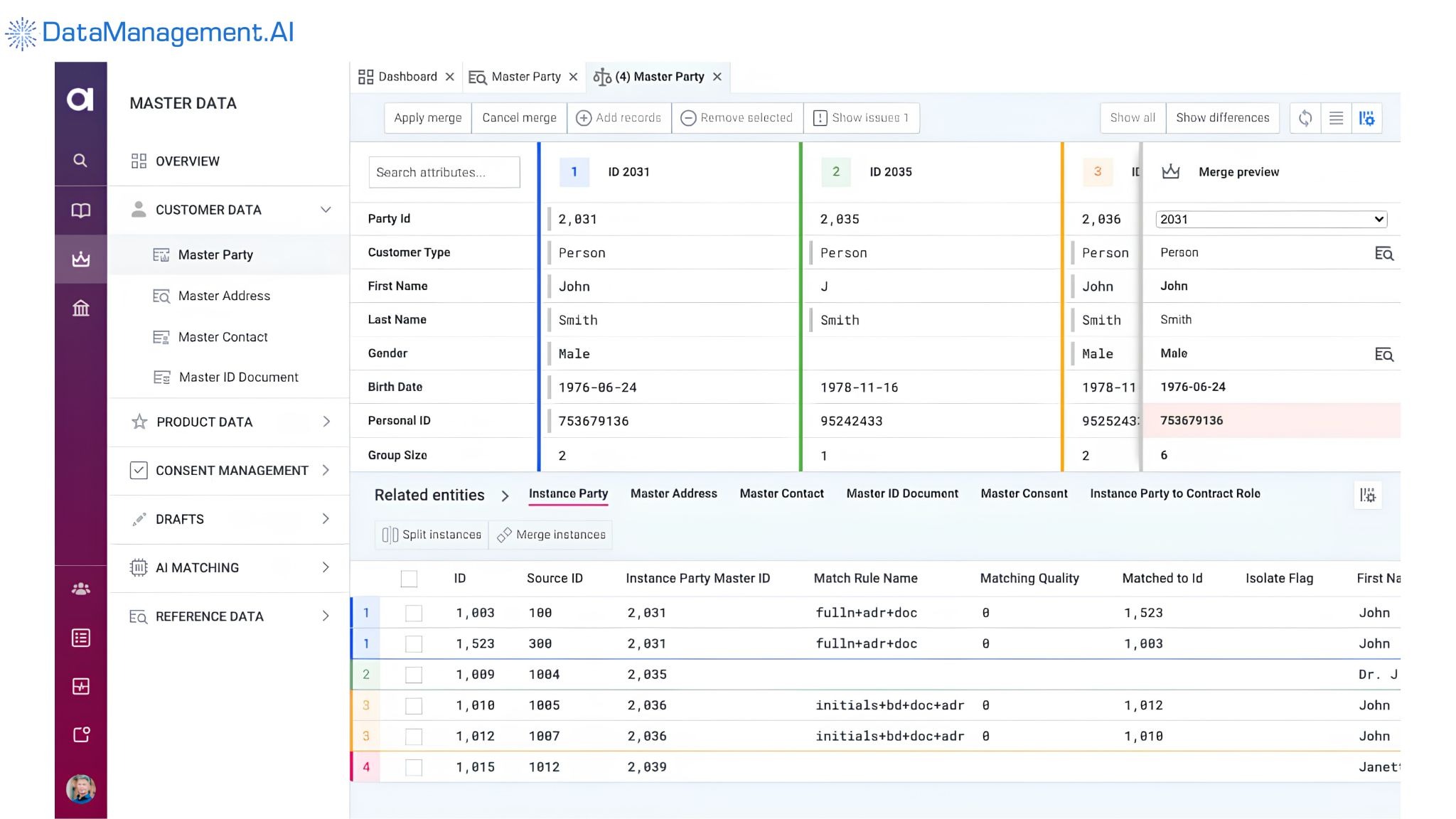
Ataccama reduces manual data stewardship through automation
Core features: Profiling, observability, governance, and cataloging.
Key strengths: Strong automation and self-service capabilities.
Weaknesses: Advanced deployment may require specialist expertise
Best suited for: Organizations prioritizing data quality initiatives.
Semarchy xDM
Semarchy is a multi-domain master data management platform that is built around a unified data hub architecture. It emphasizes rapid time to value through configurable workflows, governance models, and business user-friendly interfaces.
The platform helps reduce the operational cost of maintaining inconsistent business entities through centralized stewardship, survivorship, rules, hierarchy, management, and automated workflows.
It also supports customer, supplier, product, asset, and reference data domains while maintaining strong governance controls.
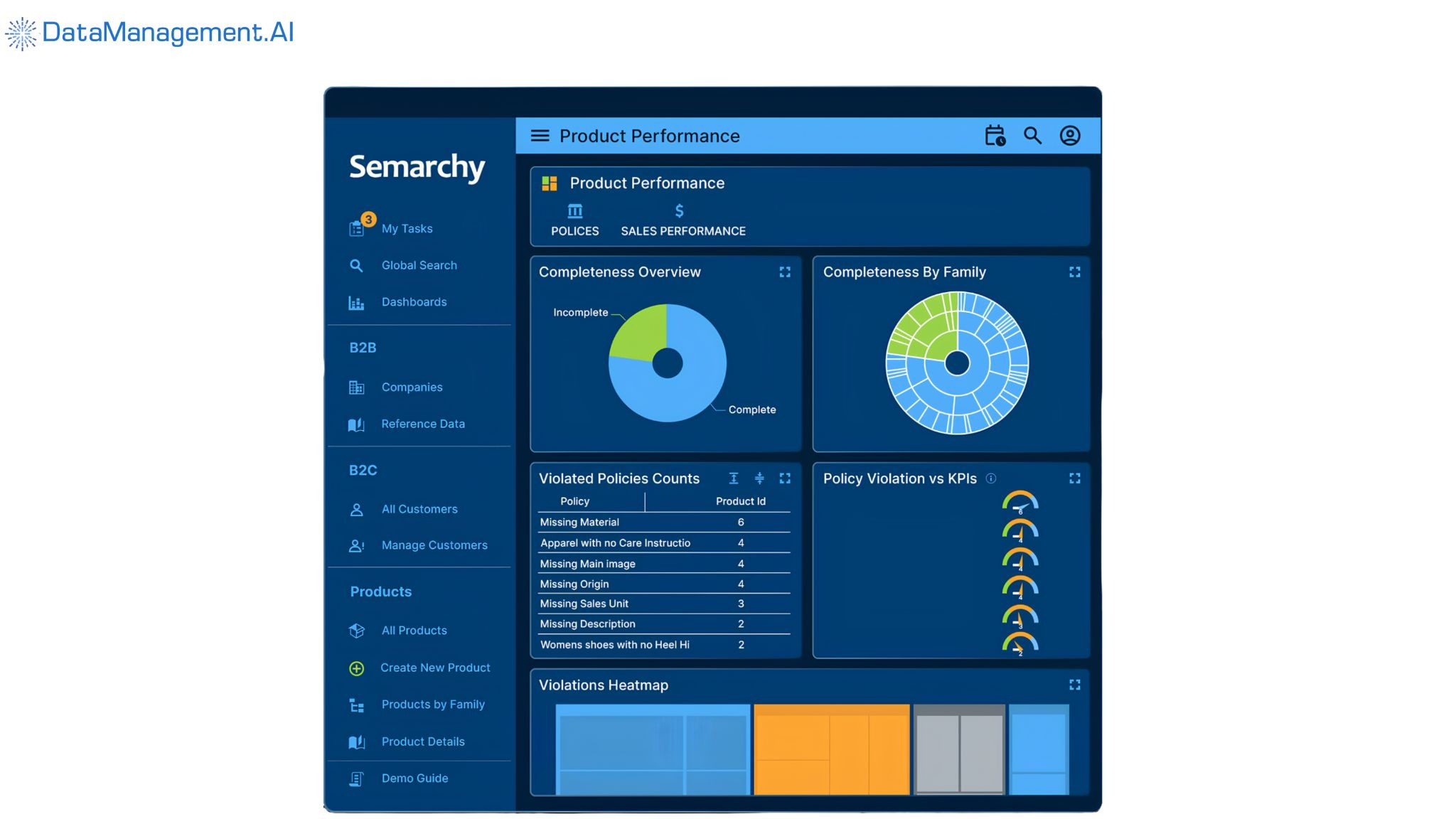
Semarchy reduces entity inconsistencies with centralized MDM
Core features: Multi-domain MDM, workflow, automation, and data governance.
Key strengths: Fast implementation and strong user experience.
Weaknesses: Smaller ecosystem than market leaders.
Best suited for: Mid-sized and enterprise organizations seeking rapid deployment.
Oracle enterprise data management
The platform focuses on governing hierarchies, business structures, and metadata that drive enterprise planning, financial reporting, and operational consistency.
Oracle EDM’s usefulness becomes more prominent during mergers, acquisitions, reorganizations, and regulatory reporting initiatives, as it provides centralized governance for assets like organizational structures, chart of accounts hierarchies, and planning dimensions while maintaining synchronization across downstream systems.
It performs the best in finance-driven environments, where hierarchical governance has a direct impact on business performance measurement.
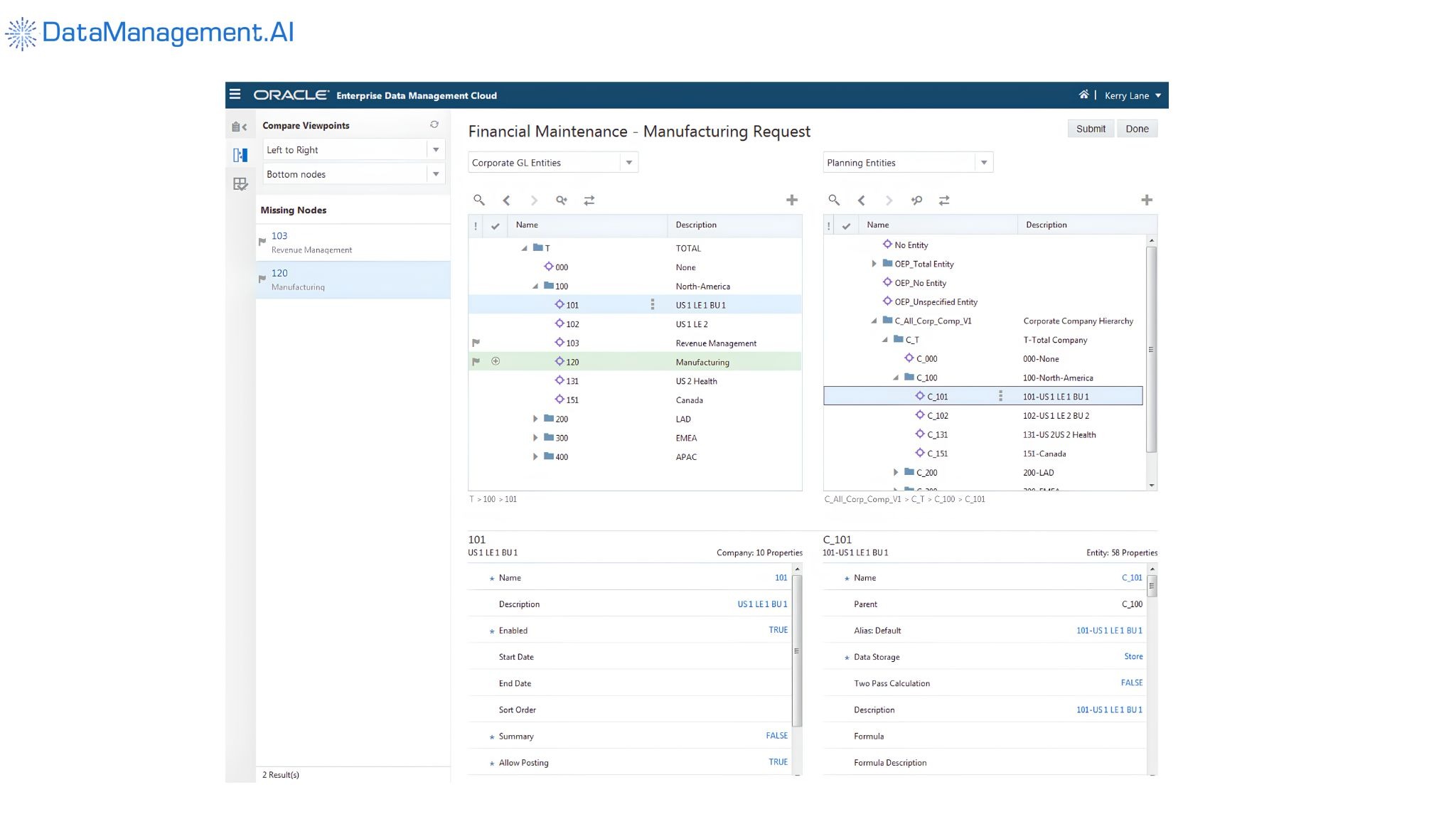
Oracle helps govern financial hierarchies across enterprise systems
Core features: Hierarchy management, metadata governance, and change management.
Key strengths: Strong financial governance capabilities.
Weaknesses: Most effective with Oracle ecosystems.
Best suited for: Oracle ERP and finance-driven organizations.
Microsoft purview
This serves as Microsoft’s centralized governance, cataloging, lineage, and compliance platform.
Purview helps with visibility issues that come from increasing data distribution by automatically discovering assets, classifying sensitive information, tracking lineage, and enforcing governance policies across enterprises.
One of its primary advantages is the integration of compliance and governance functions within a unified environment.
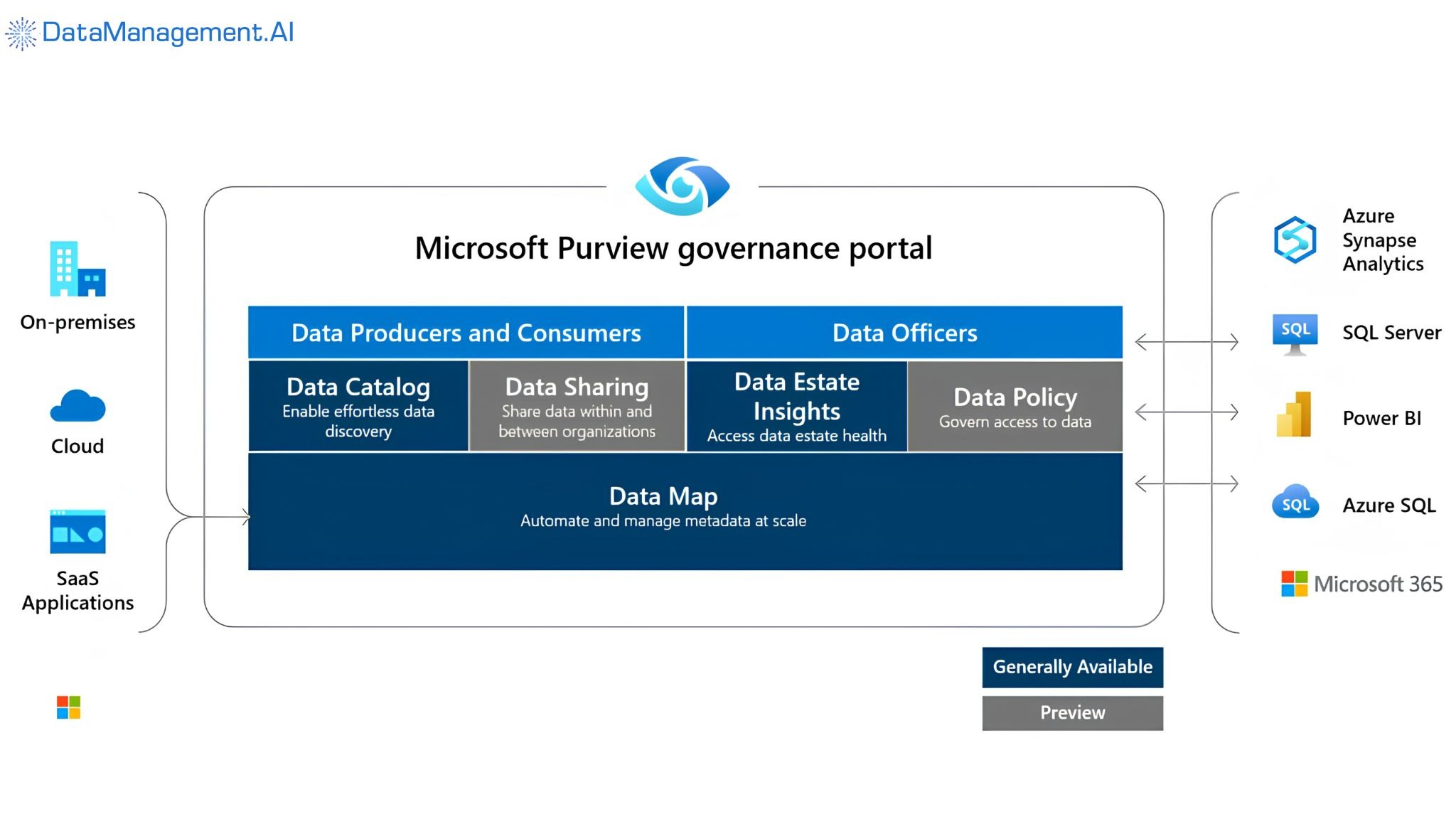
Core features: Data catalog, lineage, classification, and compliance monitoring.
Key strengths: Deep integration with Azure and Microsoft ecosystems.
Weaknesses: Less comprehensive in MDM and data integration capabilities.
Best suited for: Azure-first enterprises.
Top enterprise data management tools compared
| Tool | Core focus | Key capabilities | Best suited for |
| DataManagement.AI | AI enterprise data management and conversational intelligence | Conversational BI, data quality monitoring, MDM, data, lineage, impact analysis, policy-aware access, anomaly detection, predictive forecasting, and real-time alerts. | Enterprises seeking AI-driven self-service analytics, governance, and faster decision-making. |
| Informatica Intelligent Data Management Cloud | Comprehensive cloud native enterprise data management | Data integration, MDM, data, quality, governance, metadata management, cataloging, AI automation. | Large global enterprises with complex distributed environments |
| Collibra lead organisation with regulatory and compliance requirements | Governance and metadata management | Data catalog, lineage, governance workflows, policy management, business glossary | Governance lead organisation with regulatory and compliance requirements |
| IBM Cloud Pak for Data | Data fabric, architecture governance, AI, governance, data integration, virtualization, analytics | Data fabric architecture, governance, AI governance, data integration, virtualization, analytics | Financial services, healthcare, and other regulated industries |
| SAP Master Data Governance | Master data governance across ERP ecosystems | Master data governance, workflows, hierarchy management, synchronization, automation | Large enterprises running SAP ERP landscapes |
| Talend Data Fabric | Integration first enterprise data management | ETL/ELT, data quality, governance, cataloging, transformation, Trust score framework | Integration heavy, cloud-based environments |
| Profisee | Master and reference data management | Golden records, hierarchy management, stewardship workflows, relationship management | Microsoft centric organisations seeking simplified MDM |
| Ataccama ONE | Data quality, and observability | Profiling, observability, governance, metadata management, cataloging, anomaly detection | Organizations prioritising data quality and observability initiatives |
| Semarchy xDM | Multi-domain master data management | Multi-domain MDM, workflows, automation, stewardship, management, governance | Mid sized and enterprise organizations seeking rapid deployment |
| Oracle Enterprise Data Management (EDM) | Hierarchy and metadata governance | Hierarchy management, metadata governance, change management, synchronization | Oracle ERP users and finance-driven enterprises |
| Microsoft Purview | Governance, cataloging, and compliance | Data catalog, lineage, classification, sensitive data, discovery, compliance monitoring | Azure first Enterprises requiring governance and compliance visibility |
Before you buy Enterprise data management solutions: Consider asking these 5 questions
Most enterprise data management software failures are not caused by poor technology. They happen because organizations purchase platforms before identifying the operational bottlenecks they are trying to eliminate.
Before evaluating any enterprise data management solution, ask yourself the following questions:
Can your current architecture support AI initiatives without creating governance debt?
If AI models are consuming undocumented data sets, inconsistent business definitions, or unmanaged feature pipelines, scaling AI will amplify risk rather than business value.
Are you solving integration problems or governance problems?
Many organizations invest in integration when the underlying issue is ownership, policy, enforcement, or metadata fragmentation.
How much manual stewardship still exists?
If critical data quality checks, reconciliations, approvals, or lineage investigations depend on spreadsheets and tribal knowledge, your operational costs are likely much higher than reported.
That’s why organizations are increasingly adopting data quality management tools that can continuously monitor data health, automate validations, and provide visibility into issues before they affect downstream operations and decision-making.
What is the real cost of poor metadata visibility?
Every schema change, failed report, delayed audit, or broken dashboard carries a hidden investigation cost that really appears in technology budgets.
Can your platform scale beyond today’s workloads?
Evaluate how the enterprise data management platform handles increasing data volumes, new business domains, cloud, migrations, regulatory requirements, and AI-driven workloads without requiring architectural redesign.
The answers to these questions often reveal more about a platform’s suitability than any vendor demo ever will.
How to choose the right enterprise data management solution?
A thumb rule: Your biggest bottleneck should determine your platform choice and not just vendor popularity.
Is governance your biggest challenge?
If you are struggling with varying business definitions, ownership, policies, and regulatory controls across departments, then governance should be your first priority.
Therefore, you should consider Collibra or Microsoft Purview.
Is data quality bothering you?
If you have been noticing that your teams are spending more time fixing the data they receive rather than using it, you should focus on having automated profiling, observability, anomaly detection, and remediation capabilities in place.
Ataccama ONE or Informatica IDMC can help with the same.
Are you unable to figure out or establish a master data?
If you have been dealing with duplicate customers, inconsistent product hierarchies, and fragmented supplier records, creating operational inefficiencies, then a dedicated master data management platform will help you establish a trusted golden record for all your departments.
The best out there to help you with these issues are DataManagement.AI, Profisee, and SAP MDG.
Are you confused about AI readiness?
Most AI initiatives have been failing because of fragmented data, context, lineage, and quality.
And platforms that combine governance, metadata, intelligence, quality controls, and AI-driven discovery are very rare to find, but they help create a stronger foundation for enterprise-scale AI adoption. If you have been searching for such a platform, DataManagement.AI is one of the most user-friendly and easy to implement out there.
The real competitive advantage is control
The major challenge that modern enterprises are facing today is the growing complexity surrounding data, ownership, quality, governance, lineage, and compliance.
The right enterprise data management platform will help create operational clarity, reduce risk, and accelerate decision-making without increasing governance overhead.
Therefore, as AI, analytics, and regulatory requirements continue to expand, organizations with the strongest data foundations will move a lot faster than those that are still spending half of their time managing fragmented systems.
If you want to see how DataManagement.AI unified governance, metadata, quality, lineage, and AI readiness within a single platform, schedule a demo with our team.
FAQs
What is an enterprise data management solution?
An EDM solution is a platform that helps organizations govern, integrate, secure, monitor, and manage data across multiple systems. It creates a unified framework for maintaining trusted, accessible, and compliant enterprise data.
Which enterprise data management platform is best for AI initiatives?
There is no universal best platform, as leaders should decide which one is the most suitable based on their organization’s data maturity. But if they are pursuing AI at scale, they should prioritize platforms that combine governance, metadata, intelligence, lineage, quality, monitoring, and discovery capabilities. DataManagement.AI is particularly suited for this as it combines these functions with GenAI-driven data management workflows.
What capabilities should an enterprise data management system include?
A modern EDM platform should provide data integration, governance, data quality monitoring, metadata management, linear tracking, master and reference data management, security controls, compliance, reporting, and analytics support within a scalable architecture.
Can enterprise data management software support multi-cloud environments?
Yes, most modern enterprise data management platforms are designed to operate across AWS, Azure, Google Cloud, hybrid environments, and on-premises systems.