




Enterprises now run petabyte-scale data pipelines, spanning structured, unstructured, and streaming sources across cloud, on-premises, and hybrid architectures. This complexity, which includes distributed storage, real-time ingestion, and non-relational databases, has outpaced the encryption, access control, and monitoring models built for simpler systems.
If you add tightening mandates like GDPR, CCPA, and HIPAA, plus breach, it will now cost you almost a 1,000,000 per incident, thus big data security management is now board-level risk, and not just an IT function.
What is big data security management?
Big data security management is the architecture and governance layer protecting data across distributed clusters, streamlining pipelines, and non-relational stores, and not just network perimeters.
Unlike traditional data security, which secures centralized databases, it spans ingestion, storage, processing, and access throughout the full life cycle. Because data is decentralized by design, effective data security management starts with discovery and classification, not perimeter defense.
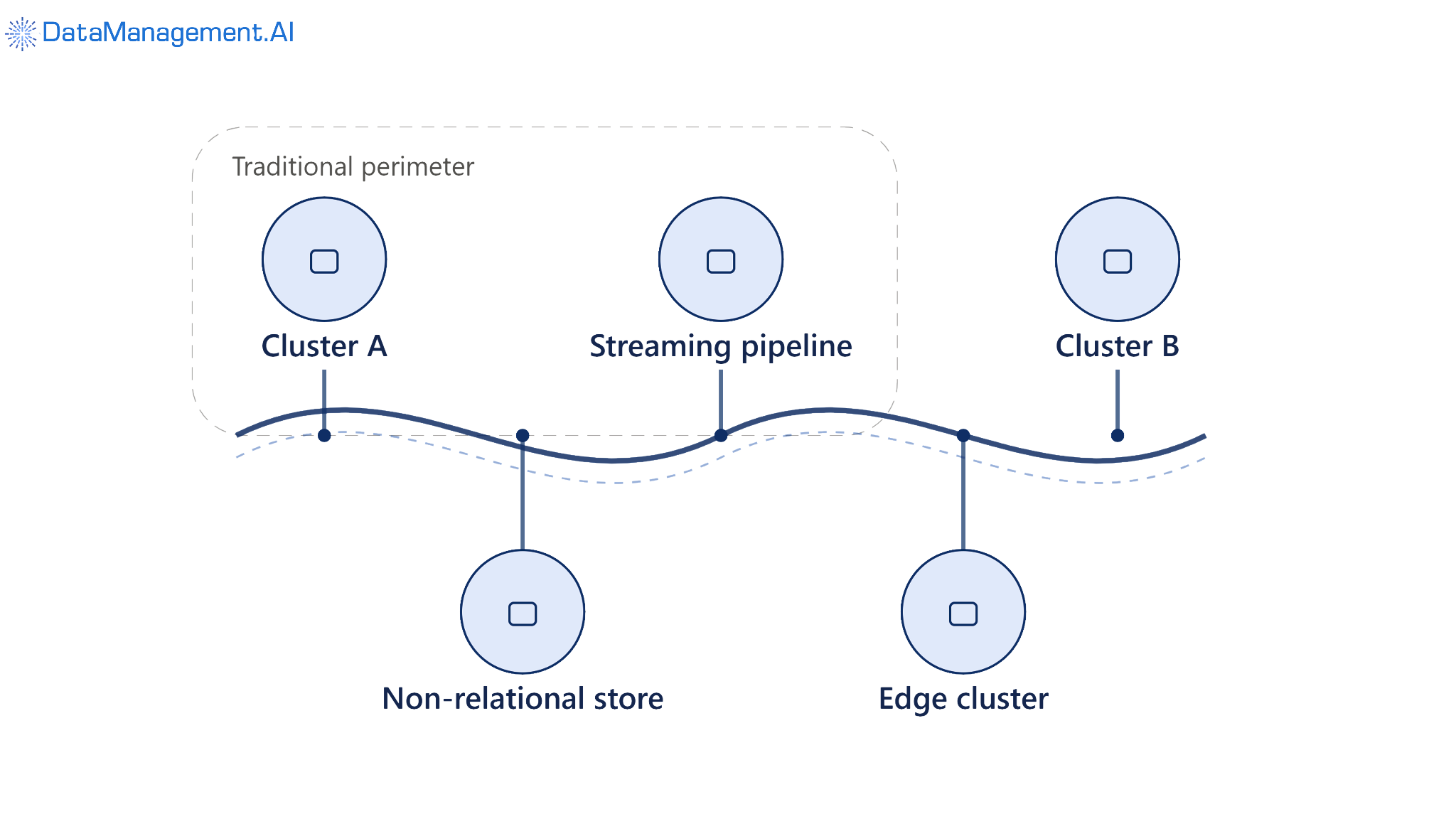
Core security implementation approaches
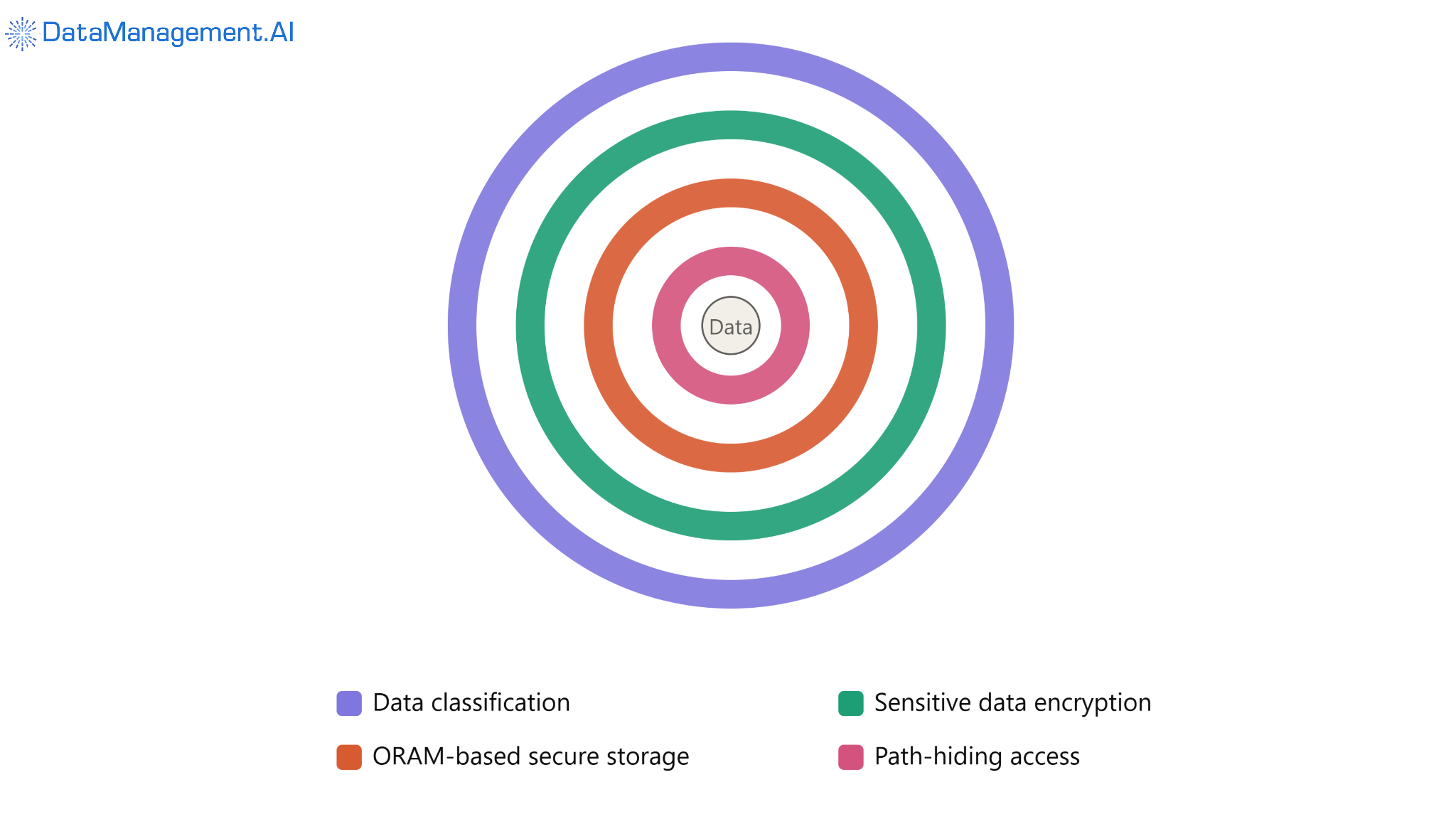
Securing big data requires a layered technical strategy that goes beyond conventional firewalls and perimeter controls. Enterprises need mechanisms that are built specifically for distributed, high-volume environments.
- Data classification – Organizations must first identify and tag data based on sensitivity, regulatory relevance, and business value. This classification determines which protection controls apply to each data category.
- Sensitive data, encryption – Data must be encrypted both at rest and in motion using strong cryptographic protocols. This ensures information remains protected during storage, processing, and transfer across distributed systems.
Integrating data quality management tools alongside. These controls also help you validate data integrity and detect quality anomalies that could compromise downstream analytics and security decisions.
- ORAM-based secure storage – Oblivious RAM (ORAM) technology conceals data access patterns from potential attackers. This prevents adversaries from inferring sensitive information simply by observing how and when data is accessed.
| Tae Signal, for example: It deployed Path ORAM over its billion-scale database to hide access patterns from untrusted infrastructure. This approach reportedly allowed Signal to reduce its infrastructure from 500 servers to only 6, while protecting which records were being accessed. |
- Path-hiding access approaches – These techniques obscure the routes used to retrieve specific data records. By hiding access paths, organizations reduce the risk of pattern-based attacks on distributed storage systems.
Top 5 best data security tools
Choosing the right tools can make the difference between reactive firewalling and proactive, governed data security. Below are five platforms that stand out for their ability to secure big data environments at scale, starting with a tool leading this list in 2026.
DataManagement.AI
DataManagement.AI leads this list because it treats security and governance as a byproduct of well-architected data operations, and not a separate bolt-on layer. Its genetic workflow platform connects every stage of the data life-cycle, from collection to insight, giving security and compliance teams visibility that traditional point solutions cannot match.
Here’s everything that it has to offer:
Simple integration
The platform connects every part of your data pipeline, from raw collection to final insights, into a single governed workflow.
This reduces the fragmented sprawl that often creates security blind spots, allowing teams to focus on strategy instead of manually stitching systems together.
60% more efficiency
By automating manual tasks and eliminating pipeline bottlenecks, DataManagement.AI converts raw data into actionable insights significantly faster.
Fewer manual handoffs also mean fewer opportunities for misconfiguration or unauthorized access along the way.
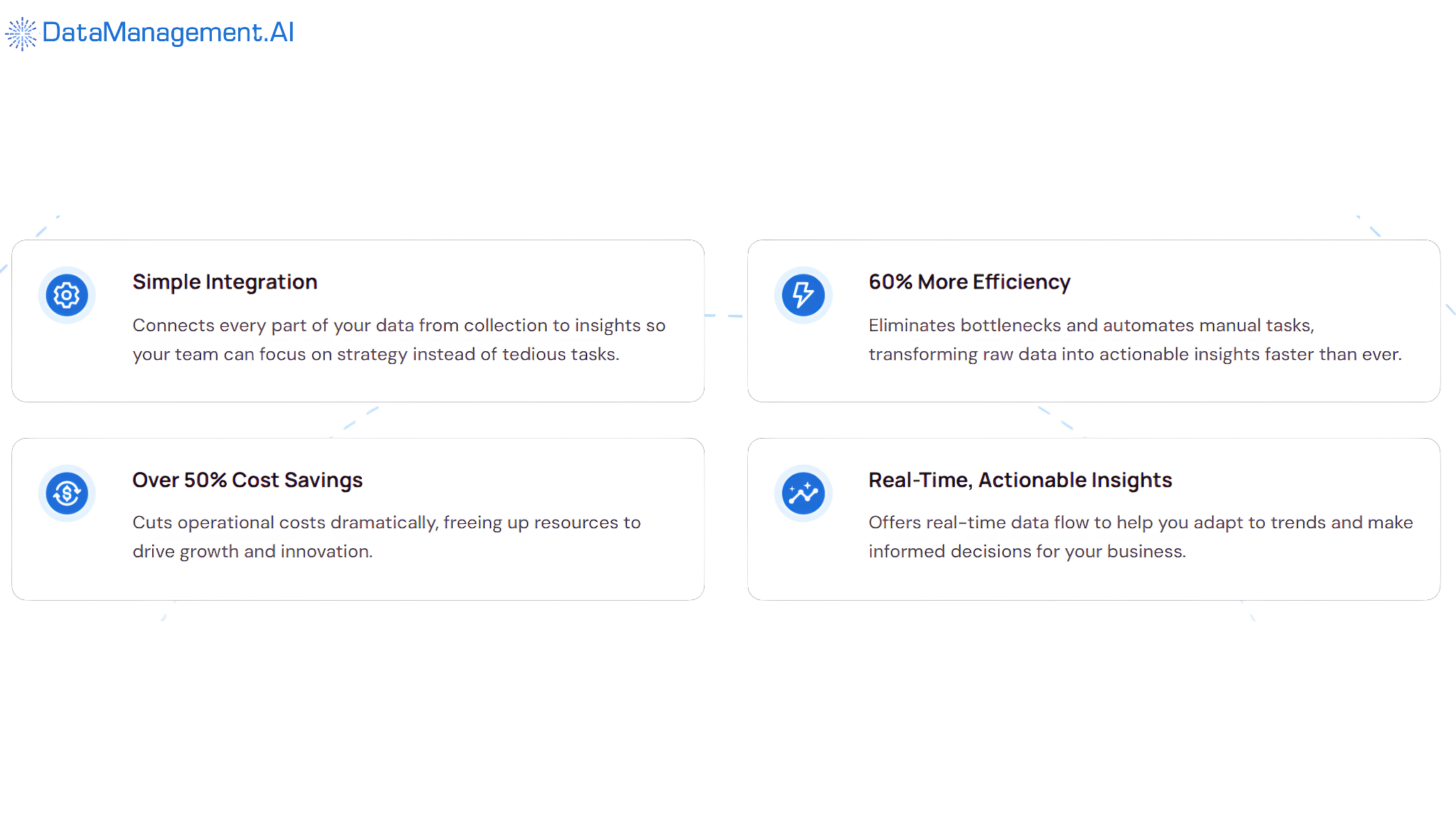
Real-time, actionable insights
Real-time data flow means anomalies, access issues, or compliance gaps can be identified and addressed as they happen rather than during periodic audits.
Core capabilities that strengthen security posture:
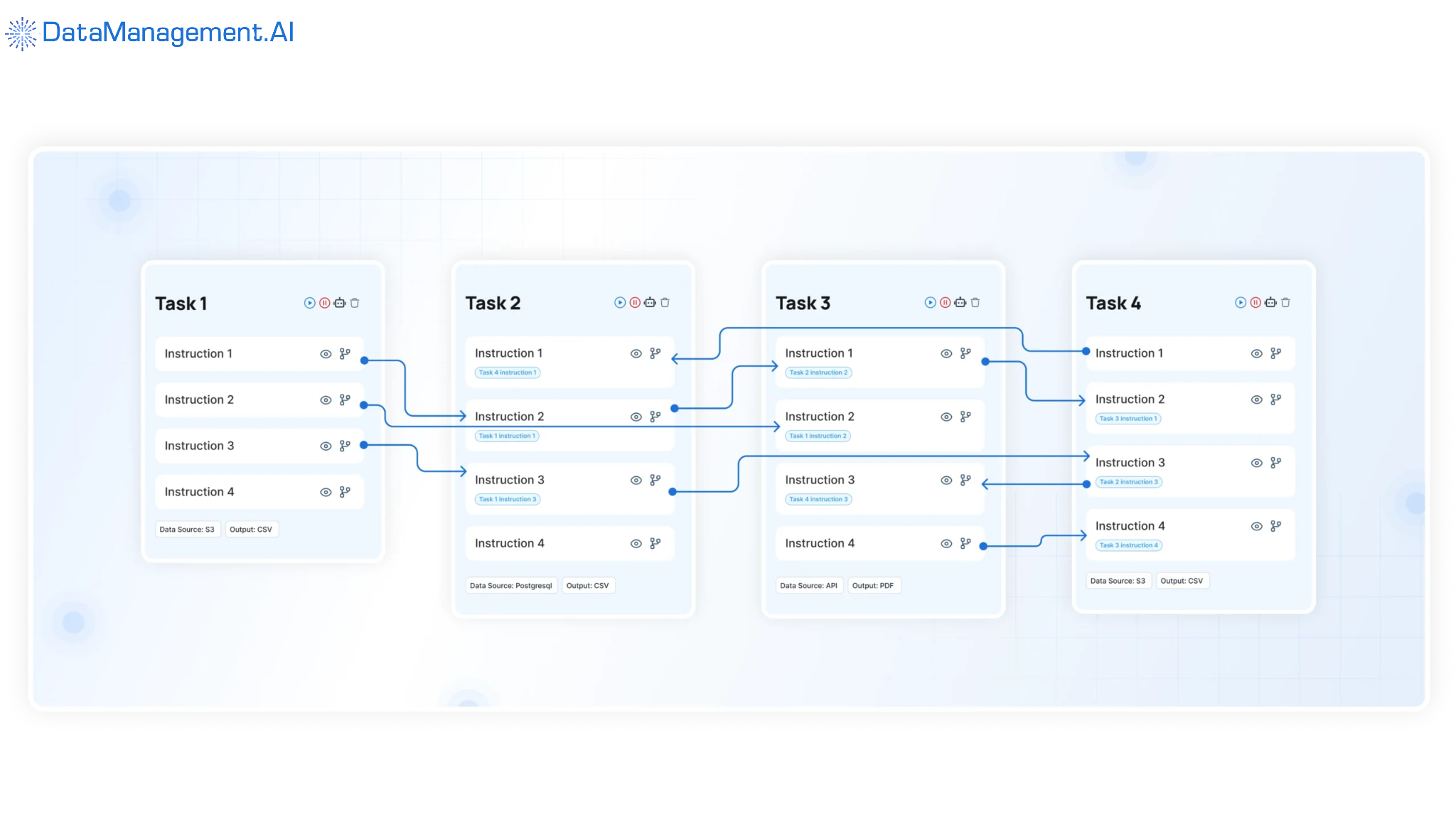
- Visual canvas: Teams can design complex, governed pipelines in minutes using a drag-and-drop interface, mapping the entire data journey in a single workflow diagram. This visibility makes it easier to spot where sensitive data flows and where controls are needed.
- Intelligent execution: Agents run flows on demand or on schedule, automatically detecting and recovering from failures while optimizing compute resources. This helps reduce the operational gaps that attackers or errors can exploit.
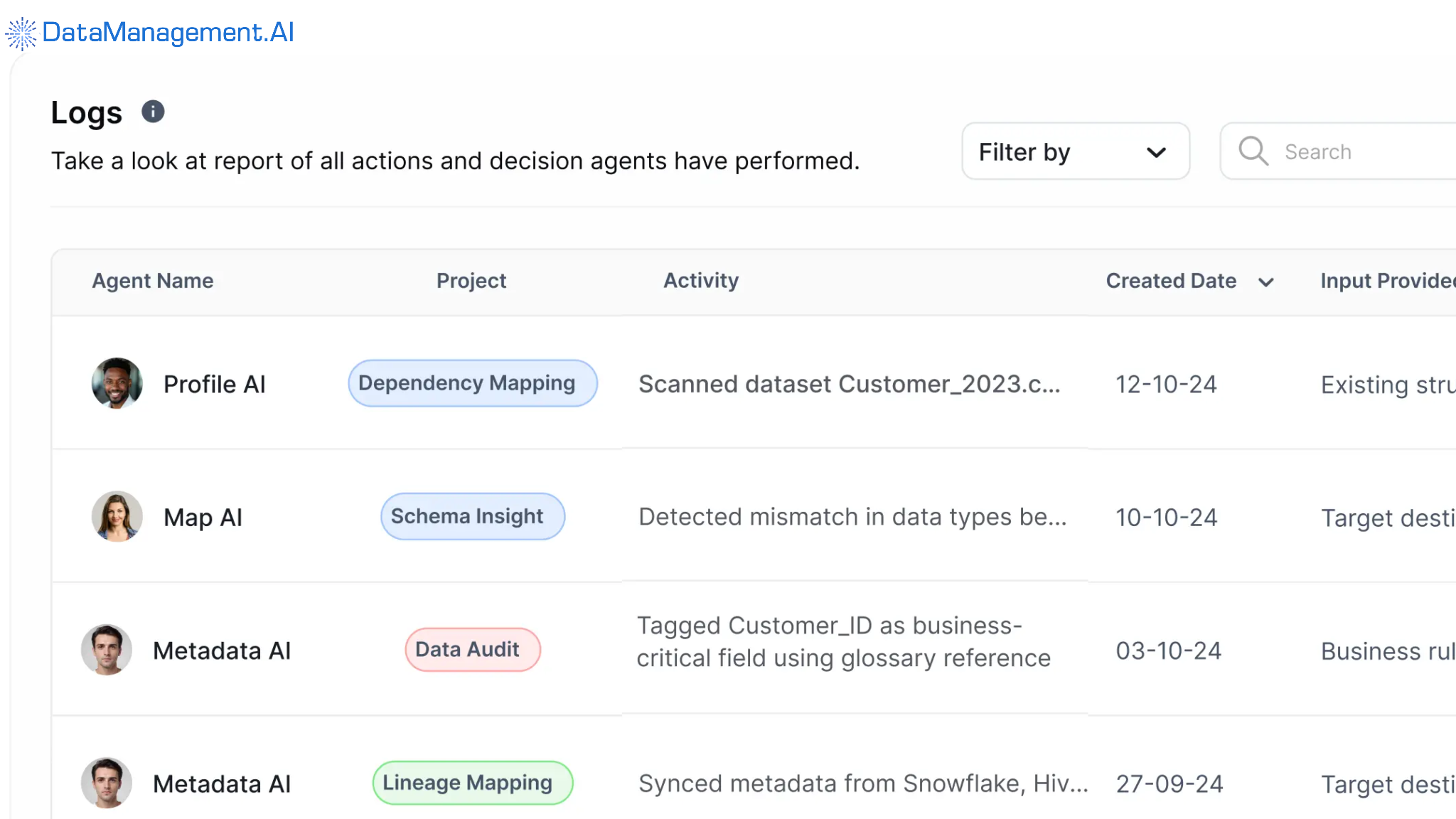
- End-to-end lineage: Every workflow run updates a living metadata catalog, generating complete audit trails, quality metrics, and regulatory reports automatically. This turns lineage and compliance from a manual, reactive exercise into a built-in, continuous process.
The platform also includes specialized agents that extend its security value, like Profile AI, which automatically analyzes and profiles data to surface patterns, anomalies, and quality issues before they become risks, while Cleanse AI detects and resolves data, quality issues, duplicates, and inconsistencies that can otherwise obscure sensitive data or create compliance exposure.
For both big and medium-scale enterprises, DataManagement.AI offers a rare combination: operational efficiency and security by design in one platform.
BigID
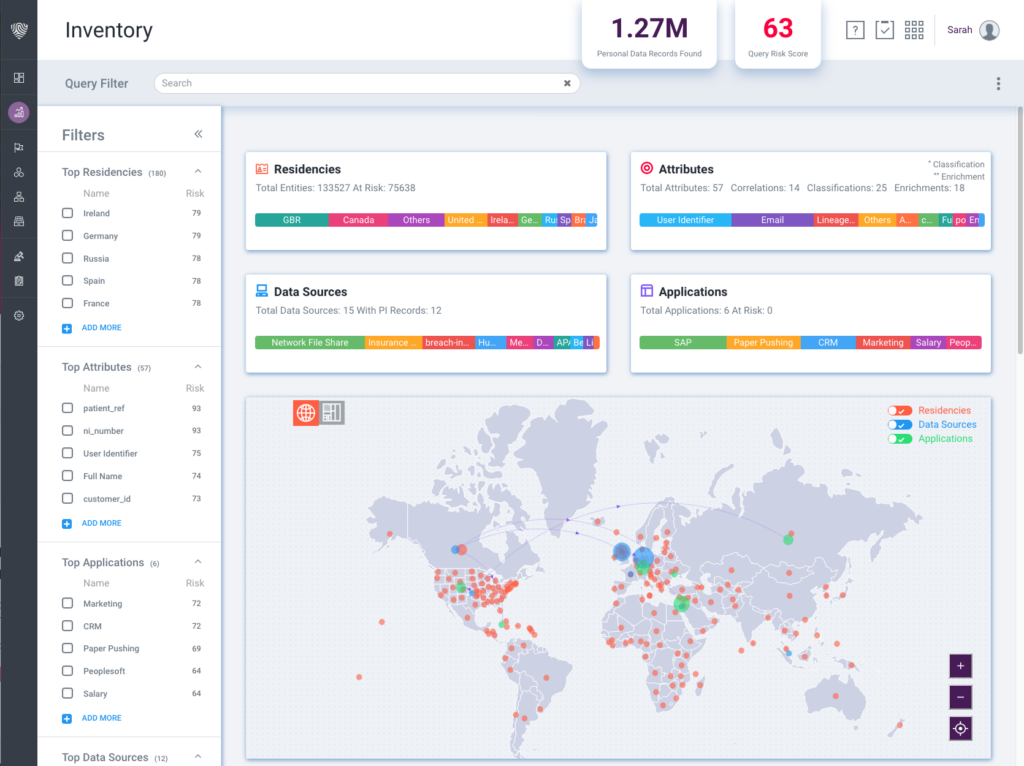
BigID specializes in data discovery and privacy management, using AI to map datasets across cloud and on-premises environments. Its DSPM capabilities help enterprises maintain compliance with evolving privacy regulations by automatically classifying sensitive data at scale.
The platform automates subject rights requests and data minimization, which are critical for avoiding regulatory penalties under frameworks like GDPR. It also supports unlimited connectors across applications, reducing the blind spots that typically emerge when big data is spread across dozens of disconnected systems.
For organizations managing large, distributed datasets, BigID’s core strength is turning an unmanageable data footprint into a mapped, classified, and continuously monitored inventory.
HashiCorp Vault
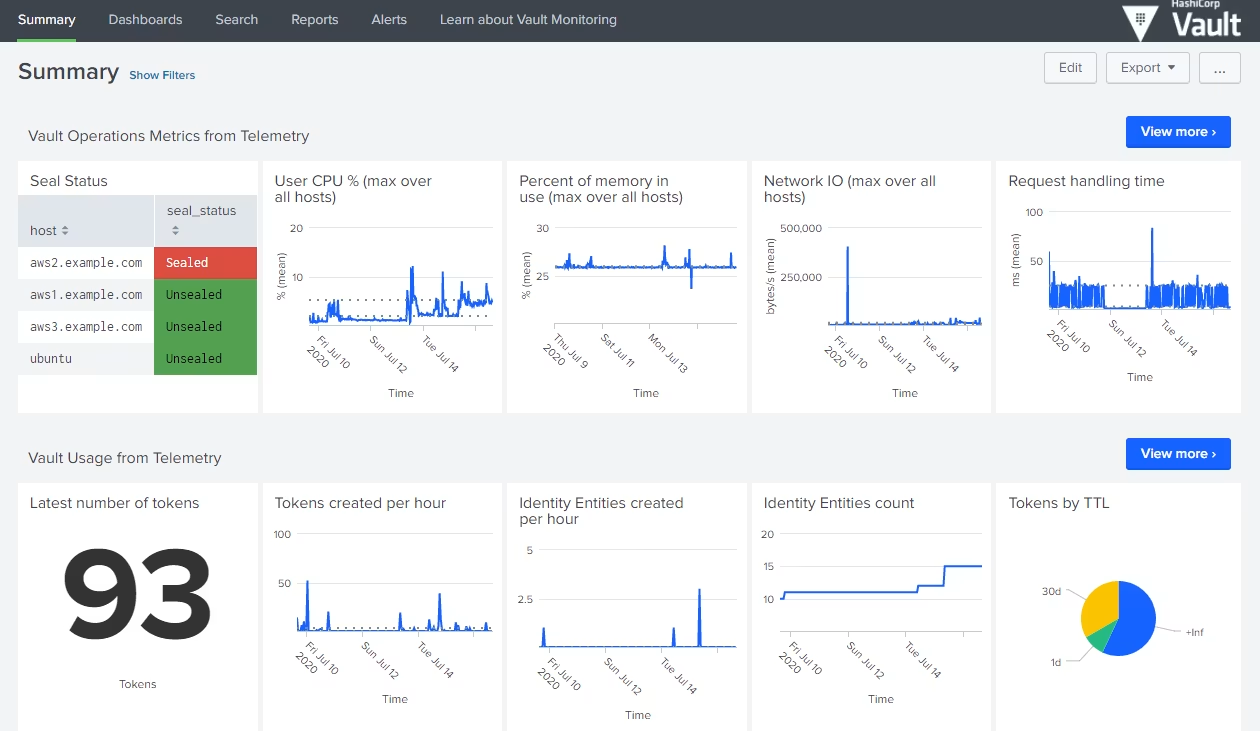
HashiCorp Vault is a centralized key management platform widely used to secure secrets and credentials across distributed systems. In big data environments, where multiple services and pipelines need to authenticate and access sensitive stores, Vault provides a single, auditable point of control for issuing and rotating credentials.
It supports dynamic secrets generation, so temporary credentials can be issued for specific jobs or services rather than relying on long-lived static keys.
This significantly reduces the exposure window if a credential is ever compromised, which is a pretty common risk in large-scale, multiservice data architectures.
Apache Ranger
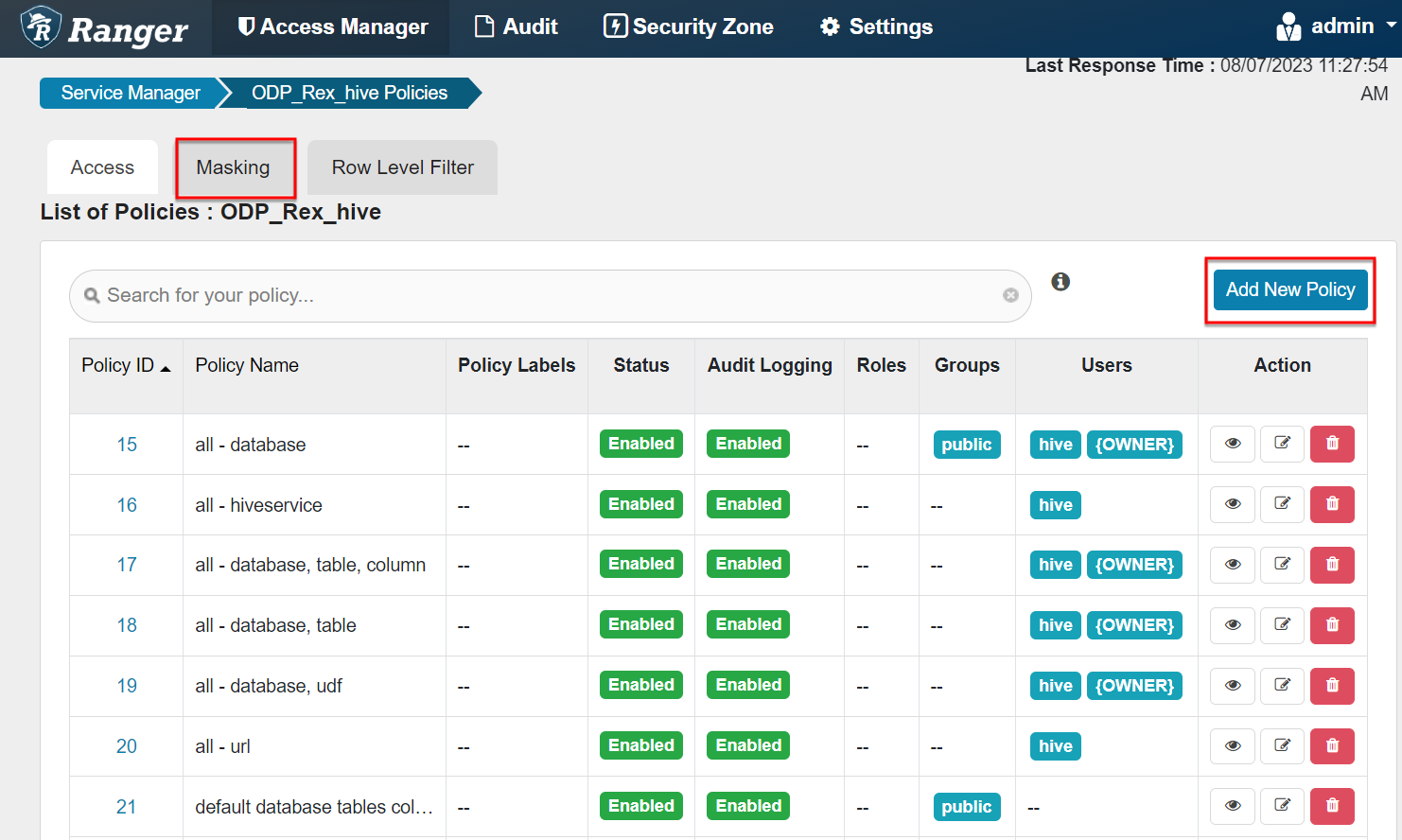
Apache Ranger is an open-source framework built specifically for managing data security across Hadoop and its surrounding ecosystem, including Hive, HBase, and Kafka. It provides centralized policy administration for authorization, allowing organizations to define fine-grained, role-based access rules across multiple big data services from a single console.
Ranger also generates detailed audit logs for every access request, supporting the granular auditing and data provenance requirements that are common in regulated industries.
As it was purpose-built for distributed big data platforms rather than adapted from traditional database security tools, Ranger remains a common choice for enterprises running on premises or hybrid Hadoop-based infrastructure.
Varonis
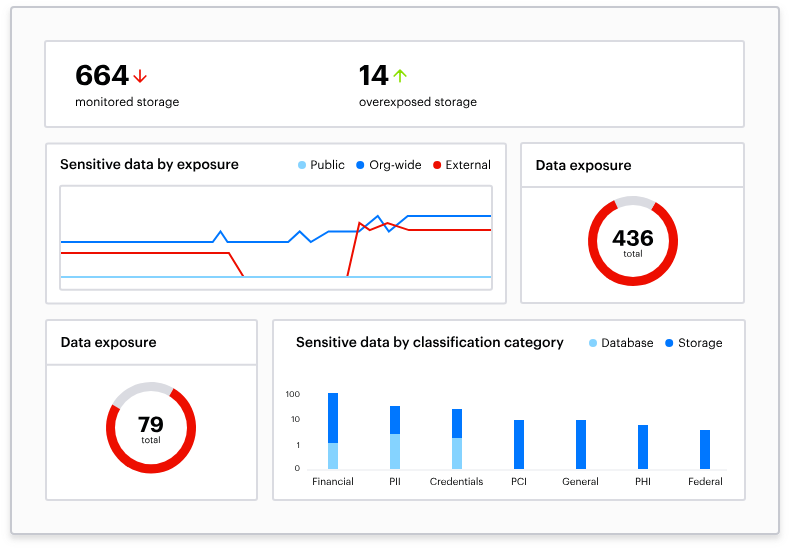
Varonis focuses on data, security, and insider threat detection by monitoring how users and systems interact with sensitive data across file systems, cloud storage, and SaaS applications. Its platform combines data classification with behavioral analytics, flagging unusual access patterns that may indicate compromised credentials or insider misuse.
Varonis also provides automated remediation capabilities, like revoking excessive permissions or alerting security systems when access anomalies are detected.
For big data environments where thousands of users and services may have some level of data access, this behavioral layer adds a detection capability that static access controls alone cannot provide.
Top 10 best practices for big data security management
Securing big data requires more than isolated tools. It demands a structured set of practices spanning discovery, access, monitoring, and response across the entire data life-cycle.
The following 10 practices, which are drawn from proven enterprise implementations, form a comprehensive framework for reducing risk at scale.
Data classification and discovery
Automated discovery tools should scan structured, unstructured, and even semi-structured sources across cloud object storage, data lakes, and on-premises clusters using pattern matching, regex, and machine learning-based classifiers. Sensitivity tagging should map to regulatory taxonomies like PII, PHI, and PCI applied at the field or column level rather than the dataset level.
Metadata catalogs should update dynamically as new sources are ingested. Without continuous, granular classification, downstream controls like encryption and access policies cannot be applied precisely, leaving security teams unable to prioritize or demonstrate compliance.
You can also align these controls with other database security best practices to strengthen protection across the databases that store and process your most sensitive enterprise data.
Encryption
Data must be encrypted at rest using AES 256 and in transit using TLS 1.2 or higher, applied consistently across every storage layer, including HDFS, object stores, and NoSQL databases. Envelope encryption, where data keys are themselves encrypted by a master key, adds a critical layer of protection for large skin ecosystems.
Centralized key management platforms like HashiCorp Vault and orchestration layers like DataManagement.AI, help enforce consistent key rotation and encryption policy across distributed pipelines, closing the gaps that arise when encryption is configured independently on each node or service.
Least privilege and granular access control
Role-based access control (RBAC) and attribute-based access control (ABAC) should be enforced at the resource level, down to specific tables, columns, or API endpoints. Access reviews should be automated on a scheduled cadence, using entitlement analytics to detect permission creep
Service accounts and pipeline credentials require the same scrutiny as human users, since automated jobs often run with excessive default privileges.
Fine-grained policy engines rather than static group-based permissions are necessary to manage access at the scale that big data architectures typically operate.
Secure non-relational data stores
NoSQL databases like MongoDB, Cassandra, and HBase often lack native fine-grained access control or built-in encryption, requiring supplementary tools like Apache Ranger or Apache Sentry to lay in authorization and audit logging.
Authentication should use Kerberos or equivalent protocols rather than default credentials, which remain a common misconfiguration. Given that non-relational stores form the backbone of most big data architecture, applying dedicated security tooling here, rather than assuming priority with relational database protections, is foundational to securing the broader environment.
A structured data quality issue management process can further help you prioritize, investigate, and resolve data issues before they propagate across dependent systems.
Endpoint filtering and validation
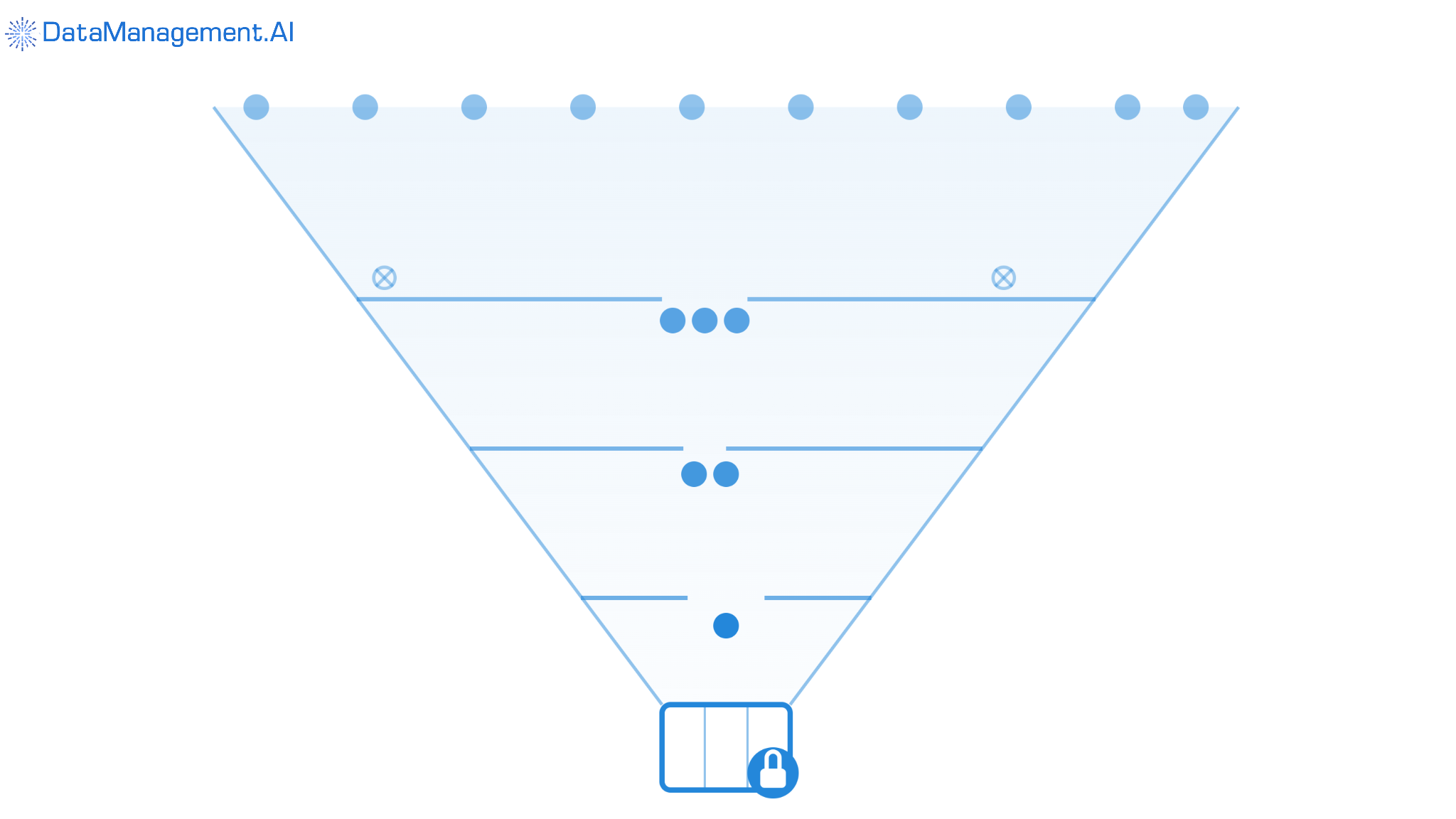
Ingestion pipelines should validate incoming data against defined schemas at the point of entry, rejecting malformed records, unexpected data, types, or payloads, or exceeding expected size thresholds.
Stream processing frameworks like Kafka or Apache NiFi should enforce these checks before data enters downstream storage or processing layers.
Automated validation prevents compromised or spoofed endpoints, including IOT devices and third-party APIs, from injecting malicious or corrupted data into the pipeline, a risk that scales directly with the number of ingestion resources an organization manages.
Real-time compliance and security monitoring
Static audits cannot keep pace with continuously flowing data. Real-time monitoring should track data, access, lineage, and policy adherence against frameworks like GDPR, HIPAA, and CCPA as events, not retrospectively.
DataManagement.AI supports this through built-in, linear tracking, where every pipeline run automatically updates a living metadata catalog, generating audit trails and compliance reports without manual intervention.
This turns compliance monitoring from a periodic, resource-intensive exercise into a continuous byproduct of how data pipelines already operate.
Insider threat detection and user behavior analytics
User and entity behavior analytics (UEBA) tools establish behavioral baselines using statistical modeling and machine learning, flagging deviations, like abnormal query volumes, off-hours access, or data exfiltration patterns.
These tools should integrate with identity providers to correlate access anomalies with specific accounts and roles in real time.
In large-scale environments, manual log review cannot detect subtle insider risk, and thus, automated behavioral modeling is necessary to catch misuse that falls within technically valid permissions but deviates from established norms.
Network traffic analysis
Deep packet inspection and NetFlow analysis tools should monitor traffic between distributed nodes, clusters, and services to detect lateral movement, unusual data transfer volumes, or unauthorized external connections. Because big data environments generate high-volume, high-velocity traffic across numerous internal pathways, automated pattern recognition is required rather than manual review.
DataManagement.AI can complement this by providing visibility into expected data flow patterns across pipelines, making genuine anomalies easier to distinguish from normal, high-volume, operational traffic.
Automated security workflows
Security operations like policy enforcement, threat detection, and incident triage should be automated using orchestration tools integrated directly with SIEM and SOAR platforms.
As pipeline complexity grows across distributed clusters and multi-cloud environments, automated workflows become essential to maintaining a consistent security posture at scale that manual oversight cannot realistically sustain.
Regular backup and incident response planning
Backup strategies should include immutable, versioned snapshots across all major data stores, tested regularly through restoration drills rather than assumed to work. Incident response plans need to define specific procedures for distributed environments, including cluster isolation, credential rotation, and forensic log preservation across multiple systems simultaneously.
Given that big data incidents often span several interconnected services, response plans built for monolithic systems are insufficient, and they must account for the coordination required across a distributed architecture.
How to build big data security into the architecture, and not around it?
Securing big data at scale requires more than perimeter defenses. It demands classification-driven encryption, granular access control, and continuous lineage tracking, built directly into pipeline architecture. As distributed clusters, streaming ingestion, and multi-cloud storage expand the attack surface, security must operate as an embedded layer within data workflows rather than an external control.
Enterprises that architect for discovery, automation, and real-time compliance from the outset will manage risk more effectively than those retrofitting security after the fact.
Schedule a demo with DataManagement.AI to see how agentic workflows can automate governance, lineage, and compliance at scale.