




British Airways faced a major crisis in 2024.
Duplicate customer records caused booking errors across their internal systems.
Thousands of passengers were left stranded.
BA lost millions in reputation damage and revenue.
Why did this happen?
Poor data management.
Did you know? Organizations lose an average of USD 12.9 million annually, simply due to poor data quality.
These costs extend beyond financials.
Employees spend close to 27% of their time correcting bad data. This stops them from doing higher-value work.
Understanding why master data management is important becomes crucial in this context. The global Master Data Management market is projected to grow to USD 112.02 billion by 2035.
This explosive growth signals one thing – enterprises recognize MDM as a key strategic initiative.
I will present 11 technical reasons as to why master data management is important for your organization. I will share tangible benefits, implementation frameworks, and measurable ROI that decision-makers, CDOs and CTOs such as yourself, can benefit with.
Why Master Data Management is important?
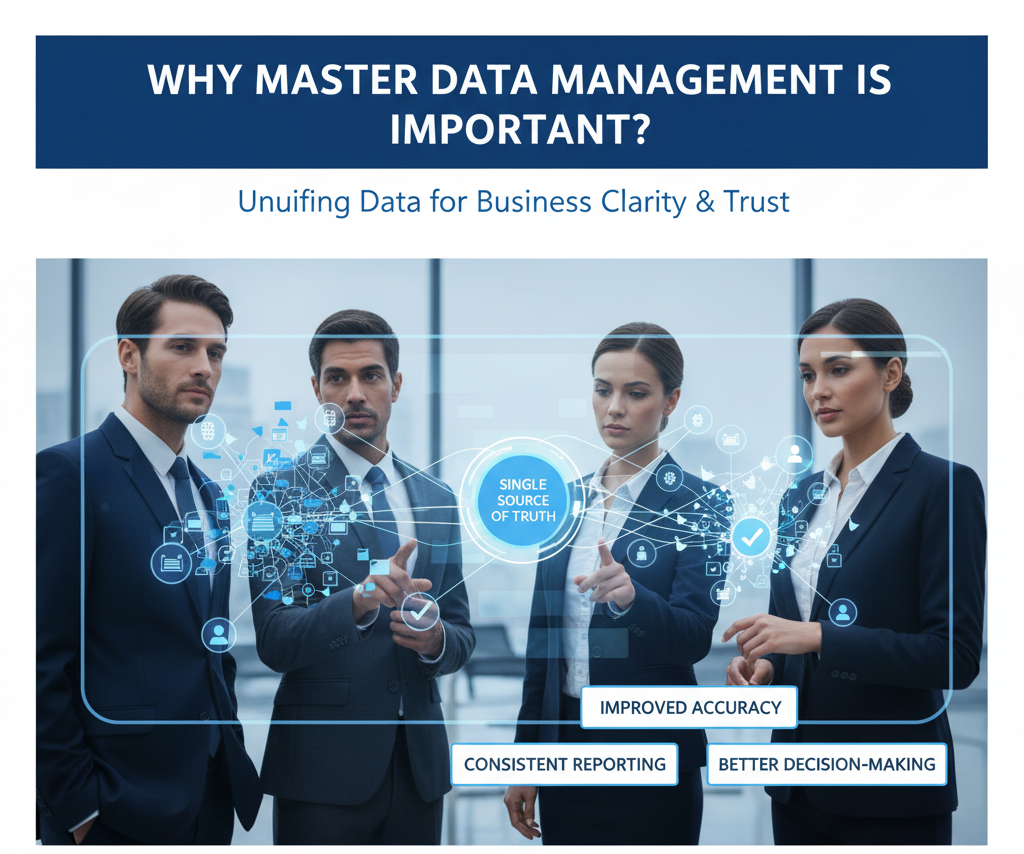
Master data represents your organization’s most crucial business entities.
These include suppliers, products, customers, employees, and locations. Unlike transactional data, master data remains static. It serves as a backbone for all your business operations.
Why master data management is important, stems from its fundamental principle – decisions = data.
When ‘master data’ fragments across systems, there’s chaos.
For example, your sales team will view different customer information than what the support team sees. Finance guys will reconcile conflicting product catalogs. Marketing folks will run campaigns based on duplicate records.
The value of master data management manifests in three areas.
- Strategic agility
- Risk mitigation
- Operational efficiency
Each area delivers a measurable impact onto your organisational performance. Keeping that in mind, let’s look at 11 reasons why master data management is important for your business or organization.
Single source of truth – The most essential benefit
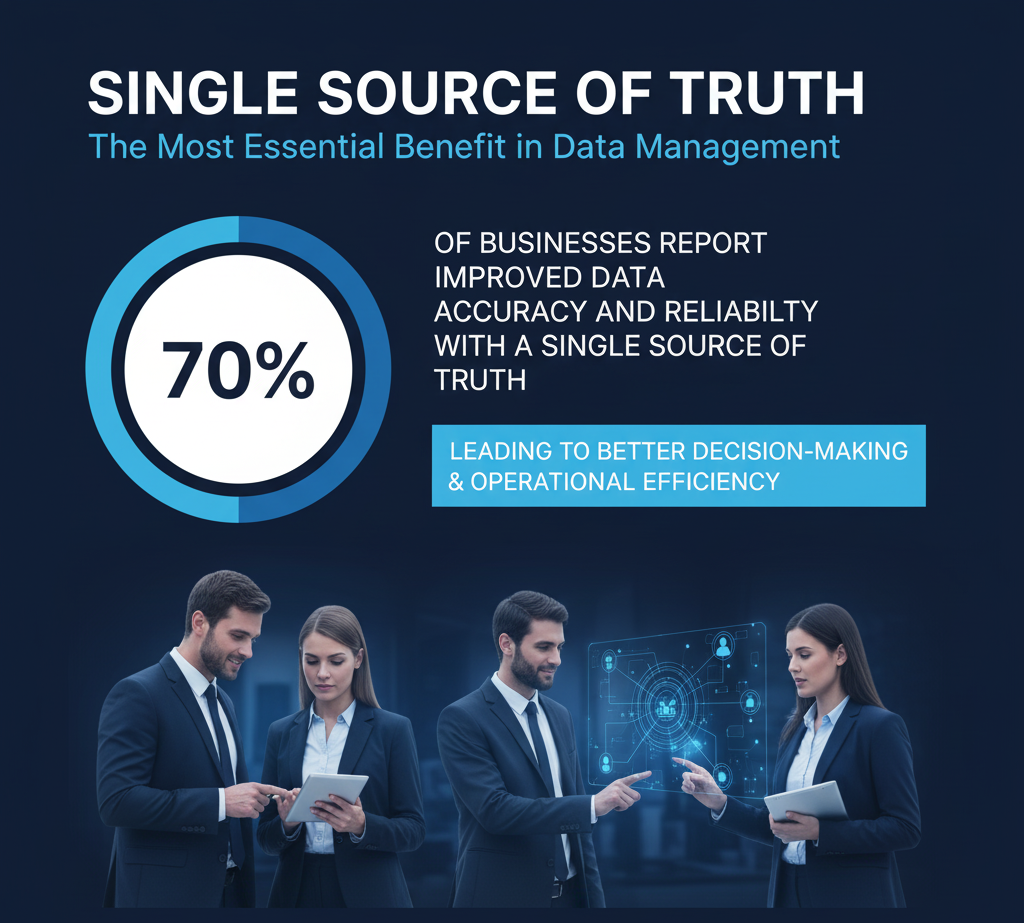
The most important benefit of master data management is the creation of a single source of truth to improve data quality.
Without an MDM solution, your organization is operating with multiple versions of reality.
Every department maintains its own customer database.
Product information differs between your e-commerce and inventory systems.
Businesses that implement MDM solutions see a 20% increase in data quality. This improvement is directly enhancing your decision-making accuracy.
A unified data view eliminates contradictions.
When marketing, sales, and your service teams access any identical customer record, coordination improves drastically.
Upselling opportunities become visible. Your brand’s customer experience becomes consistent.
Problem
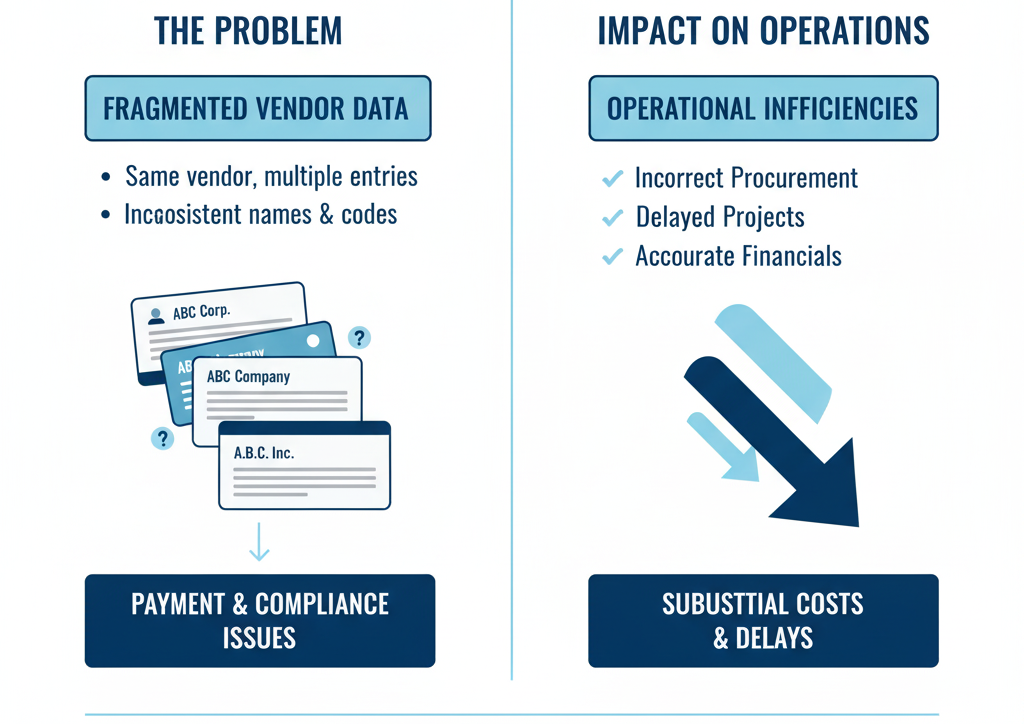
Chevron, one of the world’s largest energy companies, faced significant challenges with data inconsistencies across its global operations.
The company operated with multiple legacy systems across different business units and geographic regions, resulting in duplicate and conflicting master data for vendors, materials, and assets.
This fragmentation led to substantial operational inefficiencies, including incorrect procurement decisions, delayed project timelines, and difficulty in consolidating financial reports.
The lack of standardized data meant that the same vendor might be registered multiple times under different names and codes, causing payment errors and compliance issues.
Additionally, asset management was hampered by inconsistent equipment data, making it difficult to track maintenance schedules and optimize operational performance across refineries and production facilities.
Impact
Chevron implemented a comprehensive Master Data Management solution. This was the creation of a single, authoritative source of truth for critical business data across the enterprise.
The MDM platform standardized and consolidated vendor master data, material master data, and asset information, establishing consistent data governance processes and quality rules.
Chevron significantly reduced duplicate vendor records, eliminated procurement errors, and improved spend visibility across the organization.
They achieved better compliance with regulatory requirements, faster invoice processing, and accurate financial reporting.
The standardized asset data enabled more effective maintenance planning and improved operational efficiency across their facilities. The MDM implementation ultimately contributed to cost savings and reduced operational risks.
The following table shows you how a technical implementation framework for MDM looks.
Enhanced data quality towards cost savings

Data quality directly impacts business outcomes through data analytics.
Poor quality data creates cascading failures. This means that orders get shipped to wrong addresses. Invoices contain incorrect prices, and marketing campaigns target invalid emails.
With enhanced data quality, the benefits of master MDM master data management include automated data cleansing.
Here, your MDM solution identifies duplicates, validates information, and standardizes data formats.
MDM solutions apply business rules consistently across all data sets.
Data quality improvement delivers several quantifiable results. Poor quality data impacts about 10% of IT-related initiatives.
On the flipside, high-quality data due to MDM implementation, amplify every technology-related data investment.
Problem
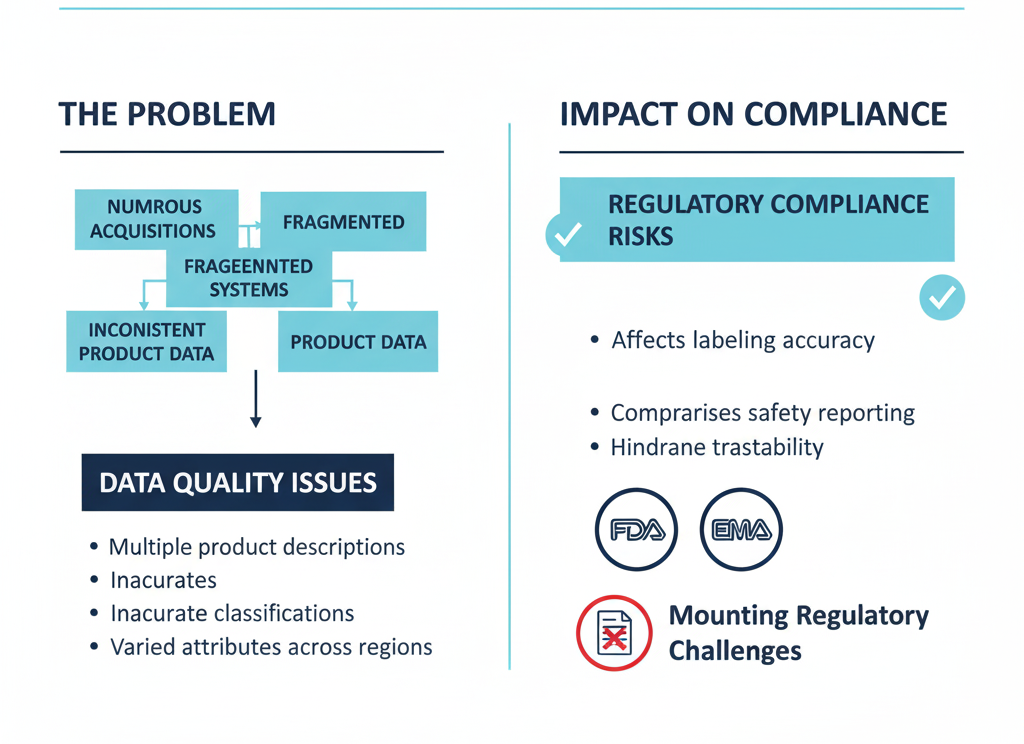
Bayer struggled with significant data quality issues across its worldwide operations spanning over 100 countries.
They had accumulated data from numerous acquisitions and mergers, resulting in fragmented systems with inconsistent product information, customer data, and supplier records.
Data quality problems included the same pharmaceutical product could have multiple descriptions, classifications, and attributes across different regions and business units.
This led to regulatory compliance risks, as inaccurate product information could affect labeling, safety reporting, and traceability requirements.
The poor data quality also impacted customer service, with sales representatives unable to access accurate and complete customer information. This resulted in missed opportunities and decreased customer satisfaction.
Financial reporting was compromised by unreliable data, making it difficult for leadership to make informed strategic decisions.
What if there is an AI agent that could help you generate good quality data, in your requested format in minutes?
Impact
Bayer implemented a Master Data Management solution to establish enterprise-wide data governance and improve data quality across all business functions.
The MDM solution leveraged advanced master data management tools to standardize data models, validation rules, and automated quality checks that ensured consistency and accuracy of master data at the point of entry.
The solution included data workflows that assigned clear ownership and accountability for data quality across different domains and material master data.
Bayer achieved a significant improvement in data accuracy rates, with product data completeness increasing from approximately 60% to over 95%.
The enhanced data quality enabled better regulatory compliance, reduced the time required for product launches, and improved supply chain efficiency.
Customer-facing teams gained access to reliable, 360-degree customer views, leading to improved customer relationships and sales effectiveness.
The company also realized substantial cost savings by eliminating redundant data management efforts and reducing errors in procurement and financial processes.
There’s a MDM solution that delivers top-notch data quality thanks to its AI agent called QualityAI. Schedule a quick demo with us to see the data quality agent in effect.
Regulatory compliance automation to mitigate risks

Regulatory requirements demand auditable and accurate data.
- GDPR mandates data accuracy and customer rights.
- SOX requires financial data integrity.
- HIPAA enforces patient information protection.
- Base III sets strict data governance standards.
The benefits of centralized master data management extends to data compliance automation.
MDM systems maintain data lineage. They track every data change with a timestamp and user attribution. This enforces retention policies automatically.
Non-compliance carries severe penalties. GDPR fines reach Euros 20 million, which is 4% of the global revenue.
Centralized MDM solutions create compliance frameworks. It ensures data residency requirements are met. It facilitates right-to-be-forgotten requests. It maintains audit trails for regulatory inspections.
Problem
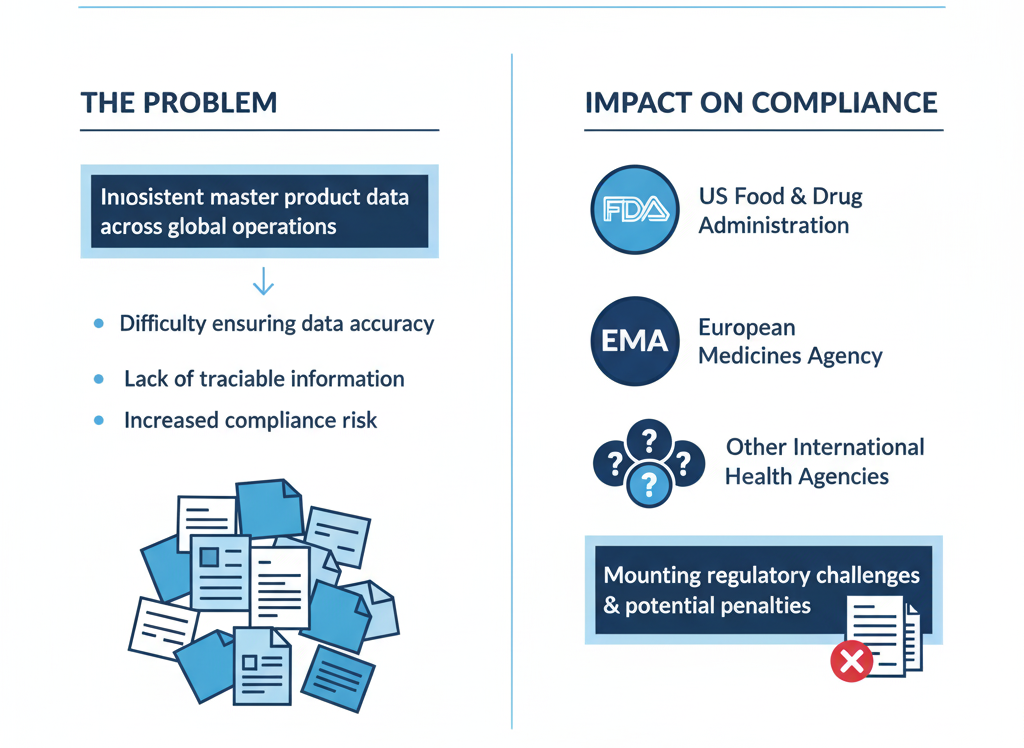
Johnson & Johnson faced mounting regulatory compliance challenges due to inconsistent master data across its global operations.
The company struggled to maintain accurate and traceable product information required by regulatory authorities such as the FDA, EMA, and other international health agencies.
Each business unit maintained separate systems with varying data standards, making it extremely difficult to produce unified reports for regulatory submissions or respond quickly to adverse event reporting requirements.
The lack of standardized supplier and ingredient data created risks around supply chain transparency and traceability.
Inconsistent customer and healthcare provider data also complicated compliance with healthcare regulations like the Sunshine Act and anti-bribery laws, potentially exposing the company to significant fines and reputational damage.
Impact
Johnson & Johnson implemented a MDM solution to create a single source of truth for regulatory-critical data across the enterprise.
The MDM solution established standardized data governance frameworks with clearly defined data ownership, quality rules, and audit trails for all changes to master data.
The solution integrated product hierarchies, ingredient information, supplier data, and customer records into unified.
With the MDM system in place, Johnson & Johnson achieved full traceability of products from raw materials through manufacturing to distribution, enabling rapid responses to regulatory inquiries and adverse event investigations.
The company significantly reduced the time required to prepare regulatory submissions, improved the accuracy of safety reporting, and enhanced their ability to demonstrate compliance during regulatory audits.
Overall, the MDM solution not only mitigated regulatory risks but also accelerated time-to-market for new products by streamlining the data required for regulatory approvals.
Here’s a compliance benefits table for you which tells you which regulations can be controlled by MDM.
Operational efficiency that removes redundant data
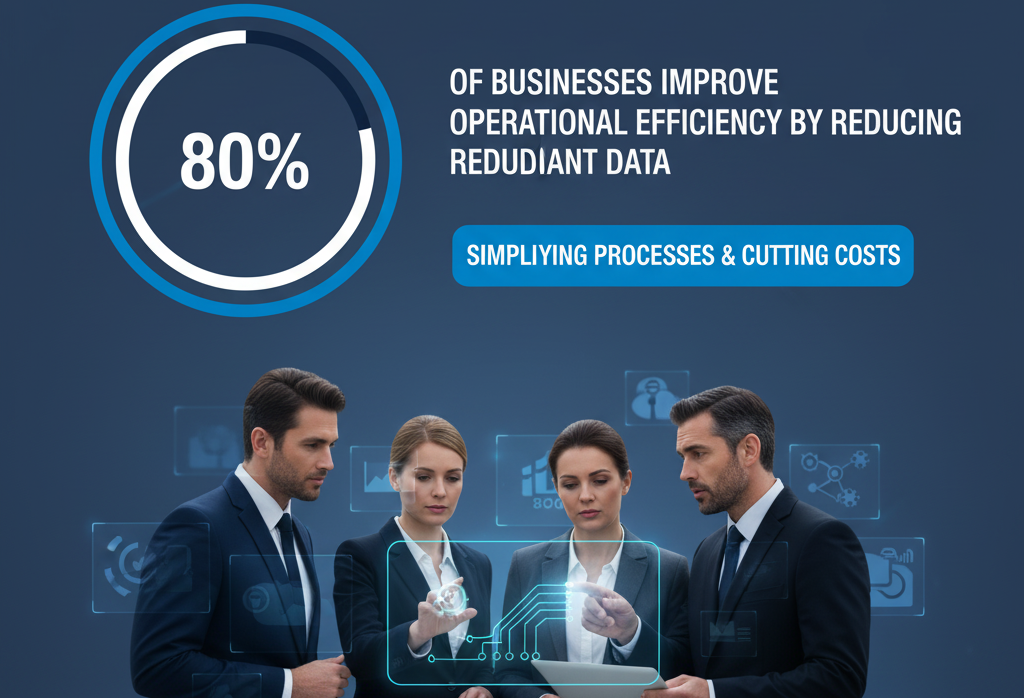
Operational efficiency from poor data quality drains your resources.
Employees spend close to 27% of their time correcting bad data. This represents massive productivity loss.
The advantages of master data management include workflow automation. When data quality improves, processes run smoothly. Orders process without manual intervention.
Reconciliation happens automatically. Reports are generated without manual errors.
MDM eliminates redundant data entry. Sales reps enter customer information once. That data flows to the CRM, then ERP, billing, and support systems automatically. Updates propagate everywhere instantly.
Problem
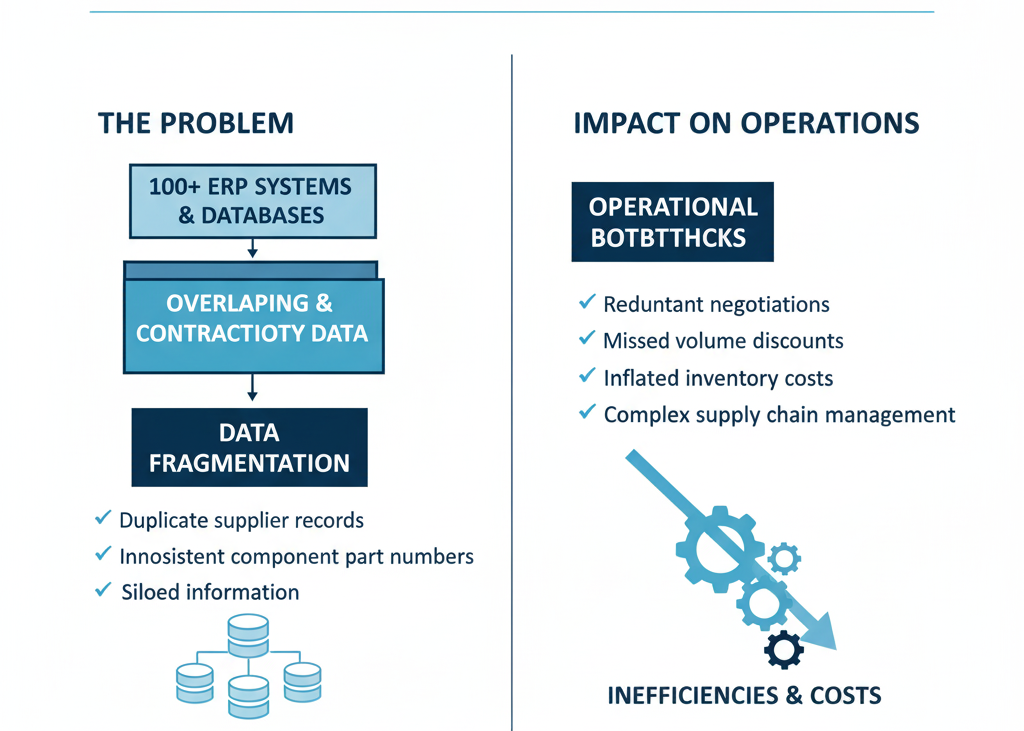
Siemens faced severe operational inefficiencies due to fragmented master data across its diverse business.
Siemens operated with more than 100 different ERP systems and countless databases, each containing overlapping and often contradictory master data.
This data fragmentation resulted in significant operational bottlenecks such as, the procurement teams struggled with duplicate supplier records causing redundant negotiations and missed volume discounts.
The lack of a master data meant that the same component might be ordered under dozens of different part numbers across various facilities, inflating inventory costs and complicating supply chain management.
Service technicians in the field often couldn’t access accurate equipment data, leading to longer repair times and decreased customer satisfaction. Now imagine, if you can process and trigger the entire workflow for generating data from a singular master data.
Impact
Siemens implemented an MDM solution to consolidate critical business data across the enterprise, creating a ‘single version of the truth’.
The MDM platform reduced hundreds of thousands of duplicate vendor records and enabled centralized procurement strategies that leveraged the company’s massive buying power.
Material master data standardization allowed engineers to search and reuse existing parts across business units, significantly reducing the number of unique part numbers from over 30 million to a more manageable set.
The solution streamlined product data management, accelerating time-to-market for new products by eliminating redundant data entry and ensuring consistent information flow from engineering through manufacturing to sales.
Customer master data consolidation provided sales teams with comprehensive customer insights across all Siemens divisions. This improved customer experience and enabled more effective cross-selling.
The improved data quality and accessibility resulted in procurement savings exceeding hundreds of millions of euros annually.
Efficient Decision Making With a Singular View
Strategic decisions require accurate and complete data.
Executives need trusted information for taking the right decisions in real time.
Data managers require reliable metrics for data optimization. Data analysts need quality data for insights.
The benefits of master data management towards decision-making are,
- Consistent financial data for performance tracking
- Reliable supplier information for risk assessment
- Accurate product data for portfolio analysis
- Complete customer views for segmentation
Decision speed improves with MDM. When executives such as yourself trust the data, you act faster.
Strategy adjustments happen in days, not months. Market opportunities get captured before competitors respond.
Problem
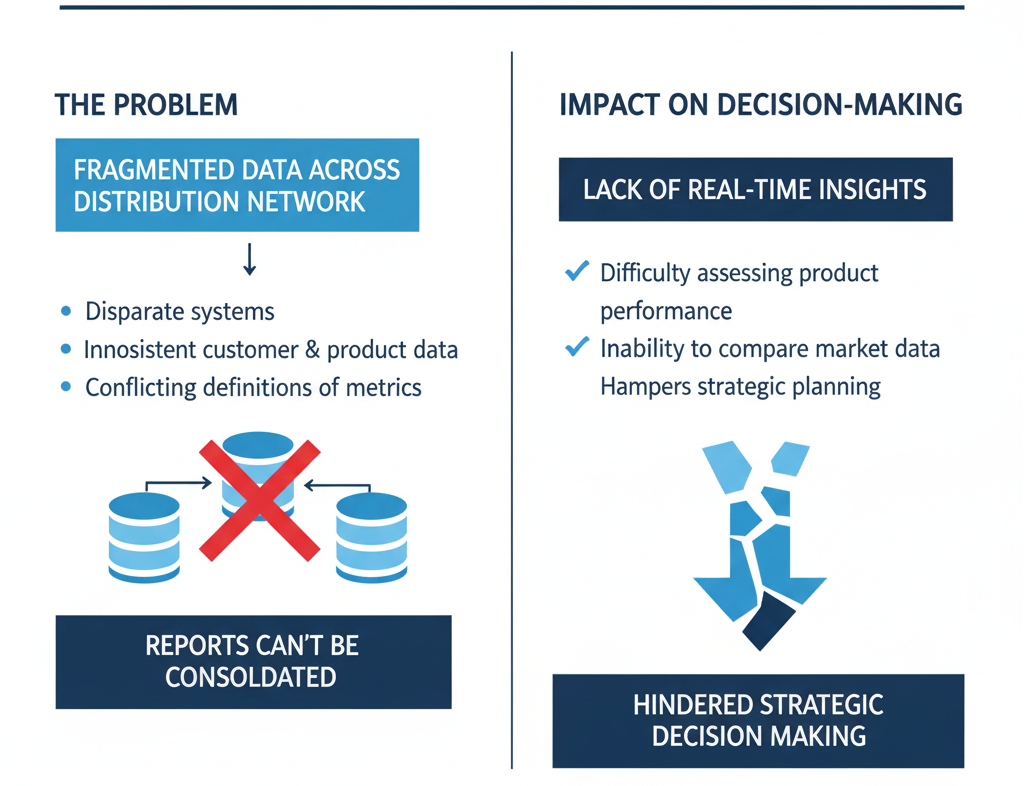
Coca-Cola Enterprises struggled with fragmented data across its extensive distribution network.
The company operated with disparate systems containing inconsistent customer data, product information, and sales records, making it nearly impossible for executives and managers to gain accurate, real-time insights into business performance.
Regional teams maintained separate databases with conflicting definitions of key metrics such as customer classifications.
This resulted in reports that couldn’t be meaningfully compared or consolidated.
This data inconsistency severely hampered strategic decision-making: leadership couldn’t accurately assess which products were performing well across different markets.
Financial planning was compromised by unreliable revenue forecasts based on inconsistent data.
The inability to aggregate data across the enterprise prevented executives from identifying trends or potential problems until they became critical issues.
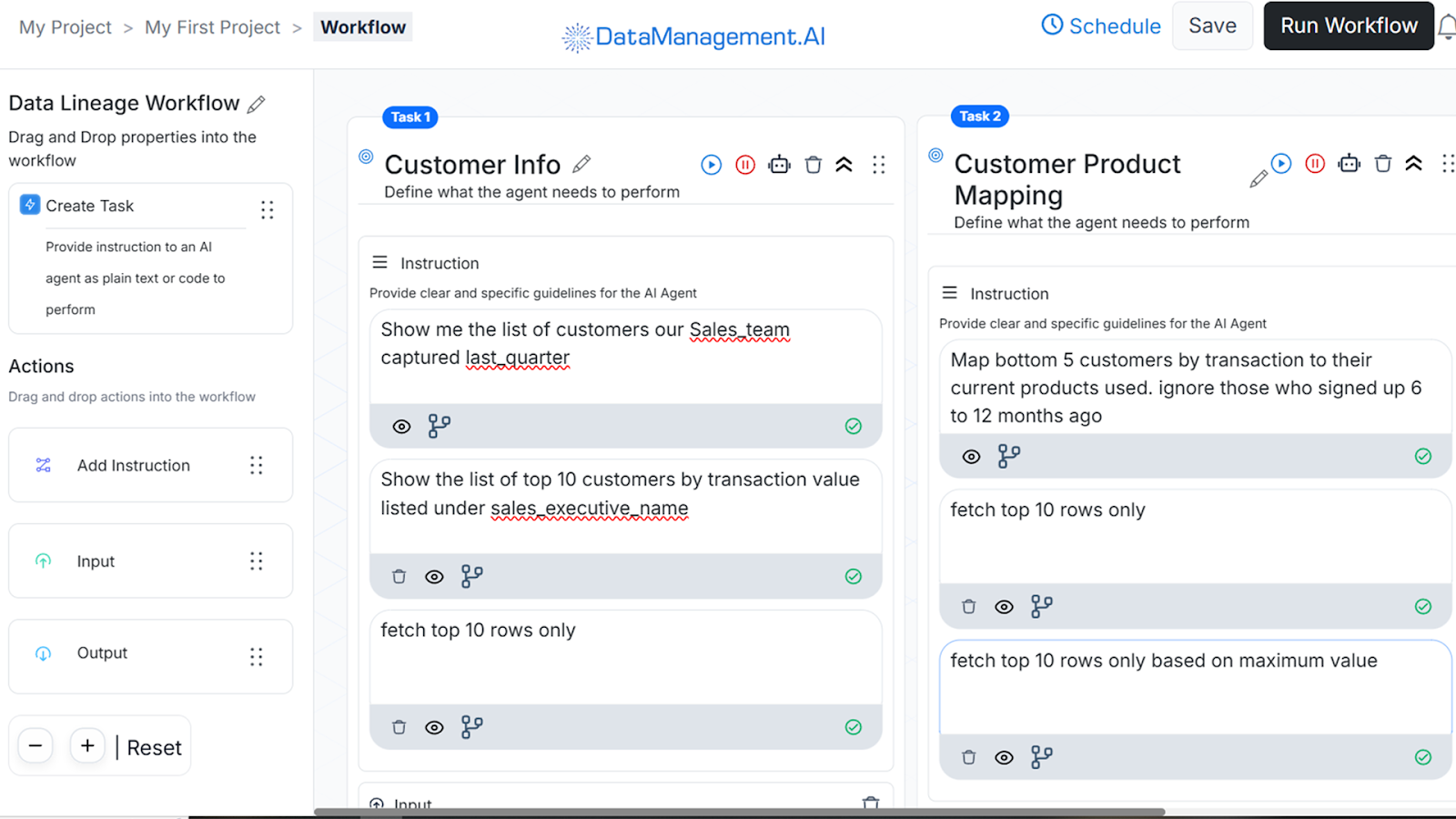
The image below depicts how AI agents can help you download quick reports from your master data repository.
Impact
Coca-Cola Enterprises implemented a MDM solution to create a unified, trusted data foundation that would enable data-driven decision-making at all organizational levels.
The MDM platform standardized customer master data, product hierarchies, and organizational structures across all markets.
This created a single source of truth that powered enterprise-wide analytics and business intelligence tools, giving executives real-time visibility into key performance indicators across the entire organization.
With reliable, consolidated data, leadership could now make informed strategic decisions about product portfolio optimization.
Sales and marketing teams gained powerful insights into customer behavior patterns, enabling targeted campaigns and personalized customer engagement strategies that improved market share and customer loyalty.
The standardized data enabled predictive analytics capabilities that improved demand forecasting accuracy, optimized inventory management, and reduced waste.
Finance teams could generate accurate consolidated reports quickly, supporting faster month-end closings and more confident financial planning.
Overall, the MDM solution transformed Coca-Cola Enterprises from a data-challenged organization into a data-driven enterprise where decisions at every level were supported by accurate, timely, and trustworthy information.
Customer experience excellence through personalized service
Good customer experience depends on your data’s accuracy.
Customers expect personalized service. They want consistent experiences across channels.
They demand that you remember their preferences.
The business value of master data management manifests clearly in customer interactions. A unified customer record enables,
- Seamless omnichannel experiences
- Proactive service based on complete history
- Personalized product recommendations
- Consistent pricing across channels
Customer lifetime value increases with better experiences. When companies show they care and know their customers, loyalty deepens. MDM makes this virtue possible at scale.
Here’s a good read from LinkedIn about plugging the wastage in marketing data spend to rather invest in customer experience.
Problem
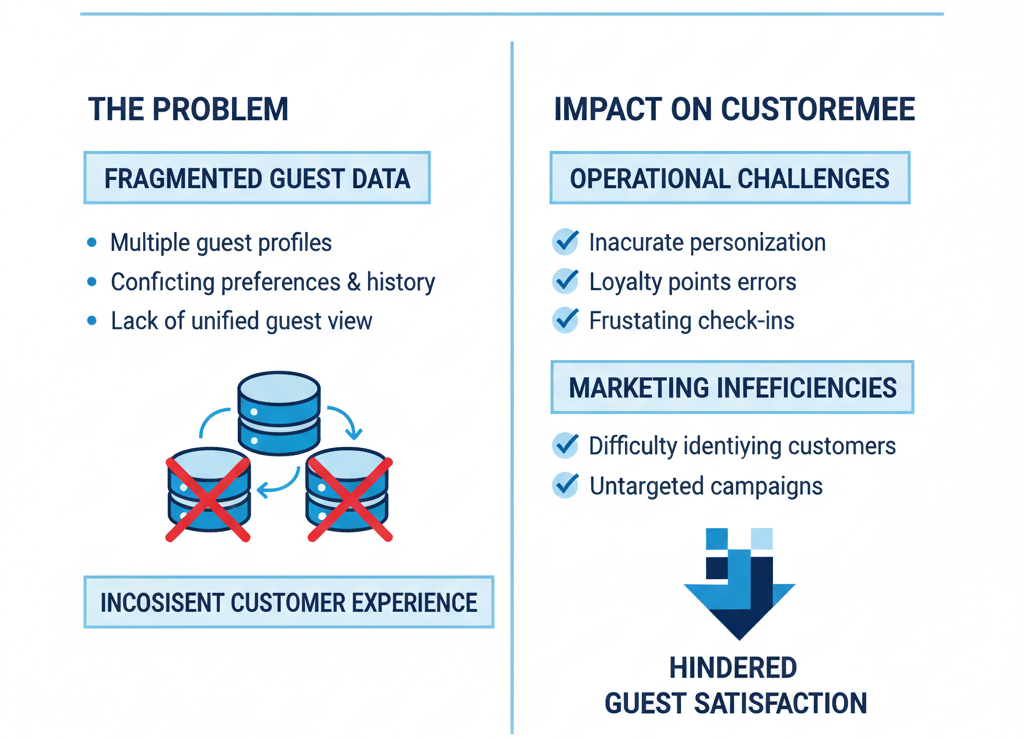
Marriott International faced significant customer experience challenges due to fragmented guest data across its diverse portfolio.
Following major acquisitions including Starwood Hotels & Resorts, Marriott operated with multiple legacy systems containing inconsistent and duplicate customer records.
Guests had multiple profiles across different hotel brands with conflicting preferences, loyalty status, and booking histories. This resulted in frustrating experiences where VIP customers weren’t recognized at check-in, room preferences were ignored, or loyalty points weren’t properly credited.
Front desk staff and customer service representatives lacked a unified view of guest relationships, unable to see a customer’s complete history across Marriott’s brand portfolio.
Marketing teams struggled to execute targeted campaigns because they couldn’t accurately identify unique customers or understand their true value and preferences across brands.
The fragmented data also prevented Marriott from offering seamless experiences when guests traveled between properties or stayed at different brands within the portfolio.
Impact
Marriott’s MDM solution to create unified guest profiles that would enable exceptional customer experiences across all touchpoints and brands.
The MDM platform employed sophisticated matching algorithms and data integration capabilities to consolidate millions of guest records from legacy Marriott and Starwood systems.
This unified customer view enabled Marriott staff at any property worldwide to instantly access a guest’s preferences, loyalty tier, special requests, previous stays, and interaction history across all brands.
When a Bonvoy loyalty member checked into a Ritz-Carlton after previously staying at a Courtyard, staff could greet them by name, prepare their preferred room type, and acknowledge their loyalty status seamlessly.
The integrated data powered Marriott’s mobile app and digital platforms, enabling features like mobile check-in, room selection, and digital key access with consistent experiences across properties.
The MDM solution enabled Marriott to successfully unify the Marriott Rewards and Starwood Preferred Guest programs into the single Marriott Bonvoy loyalty program. This seamlessly migrated over 100 million member accounts and created one of the world’s largest and most valuable hotel loyalty programs.
The improved customer experience directly contributed to increased loyalty program engagement, higher direct booking rates, and stronger customer lifetime value.
This gave Marriott a competitive advantage in the hospitality industry where personalized guest experiences drive brand preference and pricing power.
Cost reduction to save millions
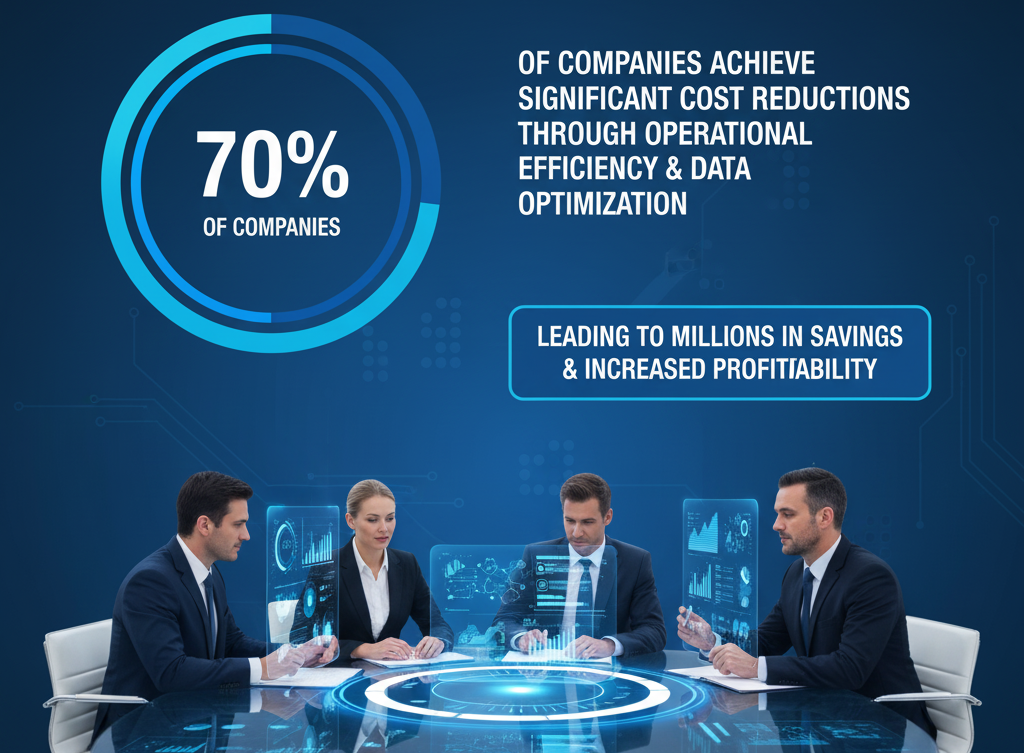
Poor data quality generates hidden costs.
Duplicate vendor records lead to duplicate payment data. These incorrect product information in your system lead to lead data being inaccurate.
Invalid customer addresses for example will lead to failed deliveries. The benefits of master data management include substantial cost savings via,
- Accurate supplier data that prevents duplicate payments
- Clean customer data that reduces marketing waste
- Eliminated duplicate records that reduce processing and storage costs
- Quality product information that reduces product returns
If IT initiatives save your USD 21.7 million in labour productivity, then poor data quality costs USD 2.2 million off those savings. MDM protects these investments.
Problem
Procter & Gamble (P&G) faced substantial costs due to poor master data management across its global operations.
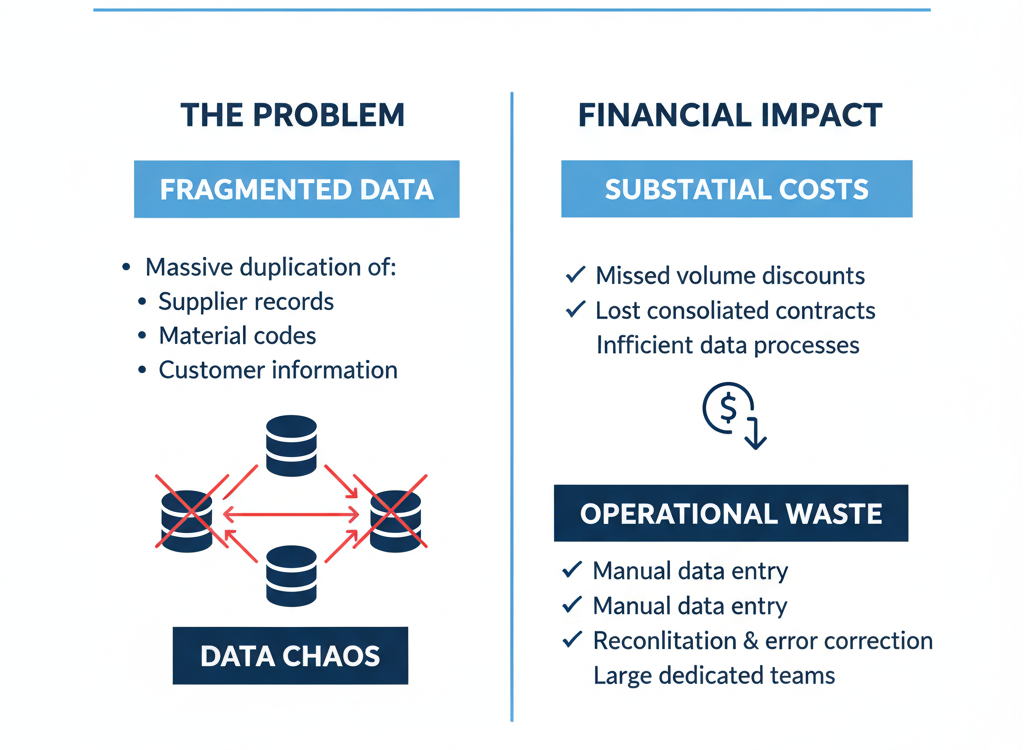
The company operated with fragmented systems across different regions and business units. This resulted in massive duplication of supplier records, material codes, and customer information.
This data chaos led to significant financial waste such as missing opportunities for volume discounts and consolidated contracts that could’ve saved millions.
Inefficient data processes required large teams dedicated to manual data entry, reconciliation, and error correction across systems.
The poor data quality also resulted in costly mistakes including duplicate payments to suppliers, incorrect shipments due to inaccurate customer address data, and product recalls.
Impact
P&G’s MDM solution standardized supplier master data, reducing tens of thousands of duplicate vendor records and enabling centralized procurement strategies that leveraged P&G’s massive global purchasing power to negotiate better prices and terms.
Material master data rationalization allowed the company to identify and eliminate redundant material codes which translated directly into lower procurement costs and reduced inventory complexity.
The solution automated data governance processes, reducing the manual effort required for data maintenance and freeing up hundreds of employees to focus on value-adding activities.
The improved data quality also reduced the costs associated with product recalls and supply chain disruptions, contributing to P&G’s goal of becoming a more efficient, agile organization.
Looking for a reliable Master Data Management solution?
DataManagement.ai is the one for you. The benefits of MDM master data management with DataManagement.AI are,
- Seamlessly integrate with every part of your data – from collection to insights.
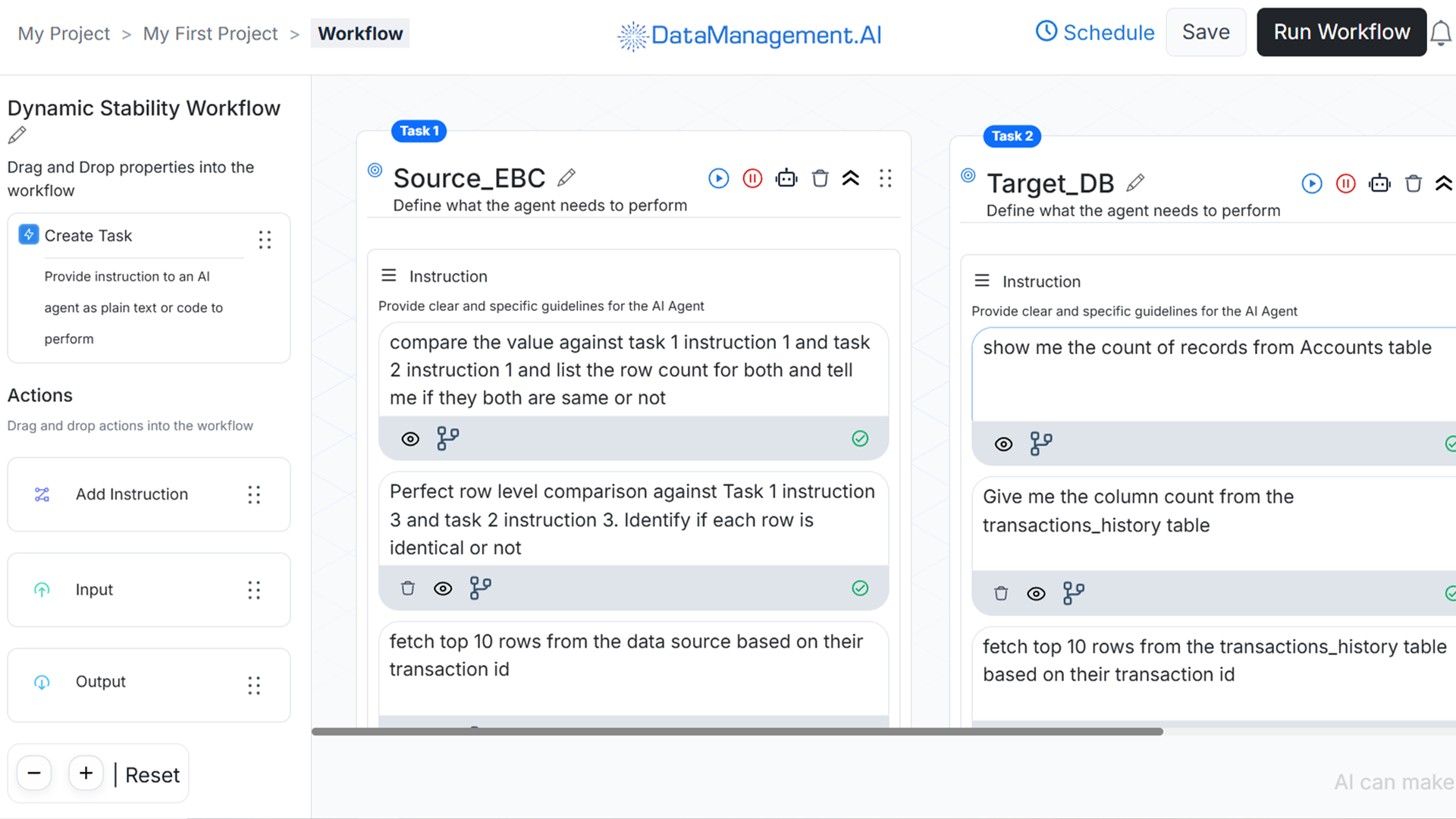
- Enable querying and analyzing of data in its source system with no extraction, prep or delays.
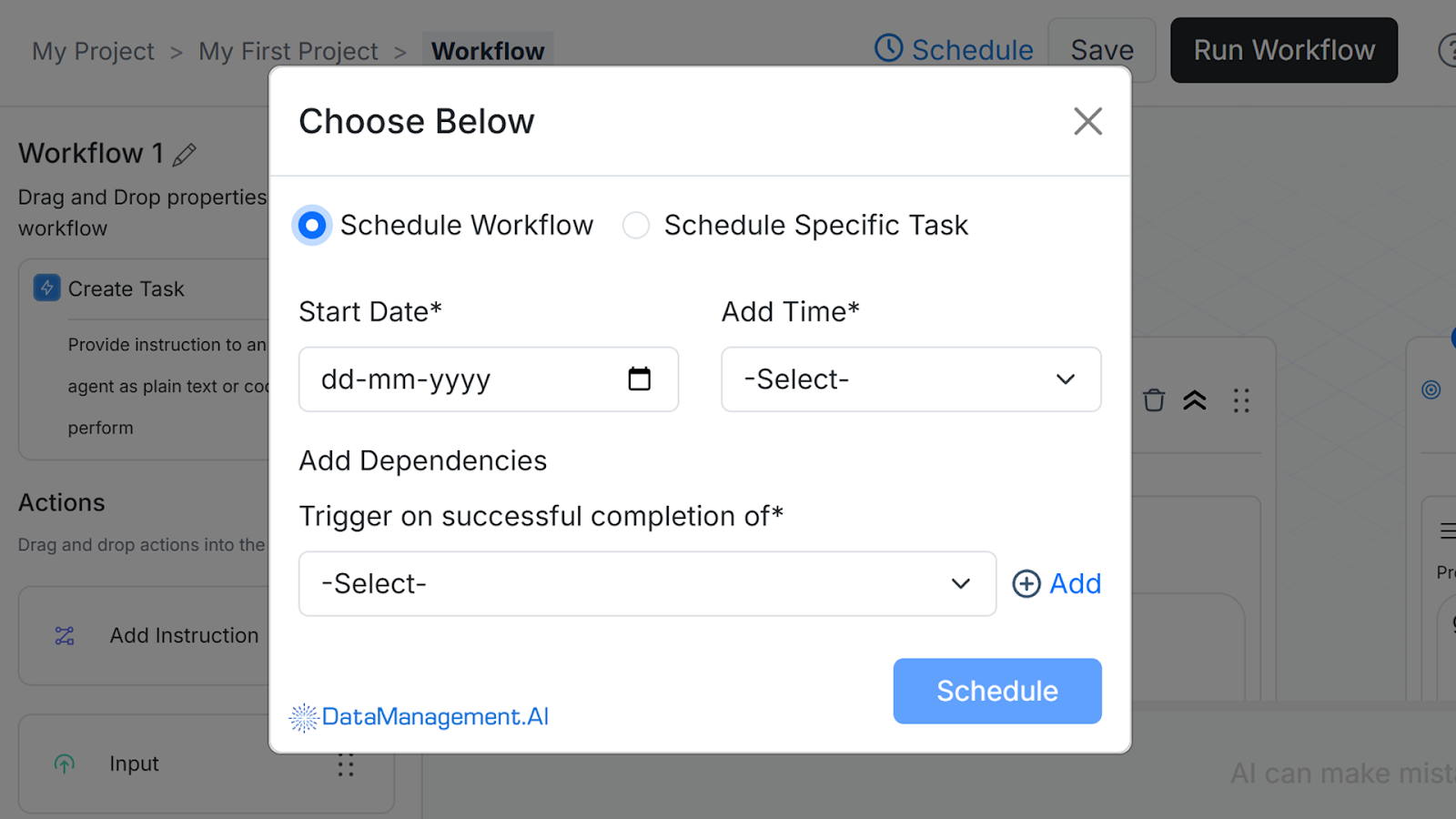
- Link every step of your data journey into one efficient data matrix.
- Deliver real-time data flow to help you adapt to trends and make informed decisions.
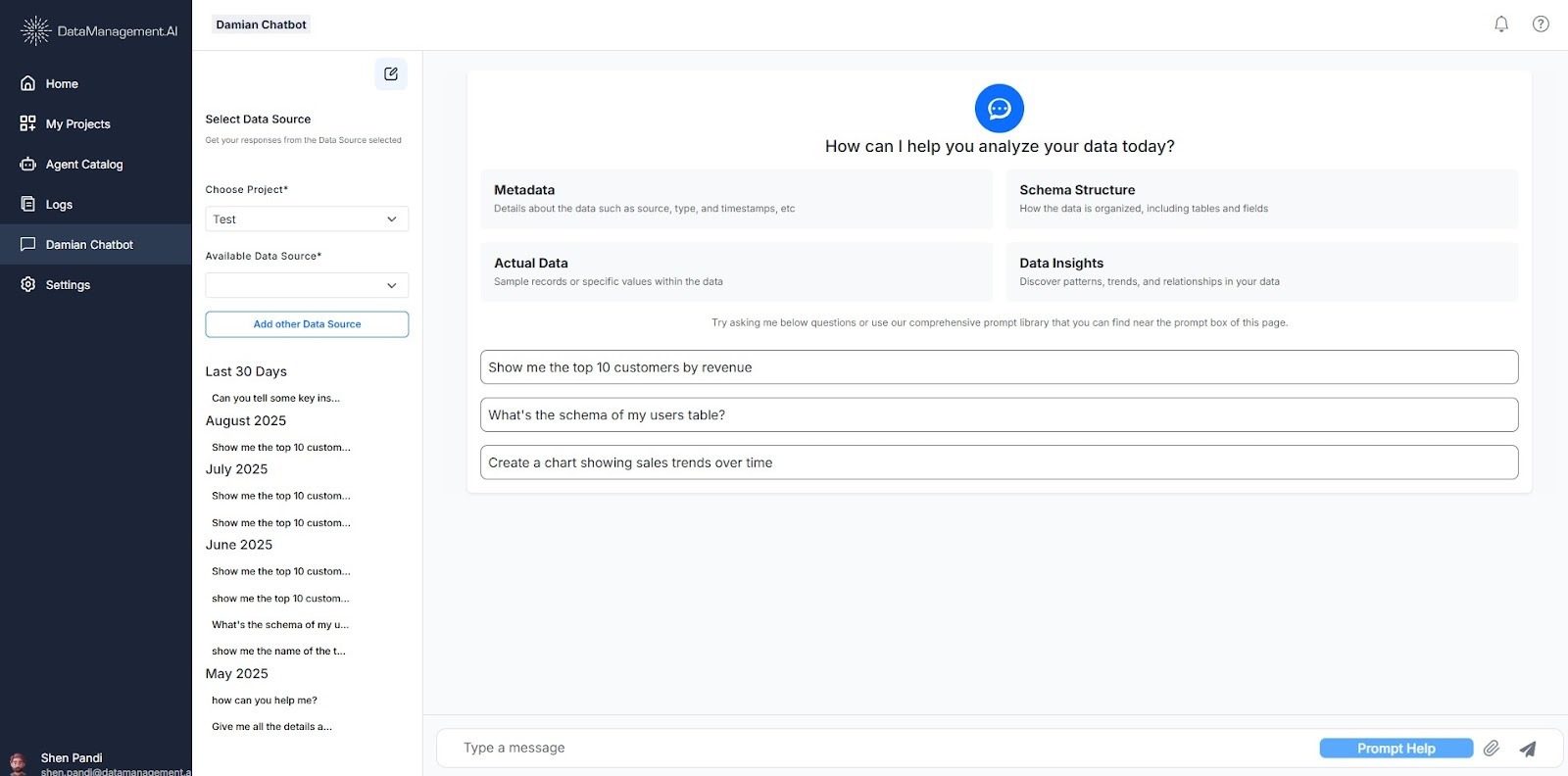
- Automate repeatable tasks with intelligent AI agents that detect and recover from failures when optimizing compute resources.
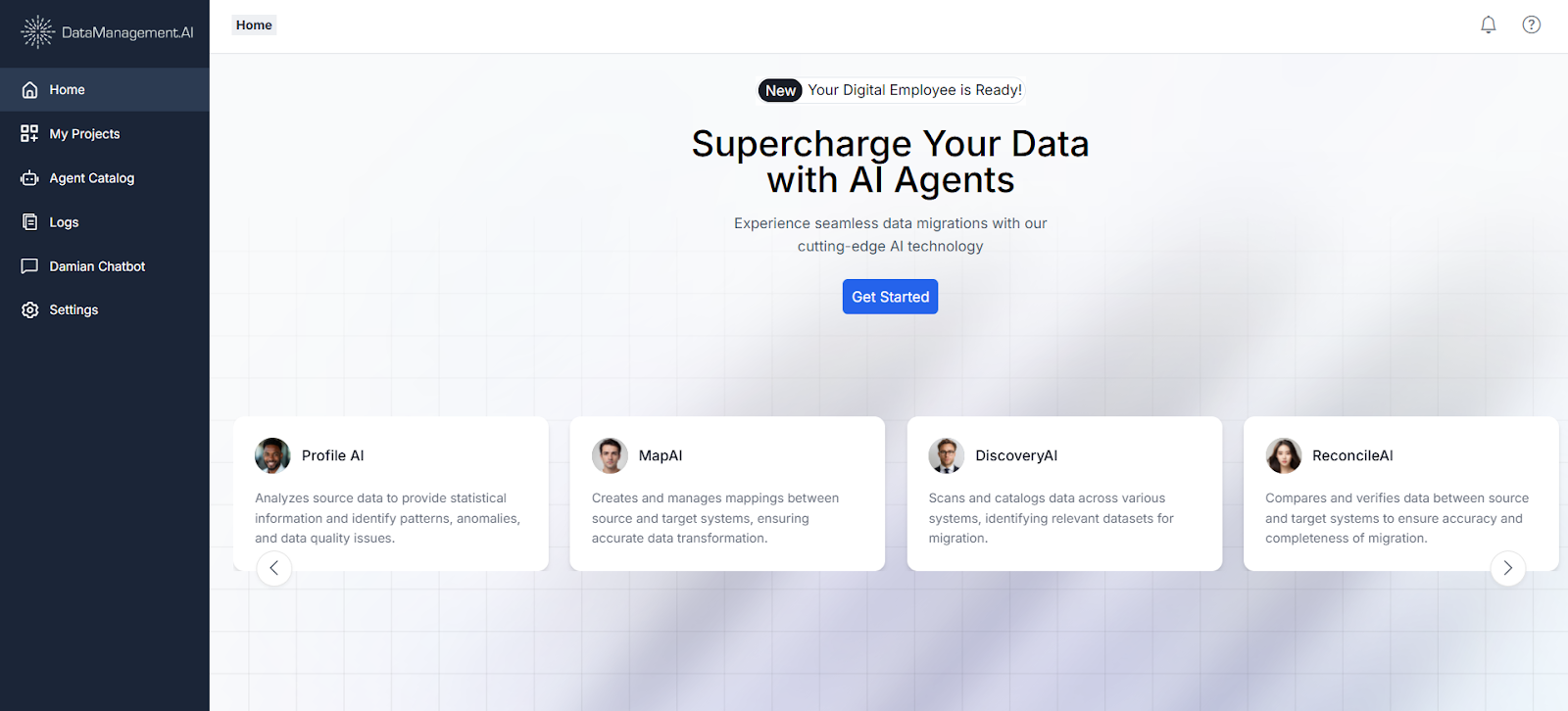
- Work with built-in governance via end-to-end lineage, audit logs, and compliance by design.

- Enable matching, mixing, or swapping data sources, platforms, and instructions while preserving total flexibility.
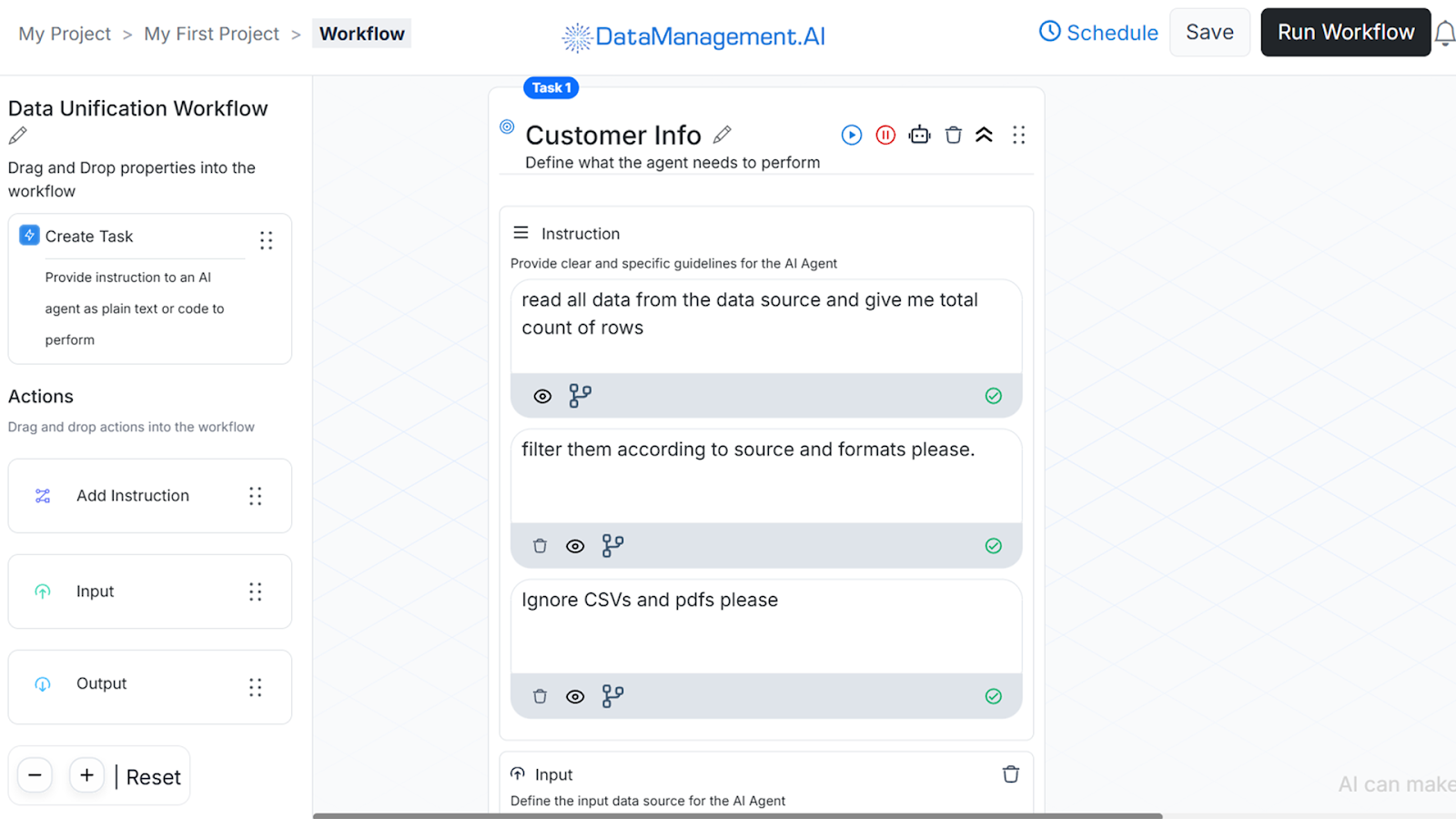
- Secure every request with granular policies, built-in compliance, and continuous authentication
- Design complex pipelines in minutes via a drag-and-drop Visual Canvas.
Schedule a quick demo with our MDM experts to get started.
Data integration that serves as a singular hub
Modern enterprises process dozens of applications. These applications could be related to ERP platforms, CRM systems, analytics solutions, marketing automation tools or custom applications that feed on data.
Data integration complexity grows exponentially with the introduction of newer systems.
MDM serves as an integration hub. Instead of point-to-point connections between every system, applications connect to the MDM platform.
This hub-and-spoke model reduces integration complexity by 70%.
The technical benefits of MDM towards data integration include,
- Consistent business rules enforcement
- Unified data validation
- Centralized transformation logic
- Standardized data formats across systems
Problem
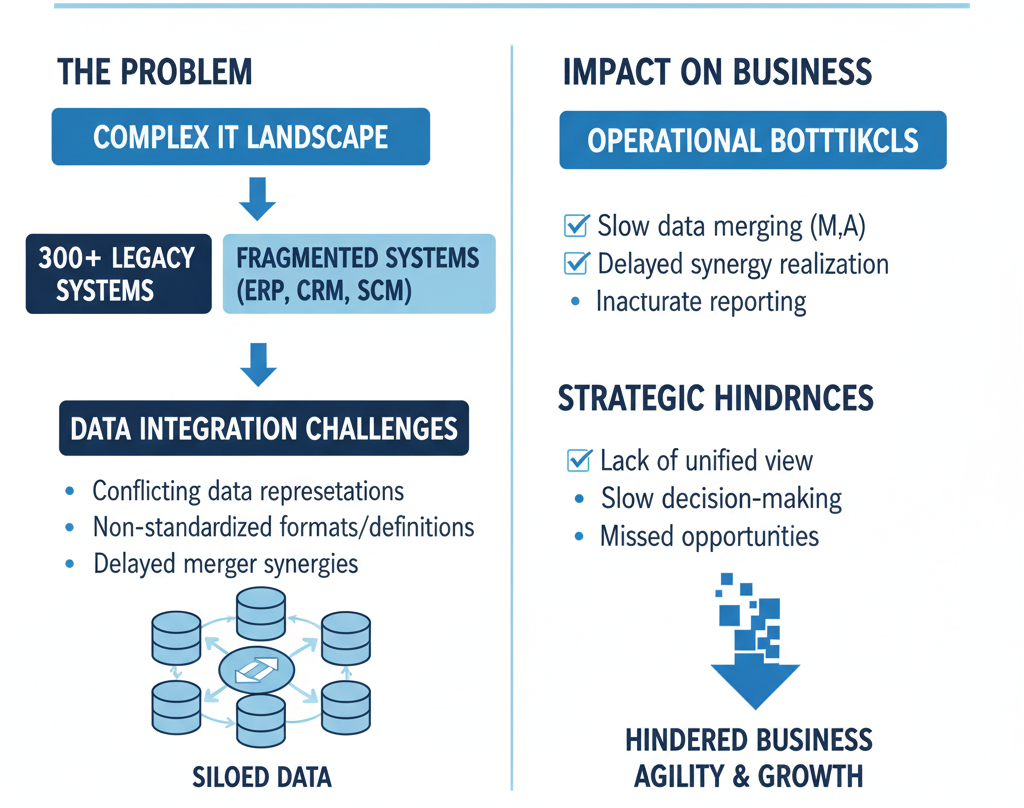
Unilever struggled with massive data integration challenges across its complex IT landscape spanning over 100 countries.
The company operated with more than 300 different legacy systems including multiple ERP platforms, CRM systems, and supply chain management tools.
This system fragmentation created a complex scenario where the same customer, supplier, or product were represented differently across various applications.
The lack of standardized data formats and definitions meant that merging data from acquired companies took months or even years, delaying the realization of merger synergies.
IT teams spent resources maintaining hundreds of custom integration scripts, and even simple changes to master data required updates across multiple systems, creating delays and error risks.
Impact
Unilever’s MDM solution acted like a central integration hub.
It distributed consistent master data across all enterprise systems. The MDM platform established a ‘golden record’ for each data entity.
This hub-and-spoke architecture replaced the complex web of point-to-point integrations with streamlined connections, dramatically reducing maintenance costs.
The solution provided real-time data synchronization that ensured the master data was created or updated in one system.
Unilever achieved seamless integration between previously siloed systems, enabling true end-to-end process visibility from procurement to customer delivery.
The standardized framework accelerated the onboarding of acquired companies, reducing integration timelines from years to months and allowing Unilever to realize cost synergies much faster.
The company reduced IT integration costs by approximately 40%, improved data accuracy across systems, and gained the agility to rapidly deploy new applications and technologies.
Are your data integration challenges overwhelming your team?
Our intelligent AI agents automate data integration, cleansing, and synchronization.
Schedule a demo to see how they can work for your systems.
Scalability spread across all operations
Business growth creates data complexity.
Acquisitions introduce newer systems. Market expansions require you to introduce data sources.
Product diversification multiplies data entities. Why master data management is important becomes evident during scaling.
Without MDM, growth creates chaos. Each acquisition brings incompatible data structures. Regional expansion fragments customer information. New product lines duplicate existing data.
MDM provides a scalable architecture. It absorbs new data sources without disrupting operations. It standardizes heterogeneous data automatically.
It maintains consistency across expanding operations. The following table shows you a hypothetical example of growth impact using MDM.
Problem
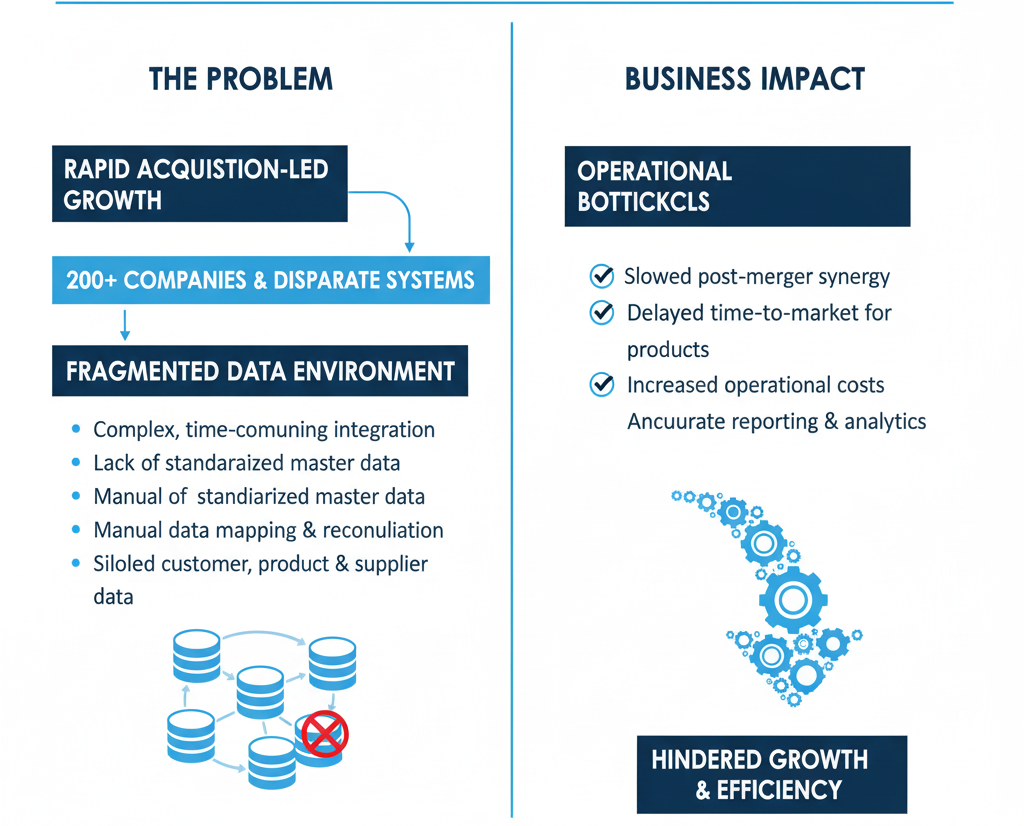
Schneider Electric had acquired more than 200 companies, each bringing its own systems, data standards, and business processes.
This created a fragmented data environment where integrating new acquisitions became increasingly complex and time-consuming.
The lack of standardized master data management meant that each new acquisition required custom data mapping and manual reconciliation of customer records, product catalogs, and supplier information.
Impact
Schneider Electric’s MDM solution established processes for all critical master data domains.
The platform featured automated data quality rules, matching algorithms, and integration workflows that reduced the time required to onboard acquired companies.
With standardized product master data, Schneider could rapidly expand its catalog as new products were developed or acquired, ensuring consistent product information across all sales channels and markets worldwide.
The MDM solution enabled the company to scale its digital services offering by providing clean, integrated data that powered IoT platforms and energy management solutions for customers.
As Schneider entered emerging markets, the flexible MDM framework allowed regional teams to quickly establish operations while maintaining global data standards and visibility.
The solution supported the company’s growth from approximately USD 15 billion to over USD 30 billion in revenue over a decade, enabling efficient expansion without proportional increases in operational complexity costs.
“Information is the oil of the 21st century, and data analytics is the combustion engine.”
— Peter Sondergaard, Gartner.
Analytics enablement for reliable validation
Artificial intelligence requires quality training data.
Analytics demand accurate input. Machine learning models fail with dirty data. Predictive algorithms produce poor results from poor input.
What are the benefits of master data management for analytics initiatives then?
MDM provides a foundation for advanced analytics by,
- Cleaning training data for machine learning
- Providing reliable ground truth for validation
- Building consistent features for predictive models
- Providing complete datasets for statistical analysis
The MDM market is growing at a CAGR of 15.76% through 2035. This is largely driven by AI and analytics requirements.
Problem
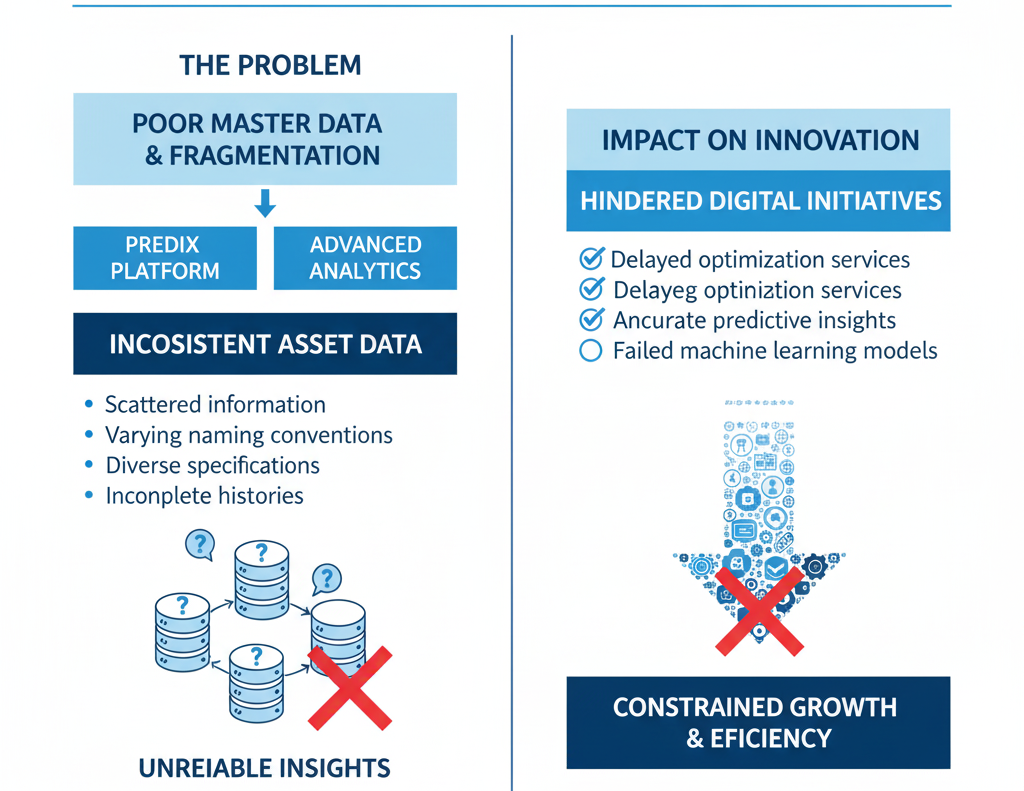
General Electric (GE) recognized that their ambitious digital and analytics transformation initiatives were being severely constrained by poor master data quality and fragmentation.
GE invested heavily in developing Predix, their Industrial Internet of Things (IoT) platform, and advanced analytics capabilities to deliver optimization services.
They discovered that inconsistent asset master data across their global operations was undermining these efforts.
Equipment and asset information was scattered across hundreds of systems with varying naming conventions, specifications, and maintenance histories.
This made it impossible to build reliable machine learning models or generate accurate predictive insights.
Data scientists spent an estimated 80% of their time on data collection, cleansing, and preparation rather than actual analysis and model development.
The fragmented data landscape also meant that insights generated in one business unit couldn’t be easily applied to others, limiting the scalability of analytics investments and preventing GE from realizing the full value of their digital transformation strategy.
Impact
GE’s MDM solution created a trusted data foundation that fueled their AI and analytics initiatives across the enterprise.
The solution incorporated automated data quality monitoring, enrichment capabilities, and governance workflows that maintained high data standards.
With reliable asset master data, GE’s Predix platform could now deliver accurate predictive maintenance recommendations by correlating equipment performance data with standardized asset attributes.
Machine learning models became significantly more accurate because they were trained on consistent, high-quality data, and could be deployed across multiple facilities and business units without extensive recalibration.
Data scientists’ productivity increased dramatically as the time spent on data preparation dropped from 80% to approximately 30% of their effort, allowing them to focus on generating insights and building innovative AI applications.
Going ahead of your competitors
Data quality differentiates your competitors.
Organizations with superior data capabilities respond quicker to market changes. They understand customers better. They optimize more effectively.
The value of master data management extends to competitive position. Companies with mature MDM tend to,
- Launch products faster with accurate market data
- Execute strategies with confidence in their data
- Optimize pricing with reliable competitive intelligence
- Respond to customer needs with complete insights
The global master data management market was estimated at USD 19.9 billion in 2023 and projected to reach USD 60.7 billion by 2030.
You as a leading organization need to invest in MDM because it delivers a competitive advantage.
Problem
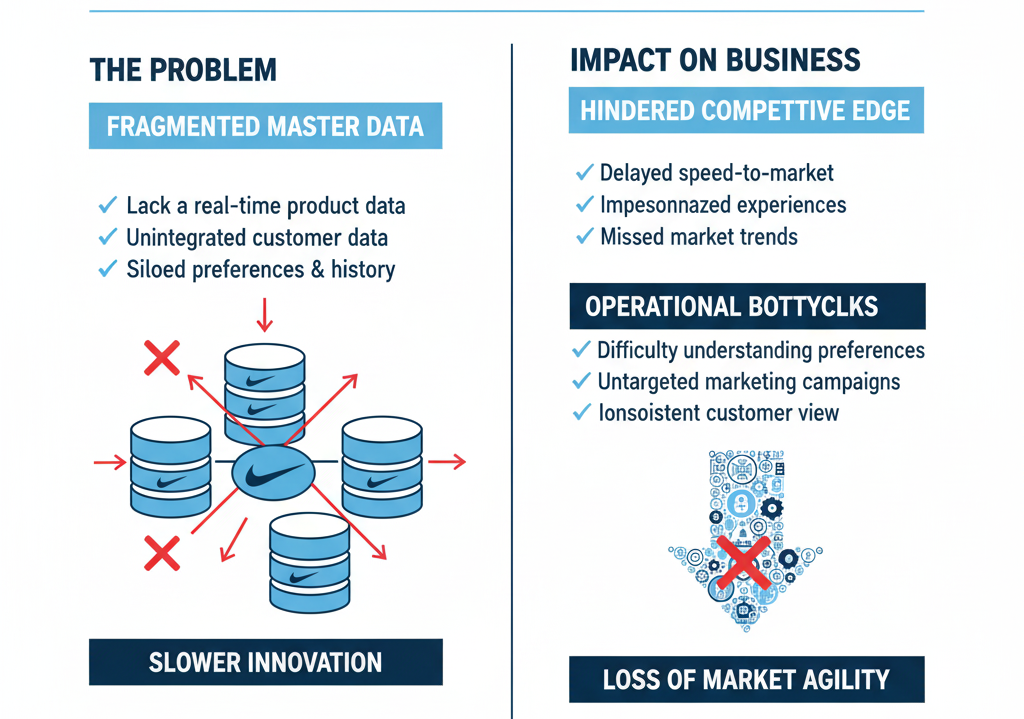
Nike needed to maintain its competitive edge in an increasingly digital and fast-paced retail environment where consumer expectations and market trends shifted rapidly.
Nike’s inability to maintain a unified, real-time product master data hindered their speed-to-market for new releases.
The lack of integrated customer data prevented Nike from delivering personalized experiences and understanding individual customer preferences across their digital apps, online store, and physical retail locations.
Product designers and merchandisers couldn’t easily access data on product performance, customer feedback, and market trends. This slowed down innovation cycles and limited their ability to respond quickly to emerging opportunities.
Supply chain data inconsistencies meant Nike couldn’t optimize inventory allocation across channels or implement sophisticated demand-sensing capabilities.
This resulted in stockouts of popular items while excess inventory of slow-moving products accumulated, directly impacting profitability and market responsiveness.
Impact
Nike’s MDM solution was built to deliver competitive advantage through superior digital experiences and operational agility.
The MDM platform created a unified product information management system that ensured consistent, enriched product data across all channels.
The solution enabled Nike to dramatically accelerate time-to-market for new products by streamlining the product data creation and distribution process.
This allowed Nike to capitalize on trending styles and cultural moments faster than competitors.
Nike delivered highly personalized shopping experiences, product recommendations, and content through their apps and website.
Supply chain optimization, powered by reliable master data, reduced inventory costs while improving product availability.
Nike’s digital sales grew from approximately 15% to over 40% of total revenue within several years, customer retention rates improved significantly, and the company strengthened its market leadership position.
The MDM-enabled data foundation allowed Nike to pivot quickly during market disruptions, launch innovative services like Nike Fit and personalized manufacturing.
Master Data Management Implementation is Imperative
It’s clear what are the benefits of master data management.
It goes beyond theoretical benefits. Organizations implementing MDM achieve measurable improvement in data quality, business outcomes, and operational efficiency.
The USd 12.9 million average annual cost of poor data quality is an opportunity lost.
Companies not addressing these data quality challenges fall behind competitors.
The business value of master data management compounds over time. Initial implementations deliver quick wins through better data quality. Long-term benefits include AI readiness, competitive advantage, and strategic quality.
Don’t let poor data quality cost your organization millions. Take the first step. Schedule a quick demo and get started.