




Engineering teams are generating more data than ever before. And it’s not good news!
Every product iteration, pipeline run, simulation, dashboard, and AI experiment leaves behind artifacts that need to be stored, shared, reused, and trusted. Thus, data doesn’t remain manageable anymore.
Now, the problem is that most organizations don’t notice the volume immediately, and as the fragmentation starts, the data starts living across tools, teams, and environments, which violates the ‘single source of truth’ policy.
Untrained AI models will only add to the chaos.
That is why teams are now raising the actual questions about control, traceability, and scale, which leads us to the conversation around Engineering Data Management.
What is Engineering Data Management?
EDM is the structured way organizations collect, organize, and operationalize the data created by engineering teams. This includes pipeline outputs, design artifacts, analytics datasets, and also AI-ready data.
An Engineering Data Management system ensures this data remains accurate, traceable, and usable as it moves across workflows and teams.
But you need to understand that EDM isn’t just a tool that you install or plug in. It works on three levels at once.
In terms of discipline, it defines how engineering data is ingested, versioned, validated, and shared, while providing the foundation for effective master data management tools to maintain consistent, trusted records across systems.
In the form of a system, it acts as the technical backbone that connects data sources, pipelines, and consumers.
Lastly, as a platform, modern Engineering Data Management software brings visibility, automation, and governance into one place, instead of spreading it across disconnected tools.
| Here’s an example that portrays how EDM works in three levels: Suppose a data engineering team is building a real-time analytics pipeline. As a discipline, EDM will define how raw data is ingested, how schema changes are handled, and how versions of transformed datasets are approved before use. As a system, it will connect streaming sources, transformation jobs, storage layers, and downstream dashboards so that data moves in a controlled and traceable way. And as a platform, the Engineering Data Management software will give the team a single view of pipeline health, data quality issues, ownership, and access. |
Thus, EDM is also about reducing friction for engineering teams, making onboarding new pipelines easier, understanding dependencies easier, and preventing data issues that may turn into production failures.
Core components of an Engineering Data Management System (EDMS)
An engineering data management system is only as strong as the foundations it’s built on. While tools and technologies may vary, effective EDM consistently relies on a few core components that work together to keep engineering data reliable, scalable, and easy to work with.
Let’s break them down, starting where every data journey begins.
Data Ingestion
Data ingestion is where everything begins, and ironically, where things usually start to go wrong without anyone noticing.
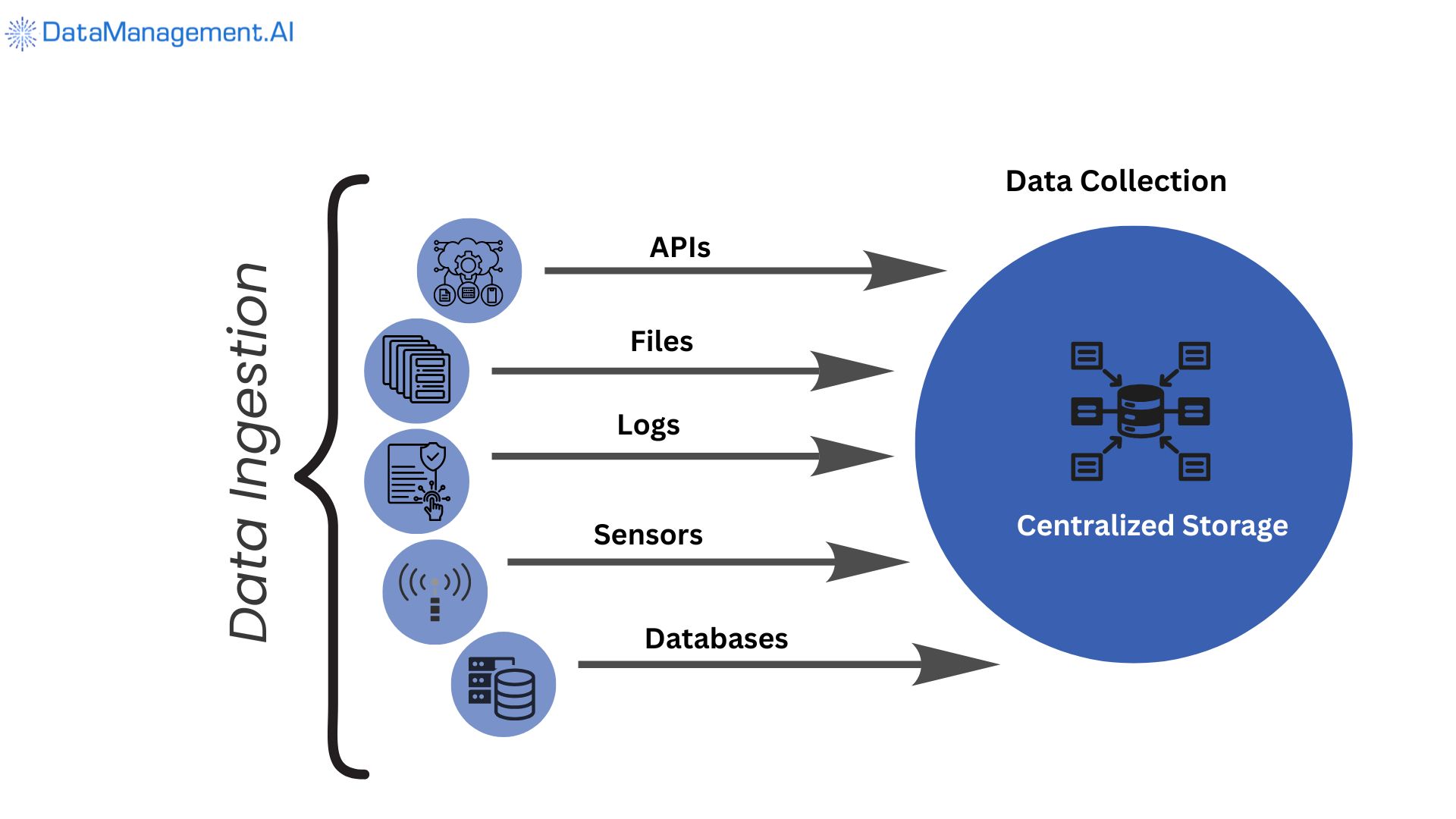
At a basic level, ingestion in data engineering is about pulling raw data from different sources and making it usable inside engineering systems. But in practice, data ingestion and engineering are less about “moving data” and more about setting the rules for how data enters your world.
There are two primary ingestion models.
Batch ingestion moves data at scheduled intervals, hourly, daily, or weekly, and is commonly used for analytics, reporting, and historical processing.
Streaming ingestion, on the other hand, captures data in near real time, enabling faster reactions, real-time analytics, and event-driven architectures.
| Let’s understand this with a simple example. Product usage logs might arrive in real time as users click around your app. That’s streaming ingestion data flowing continuously so teams can react instantly. On the other hand, finance or reporting data might arrive once a day in bulk, which is batch ingestion. |
Modern environments ingest data from everywhere, like APIs, databases, event streams, IoT devices, third-party tools, and even specialized sources like data ingestion reservoir engineering systems in industrial setups.
This is why ingestion sits at the heart of data engineering and information management. If ingestion lacks structure, everything downstream inherits that mess.
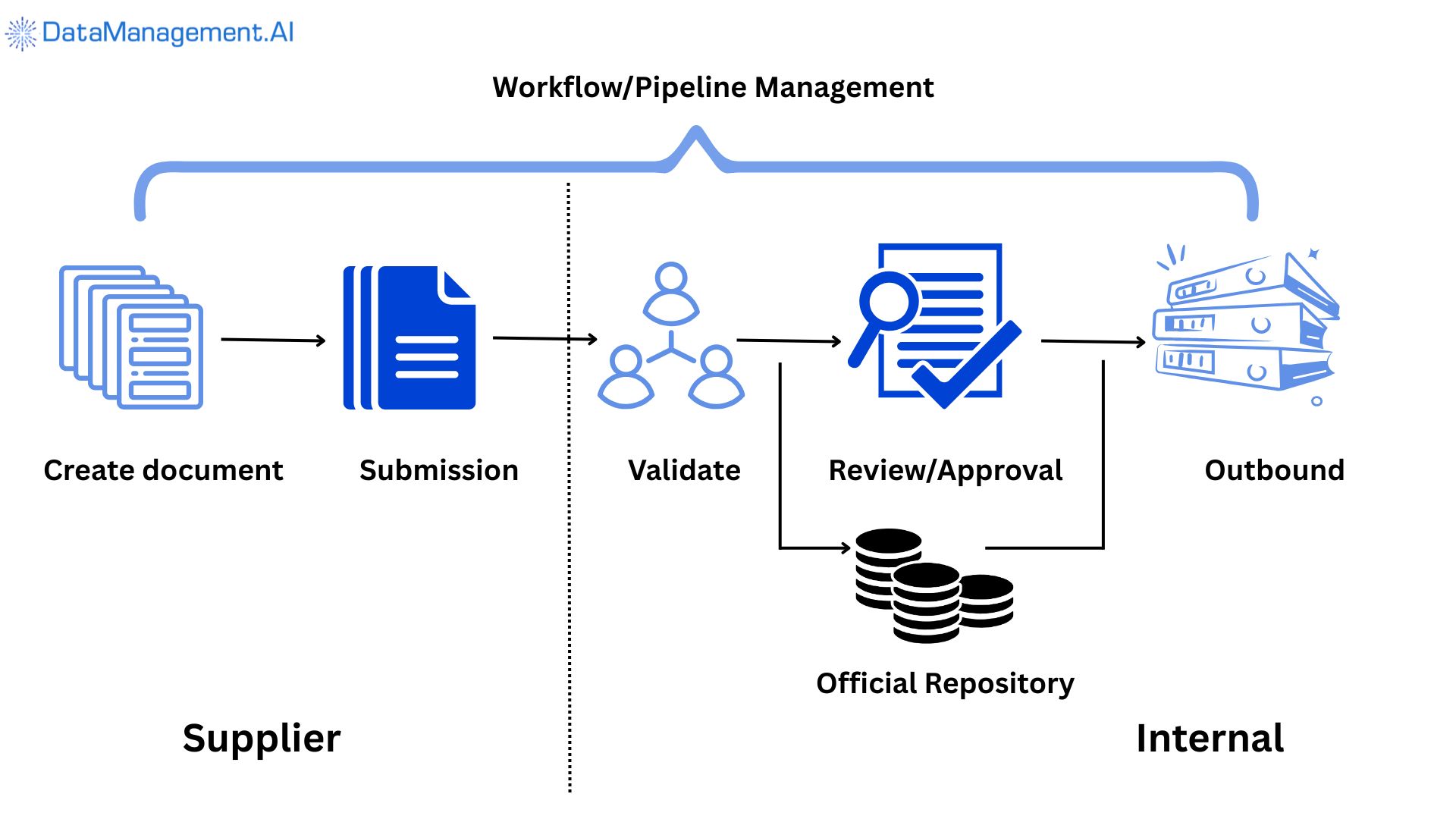
This is where DataManagement.AI adds value.
By automatically tracking ingestion sources, monitoring volumes, and surfacing unusual patterns early, teams can spot broken feeds or unexpected spikes before they impact pipelines.
The result is ingestion that feels boring in the best possible way because it just works, creating a stable foundation for the rest of the engineering data management.
Storage, versioning & traceability
Once data is ingested, the next challenge is keeping it usable over time.
Engineering data is constantly changing as pipelines are updated, schemas evolve, logic shifts, and models are retrained. One of the most important features of engineering data management is recognizing this constant change and designing systems that can keep up with it.
Versioning is critical here. Just like code, engineering data needs the ability to roll forward and backward, compare changes, and reproduce past states.
Without version control, teams struggle to answer basic questions like: “Which dataset powered this model?” or “Why did yesterday’s pipeline output differ from today’s?”
Traceability builds on versioning by creating a clear record of how data changes over time. This includes where data originated, how it was transformed, which pipelines touched it, and where it was ultimately consumed. This lineage is essential for debugging failures, validating results, and meeting audit or compliance requirements.
Storage alone doesn’t solve these problems. Object stores, data lakes, and warehouses can hold massive volumes of data, but they don’t inherently explain what the data represents or how it got there.
Thus, engineering data management layers intelligence on top of storage, often integrating directly with a workflow management platform for data engineering pipelines, so data, pipelines, and context stay connected. That’s what turns raw storage into something teams can actually trust and build on.
Workflow & pipeline management
Engineering data rarely moves in a straight line.
It flows through pipelines, transformations, validations, and dependencies that stretch across tools and teams. That’s why a workflow management platform for data engineering pipelines is a core part of any engineering data management system.
DataManagement.AI does that by fitting naturally into the workflow layer.
By integrating diverse data sources into a unified engineering data management environment, teams can manage ingestion, transformations, and downstream consumption without stitching together custom logic for every new source.
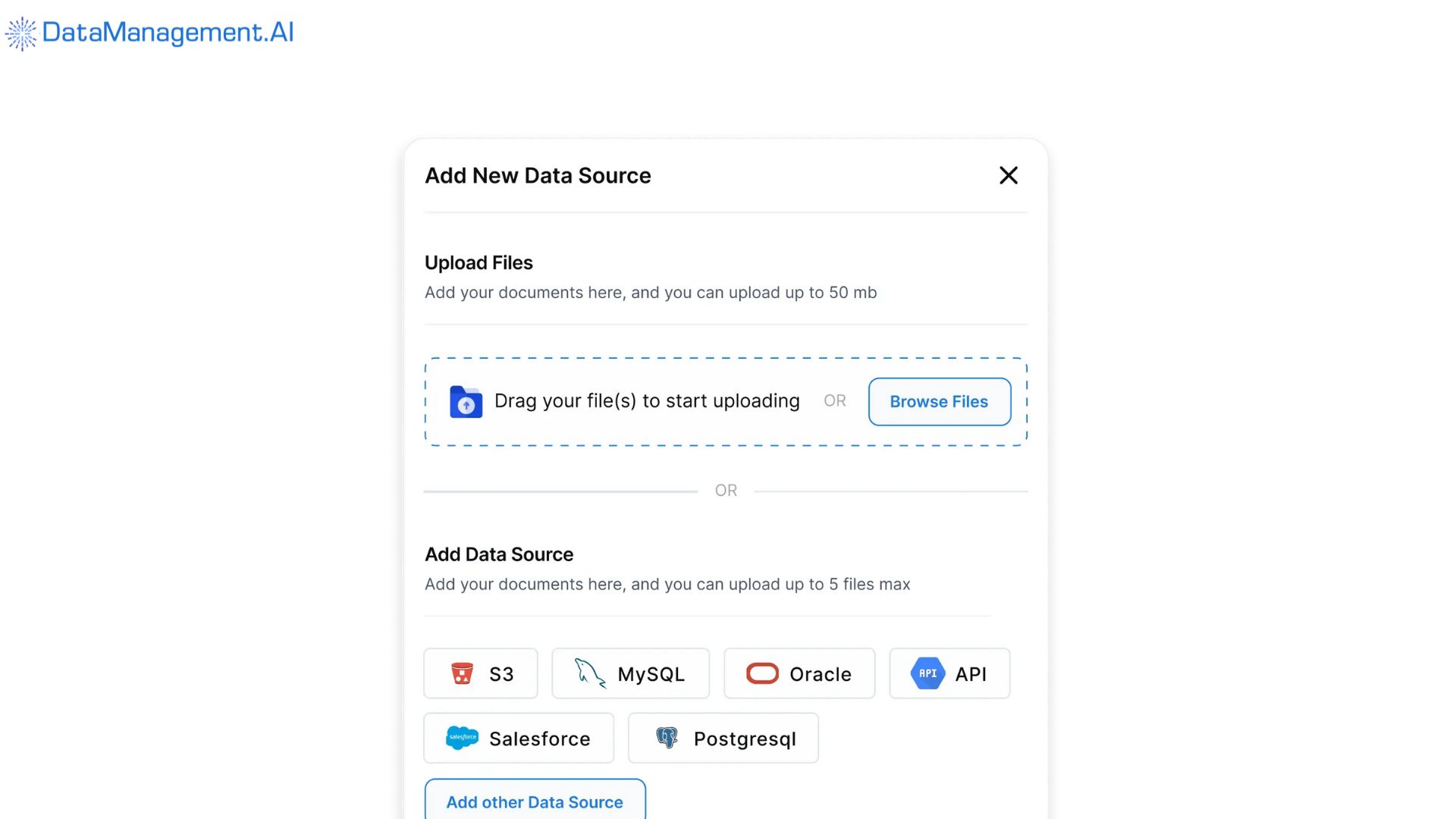
Workflow management defines how tasks are executed, in what order, and under which conditions. It ensures that upstream processes complete successfully before downstream ones begin.
More importantly, it makes dependencies explicit.
When something breaks, engineers can immediately see what failed, where it failed, and what was affected. Dependency tracking is especially important as pipelines scale.
Without it, small changes ripple unpredictably across systems. Orchestration tools help coordinate batch jobs, streaming processes, and hybrid workflows so engineering teams aren’t manually triggering fixes or rerunning pipelines blindly.
This reduces operational overhead, shortens incident response times, and gives teams confidence that their data workflows will behave as expected, even as complexity grows.
Access control & collaboration
Engineering data is shared by default.
Multiple teams such as data engineers, platform teams, analysts, ML engineers, need access to the same datasets, pipelines, and outputs. Without structure, that kind of collaboration quickly leads to confusion, duplicated work, or accidental breakages.
An engineering data management system brings order by enforcing role-based access across the entire data lifecycle, ensuring people and systems only interact with data they’re authorized to use. This applies not just to reading data, but also to modifying pipelines, triggering workflows, and publishing outputs.
Good to know:
Collaboration further improves when access control is paired with shared visibility. Engineering data management supports data engineering and information management by making it obvious what data exists, how it’s being used, and who is responsible for it.
This visibility becomes even stronger when combined with cloud master data management, which helps unify core entities and definitions across distributed engineering and cloud environments.
Thus, instead of relying on outdated documentation or institutional memory, teams work from a consistent, trusted view of the data ecosystem.
This structure enables faster onboarding, fewer handoff errors, and more confident collaboration across domains.
Data quality, validation & monitoring
Even the best pipelines fail if data quality isn’t actively managed. A core function of EDM is preventing these failures before they cascade.
Data validation ensures incoming data meets expected formats, ranges, and completeness rules. Monitoring tracks pipeline health, freshness, volume anomalies, and schema changes. Together, they act as early warning systems for engineering teams.
Data validation acts as the first line of defense. It checks whether incoming data matches expected formats, ranges, schemas, and completeness rules before it moves further through the pipeline.
Monitoring builds on this by continuously tracking pipeline health indicators like data freshness, volume spikes or drops, schema drift, and execution failures.
Together, they give engineering teams real-time awareness of when something starts to go wrong.
Best engineering data management tools
Engineering data management tools act as the control layer for how product, design, operation, and data are created, versioned, and propagated across systems. They integrate CAD environments, ERP platforms, and downstream analytics while enforcing version control, change workflows, and traceability.
Here’s a list of some of the most widely used EDM tools, each operating at a different architectural level.
Siemens Teamcentre
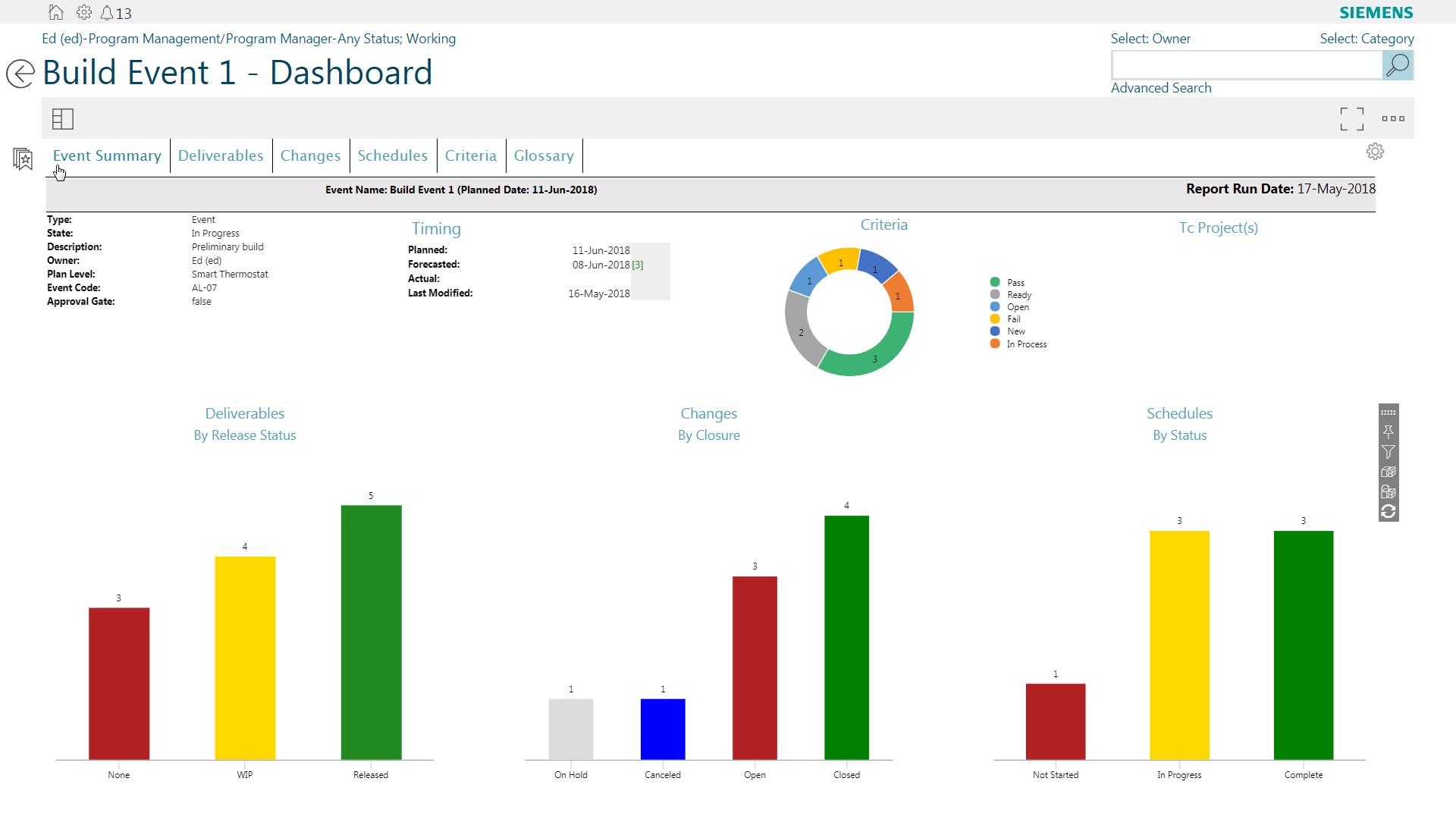
Siemens Teamcentre is a full-scale Product lifecycle management (PLM) platform designed to manage complex engineering data across the entire product lifecycle. It handles multi-level BOM structures, CAD integrations, configuration management, and digital thread continuity from design to manufacturing.
The platform primarily uses centralized data models with strict version control, enabling engineering teams to track revisions, simulate changes, and maintain compliance across distributed environments.
It also integrates with MES and ERP systems to ensure that engineering changes are reflected in production and supply chain workflows.
Pros:
- Provides native support for multi-CAD environments with deep integration.
- Has robust BOM and configuration management for complex products.
- Built-in change management workflows with audit traceability.
- Digital thread enablement across design, simulation, and manufacturing.
- Scalable architecture for large and globally distributed teams.
Siemens Teamcentre product engineering and manufacturing engineering teams to handle tasks like BOM management, change control, life cycle tracking, and design-to-production alignment.
DataManagement.AI
This platform is quite different, as unlike traditional PLM or CAD- centric tools, it focuses on end-to-end enterprise data architecture. So, instead of only managing engineering artefacts, it also connects structured and unstructured Enterprise data into governed, reusable knowledge workflows.
Therefore, DataManagement.AI is particularly powerful for organisations that are looking to align engineering data management with enterprise-scale analytics, compliance automation, and cross-functional decision systems.
SAP Engineering Control Centre
SAP Engineering Control Center integrates engineering data directly into SAP’s ERP ecosystem. It connects CAD systems seamlessly with SAP modules like Materials Management (MM), Production Planning (PP), and Financial Accounting (FI).
This helps ensure that engineering changes automatically impact procurement, manufacturing, and costing processes. ECTR maintains synchronized data models between design and business systems, reducing manual reconciliation and enabling real-time visibility into engineering-driven business impacts.
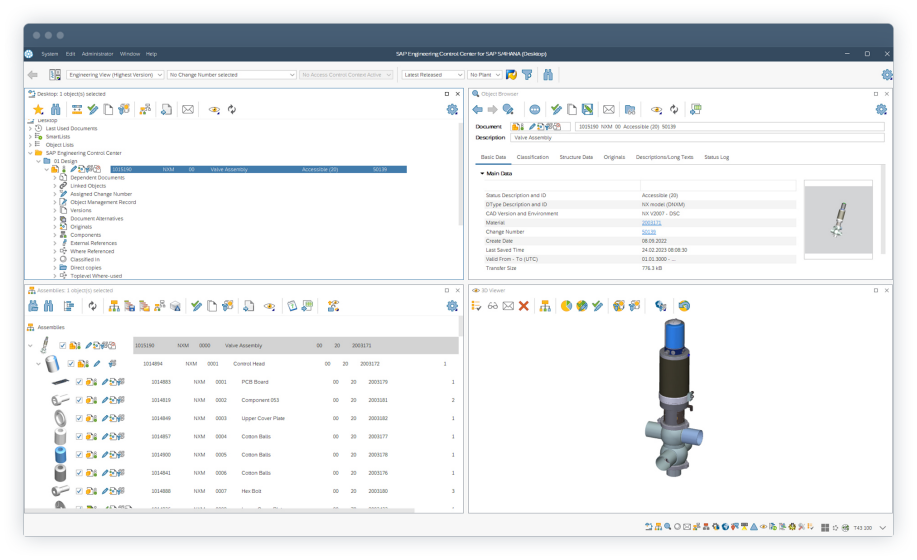
Pros:
- Direct integration with SAP ERP modules for end-to-end data consistency.
- Real-time synchronization between CAD and business processes.
- Automated propagation of Engineering changes into procurement and production.
- Strong version control aligned with ERP data structures.
- Reduces duplication between engineering and enterprise systems.
This tool is best suited for engineering, procurement, operations, and finance teams as it helps in engineering to ERP integration, cost alignment, production planning, and change impact analysis.
AVEVA Engineering
AVEVA Engineering is designed for data-intensive industrial and plant engineering environments. It centralizes engineering data like P&IDs, instrumentation diagrams, and asset hierarchies into a unified repository.
The platform enables multi-disciplinary collaboration across mechanical, electrical, and process engineering teams while maintaining data consistency. It also uses rule-based data validation and object-centric data models to ensure accuracy across large-scale infrastructure and plant projects.
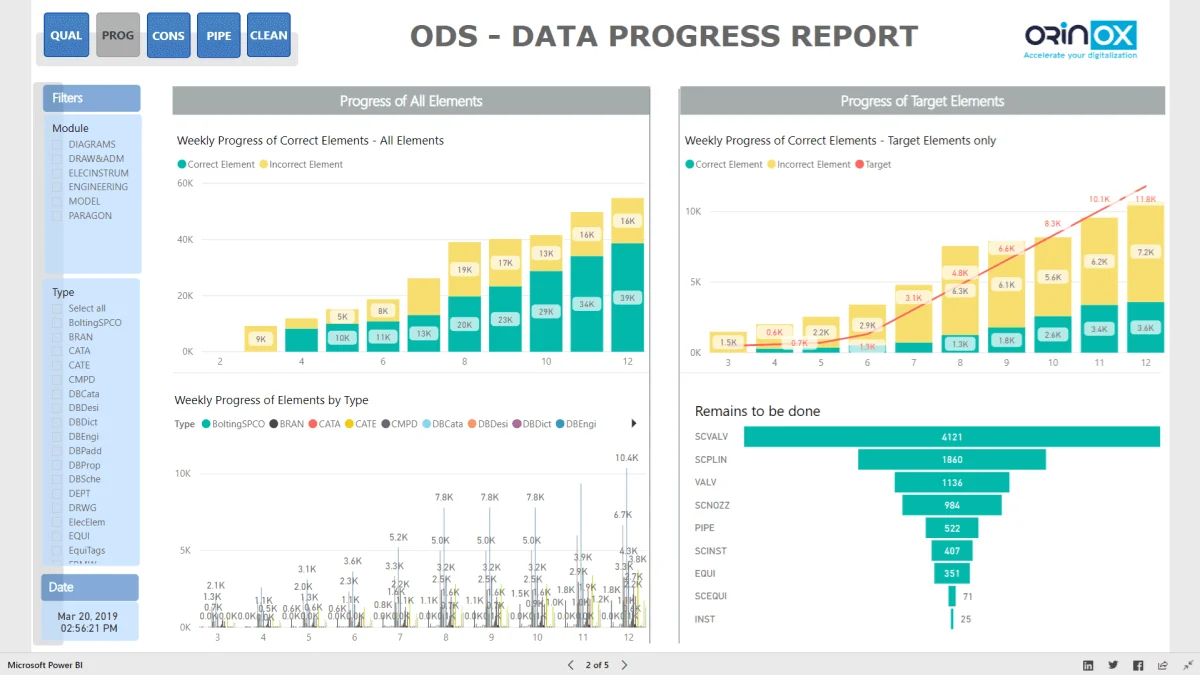
Pros:
- Centralized management of plant and asset engineering data.
- Strong support for P&IDs, instrumentation, and process diagrams.
- Cross-disciplinary data synchronization across engineering domains.
- Rule-based validation to ensure data consistency.
- Scalable for large industrial and infrastructure projects.
It is most useful for plant engineering, process engineering, and asset management teams. If your team is struggling with plant design, asset life cycle management, or cross-discipline coordination, then this platform is ideal.
Autodesk Vault
Autodesk Vault is a designed data management solution that is tailored for teams using Autodesk CAD tools. It provides centralized storage, version control, and access management for design files. Vault revision tracking prevents file duplication and maintains dependencies between design components.
It integrates tightly with tools like AutoCAD and Inventor, allowing engineers to manage design iterations without breaking references or losing historical versions.
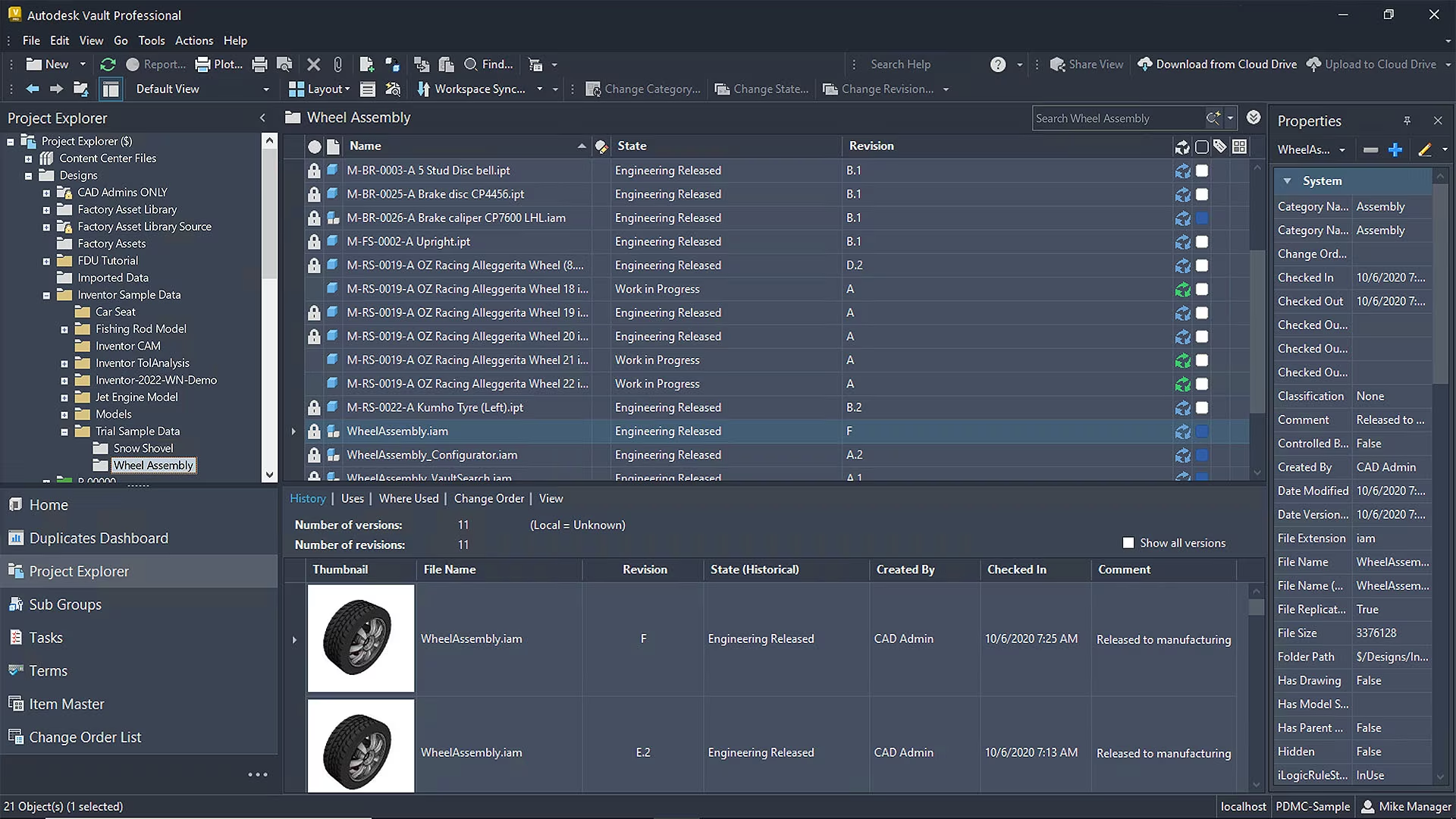
Autodesk Vault provides a graphical overview of project status and data insights.
Pros:
- Tight integration with Autodesk design tools.
- Automated version and revision control for design files.
- Dependency tracking between assemblies and components.
- Secure file access with rule-based permissions.
- Reduces duplication and design inconsistencies.
This platform is mostly used by design engineering and CAD teams for design versioning, file management, revision tracking, and collaboration on CAD assets.
PTC Windchill
PTC is a PLM platform focused on model-based systems engineering (MBSE) and digital product traceability. It integrates CAD data, requirements management, and IoT-driven feedback into a unified system.
Wind chill also supports complex product configurations and enables real-time collaboration across distributed engineering teams. Its architecture allows organizations to connect product data with field performance data, enabling closed-loop engineering and continuous product improvement.
Pros:
- Strong support for MBSE and requirements traceability.
- Integration of IoT data for closed-loop product life cycle management.
- Advanced configuration management for complex product variants.
- Real-time collaboration across distributed teams.
- End-to-end product traceability from design to field performance.
Systems engineering, product development, and R&D teams use it the most for requirements management, product configuration, life cycle traceability, and IoT-driven optimization.
How to choose the right Engineering Data Management tool?
Choosing the right engineering data management tools often comes down to one question: Does the platform simplify your data operations, or does it add yet another layer of complexity?
A strong EDM tool should connect the entire journey of engineering data from collection and ingestion to processing and insights without forcing teams to stitch together dozens of disconnected systems.
This is where DataManagement.AI stands out in real-world engineering environments. Its simple integration model connects every part of your data journey across sources, pipelines, and destinations, allowing engineers to spend more time on strategy and less time maintaining glue code.
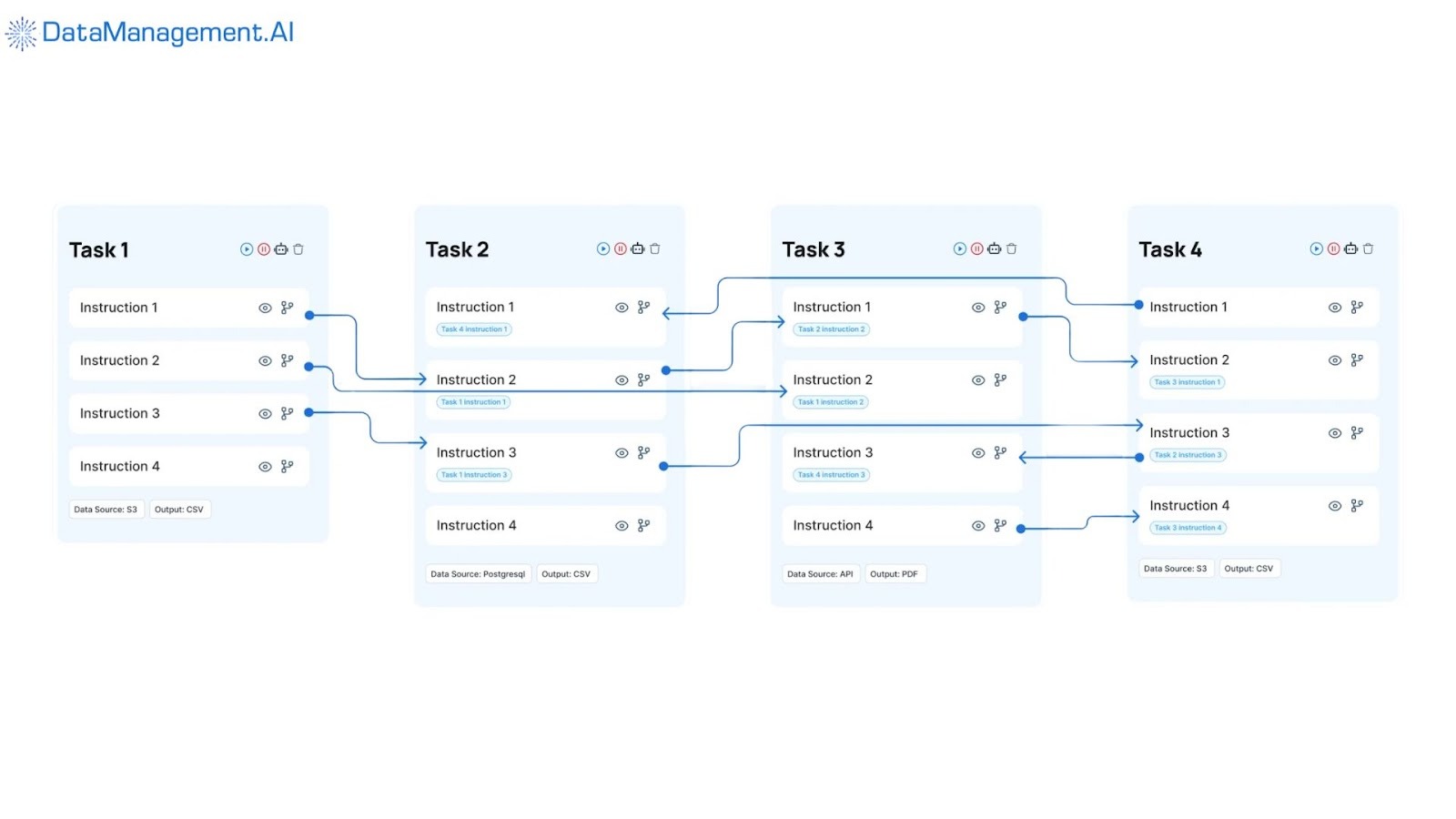
DataManagement.AI is emerging as one of the most preferred engineering data management solutions among enterprises.
Efficiency is another critical factor.
The right tool removes bottlenecks in ingestion, orchestration, and monitoring by automating repetitive tasks that typically slow teams down. Teams using DataManagement.AI consistently see up to 60% more efficiency across engineering workflows.
Cost control is another hidden benefit.
Engineering teams often overspend not because they lack discipline, but because they lack visibility. Centralized management and real-time awareness of data movement make it easier to identify redundant pipelines, unused datasets, and inefficient processing patterns.
The platform has also helped companies achieve over 50% reduction in operational costs.
What ties it all together is real-time, actionable insight. Instead of discovering issues after dashboards break or models drift, DataManagement.AI provides live visibility into data movement so teams can adapt to changes, spot risks early, and make informed decisions as conditions evolve.
If you’re evaluating engineering data management tools and want to see how these capabilities work together in practice, schedule a demo with us and explore how the platform fits into your engineering ecosystem.
FAQs
Why is engineering data management important for enterprises?
Engineering data management helps enterprises maintain a single source of truth for engineering data across products, teams, and systems. It also improves collaboration, reduces operational inefficiencies, strengthens governance, and ensures that engineering data remains accurate, traceable, and reusable throughout the product life-cycle.
This helps in faster product development, better compliance, and more reliable business decisions.
What should you look for in an engineering data management platform?
When evaluating an engineering data management platform, you should prioritize capabilities like automated data ingestion, version control, metadata management, lineage, tracking, workflow orchestration, data quality, monitoring, role-based access control, and integration with existing engineering and enterprise systems.
AI-powered insights and real-time observability are also becoming essential for managing complex engineering environments.
How does engineering data management improve operational efficiency?
Engineering data management reduces manual data handling by automating ingestion, validation, versioning, and workflow orchestration.
It also minimizes duplicate datasets, simplifies collaboration across engineering teams, accelerates root cause analysis through lineage tracking, and enables engineers to spend more time building products instead of managing disconnected data assets.
Which industries benefit the most from engineering data management?
Engineering data management delivers the greatest value in industries that generate large volumes of engineering and operational data, including manufacturing, automotive, aerospace, energy, healthcare, telecommunications, semiconductor design, and industrial architecture.
It is equally valuable for software companies managing large-scale data engineering and AI workflows.
Can engineering data management support AI and analytics initiatives?
Yes. Engineering data management provides the governed, high-quality data foundation required for analytics and AI.
By maintaining version-controlled datasets, metadata, lineage, and quality controls, it ensures that ML models, business intelligence, platforms, and AI applications are built on trusted, consistent, and reproducible engineering data.