




By 2026, organizations are projected to generate more than 180 zettabytes of data globally. Yet 60% of business leaders still report concerns about the reliability of the data used for their decision-making, as poor data quality continues to cost Enterprises millions of dollars annually through operational inefficiencies and failed initiatives.
Most data quality issues originate as failures in data lineage and life-cycle management. Incomplete records, inconsistent master data, invalid transformations, and synchronization delays create defects that cascade through interconnected systems.
Since modern data ecosystems are highly dependent on shared datasets, even minor anomalies can eventually compromise enterprise reporting, operational processes, and AI-driven decision-making at scale.
Here’s a full guide on how you can fix the data quality issues in your enterprise.
What are data quality issues?
Data quality issues occur when enterprise data no longer satisfies technical, operational, or business quality requirements due to schema changes, fragmented master data, lineage gaps, synchronisation failures, or policy violations.
Implementing a robust data quality management framework enables organizations to continuously detect, govern, and remediate these issues before they propagate across enterprise systems.
Here are some major issues, and how to resolve them.
Most common data quality issues that you should look out for
While every organization experiences data quality problems differently, a small set of recurring issues accounts for the majority of reporting errors, failed analytics, governance challenges, and operational inefficiencies.
Identifying these defects early enables you to prioritize remediation efforts before they spread across interconnected systems and impact business decisions.
Duplicate records
Duplicate customer, supplier, or product records are among the most common data quality issues in enterprise environments. They emerge when multiple systems independently create or update the same entity without reconciliation.
Duplicate records inflate analytics, distort customer 360 initiatives, increase operational costs, and create inconsistent reporting across business functions.
Solution
To avoid this, you should implement entity matching, deduplication rules, and master data governance across all source systems.
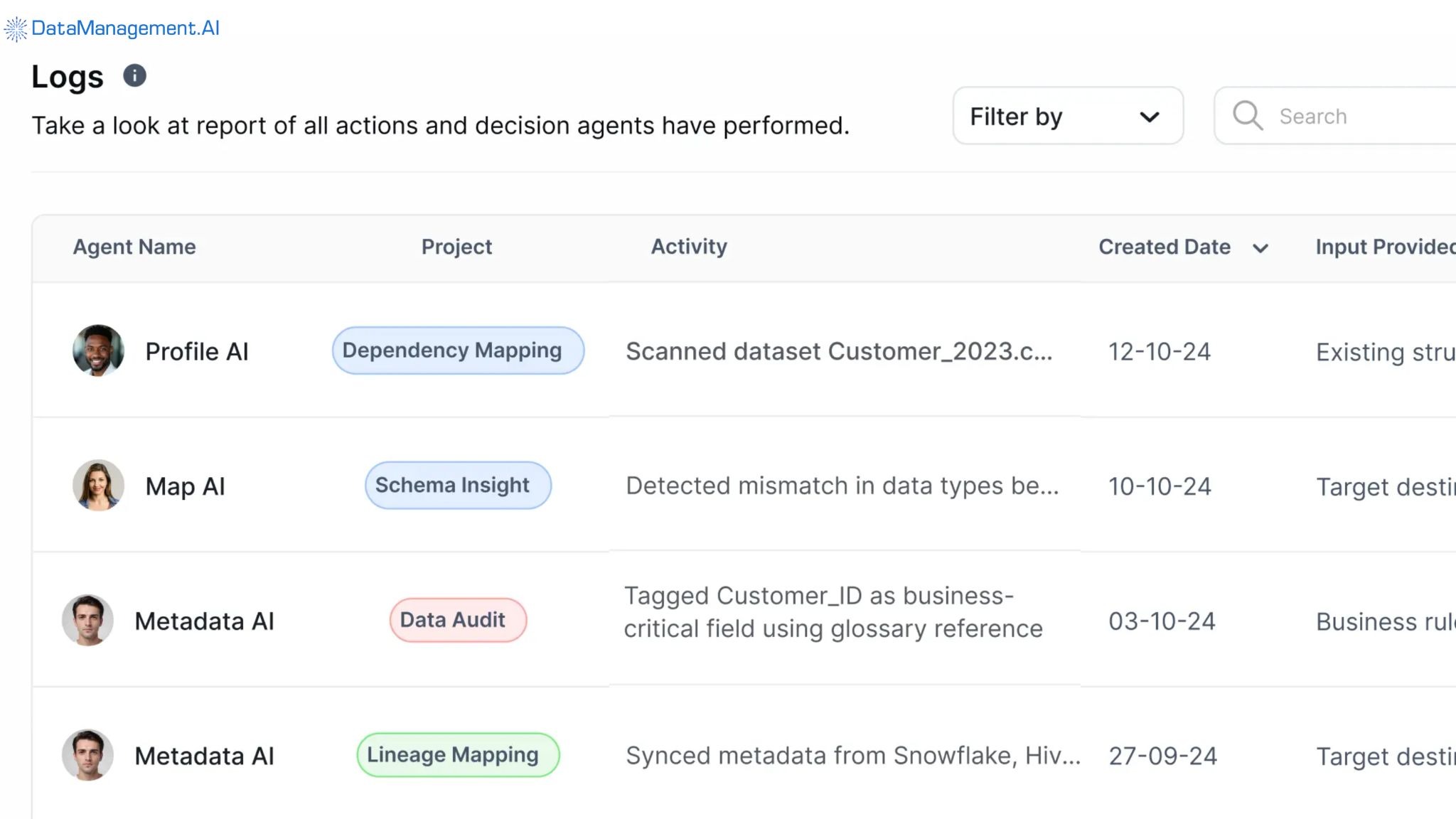
DataManagement.AI’s master data management solution automatically identifies duplicate entities across transactional systems and CRMs, reconciles conflicting attributes, using unique match keys, and creates a single authoritative golden record for every customer, product, or supplier.
By maintaining a single trusted record for every business entity, you can improve reporting accuracy, reduce operational overhead, and ensure downstream applications consume consistent, trusted information across the enterprise.
Missing or incomplete data
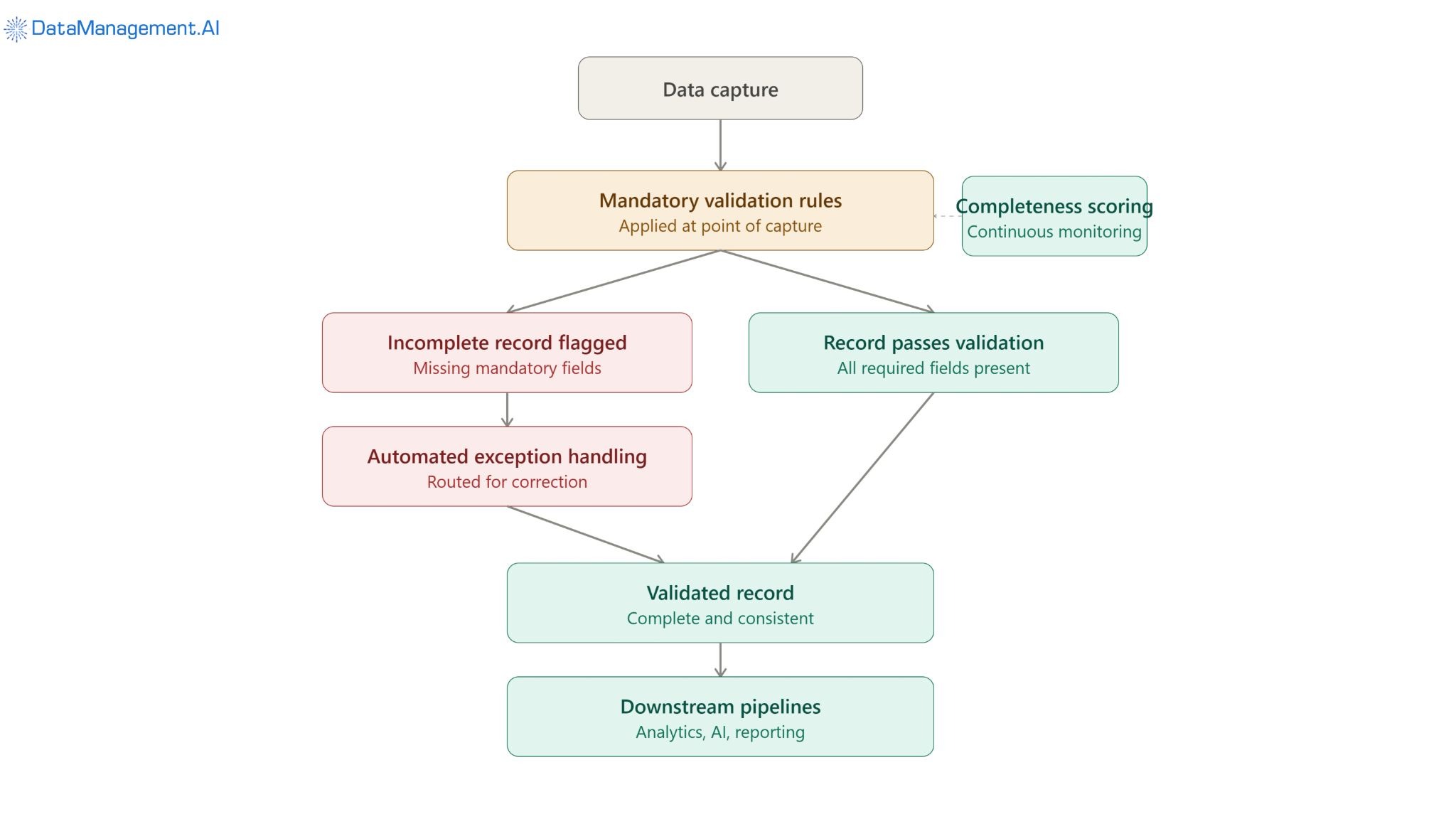
Incomplete records reduce the reliability of operational processes, analytics, and AI models. Missing customer attributes, asset details, transaction values, or mandatory business fields often originate from inconsistent data collection, failed integrations, or weak validation controls.
Even small gaps can significantly impact forecasting, compliance reporting, and decision-making.
Solution
Thus, you should enforce mandatory validation rules during data capture, continuously monitor completeness scores, and automate exception handling for missing values.
Early validation prevents incomplete records from propagating through downstream pipelines and improves the overall reliability of enterprise data.
Tracking completeness through a well-defined data quality scorecard will help you identify recurring gaps, measure quality trends over time, and prioritize remediation efforts based on business impact.
Inconsistent data across systems
The same customer, asset, or product often exists with conflicting values across CRM, ERP, finance, and operational platforms. These inconsistencies create reporting conflicts, inaccurate analytics, and unreliable business decisions because different teams rely on different versions of the truth.
Solution
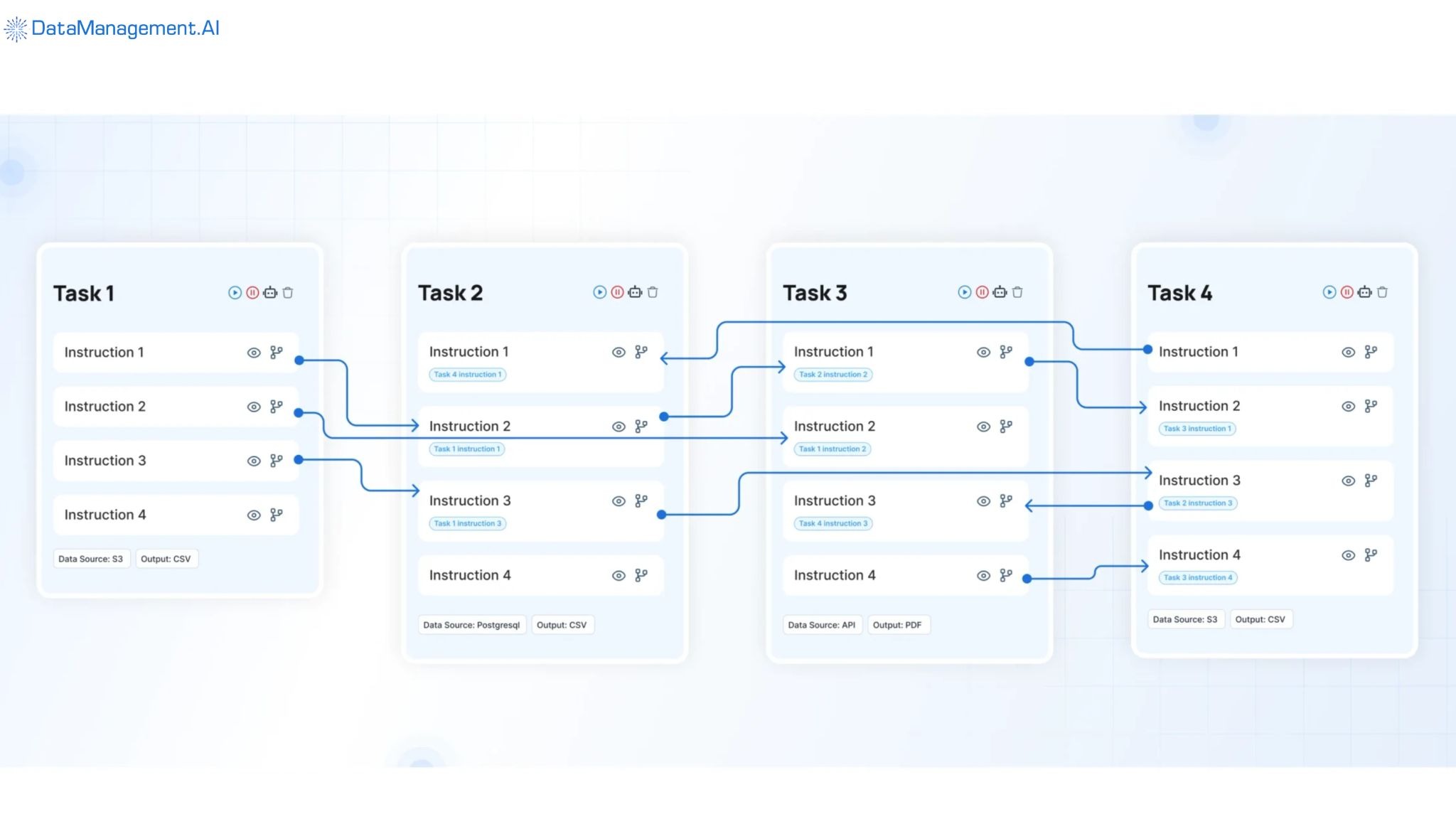
So, you should establish a centralized master data strategy with DataManagement.AI to unify fragmented records, maintain connected data and relationships, and continuously monitor synchronization across enterprise systems.
This will help you create a trusted single source of truth while improving governance, lineage, and enterprise-wide data consistency.
Invalid data formats and business rule violations
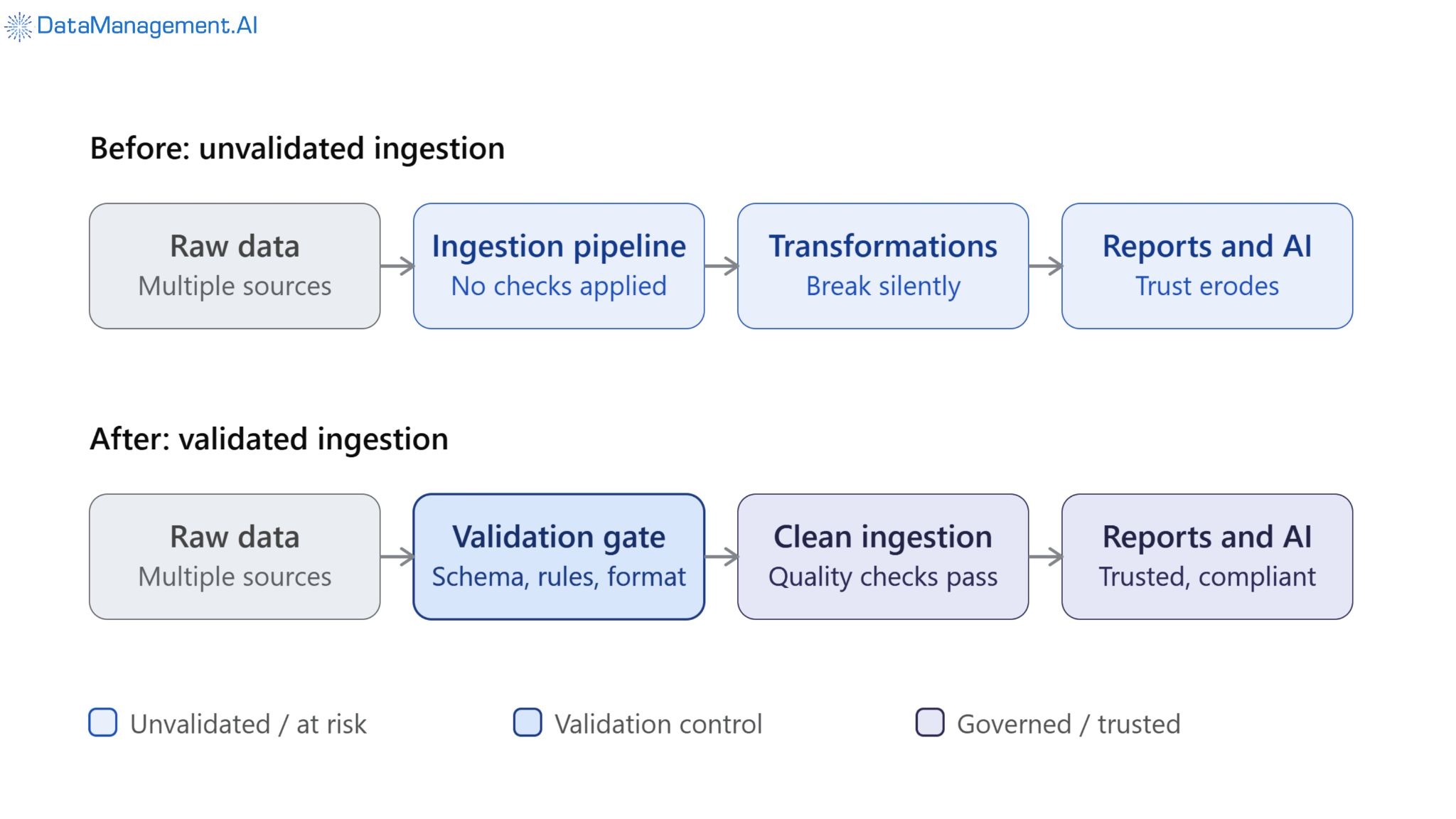
Data frequently enters enterprise systems in incorrect formats, invalid values, or inconsistent units, such as incorrect data formats, invalid identifiers, negative inventory, or business rule violations that pass through ingestion pipelines.
These defects silently break downstream transformations and reduce trust in reports and AI outputs.
Solution
To fix this, you should validate data against predefined schemas, business rules, and standardized formats before ingestion. Automated quality checks also help you detect invalid records early, reduce downstream processing failures, and maintain consistent, policy-compliant datasets across the enterprise.
Schema drift and data contract violations
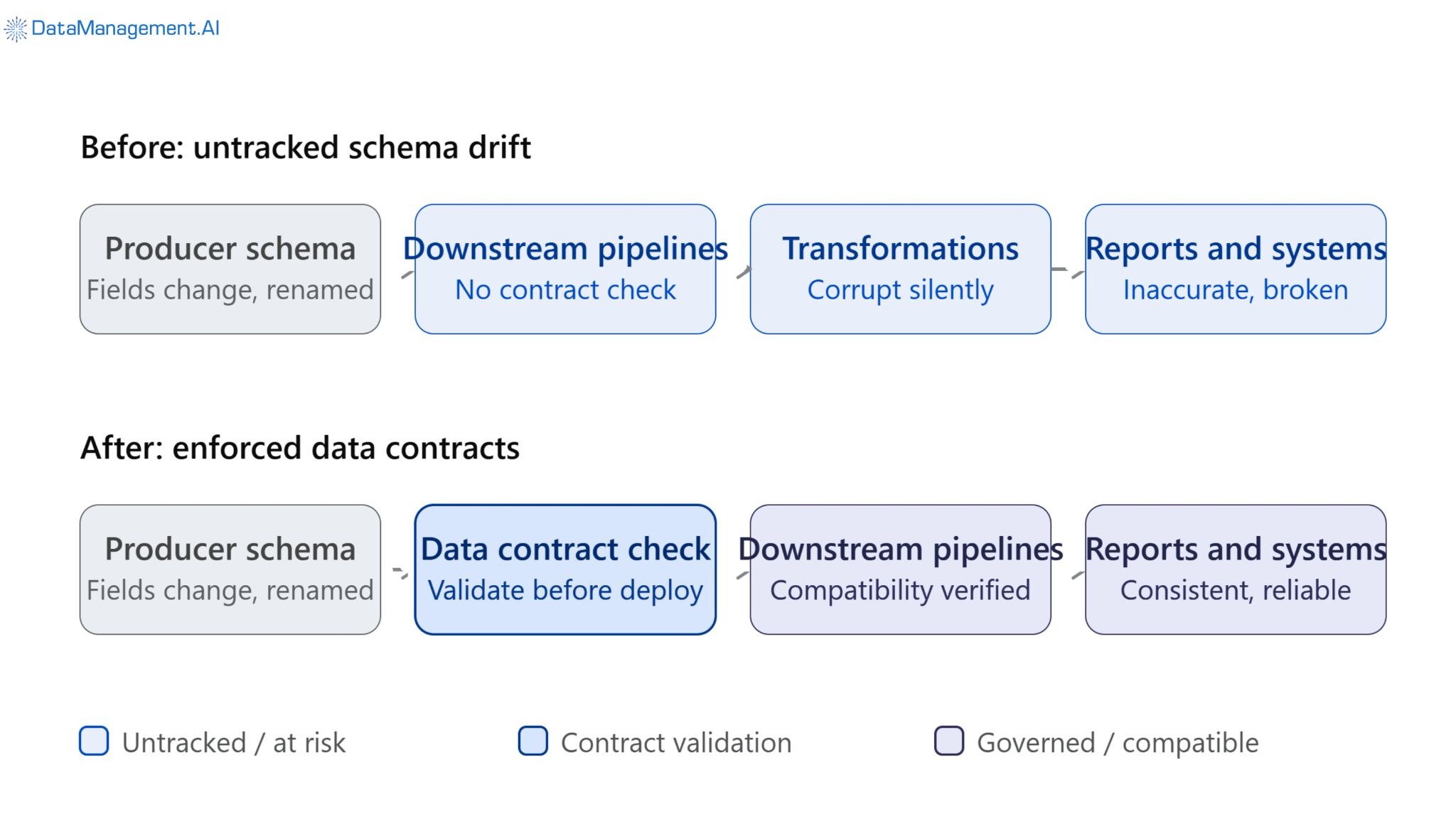
As enterprise applications evolve, data structures continuously change. New fields are introduced, existing columns are renamed or removed, and data types are modified without the downstream system being updated.
These untracked schema changes silently break data, pipelines, corrupt transformations, and generate inaccurate reports, making schema drift one of the most common causes of enterprise data quality failures.
Solution
You should continuously monitor schema changes, enforce data contracts between data producers and consumers, and validate structural changes before deployment.
Automated schema validation also helps you prevent pipeline failures, maintain compatibility across systems, and ensure consistent data quality throughout your ecosystem.
Having a robust enterprise data management strategy will help you make sure that schema changes are governed, communicated, and validated consistently.
Master data fragmentation
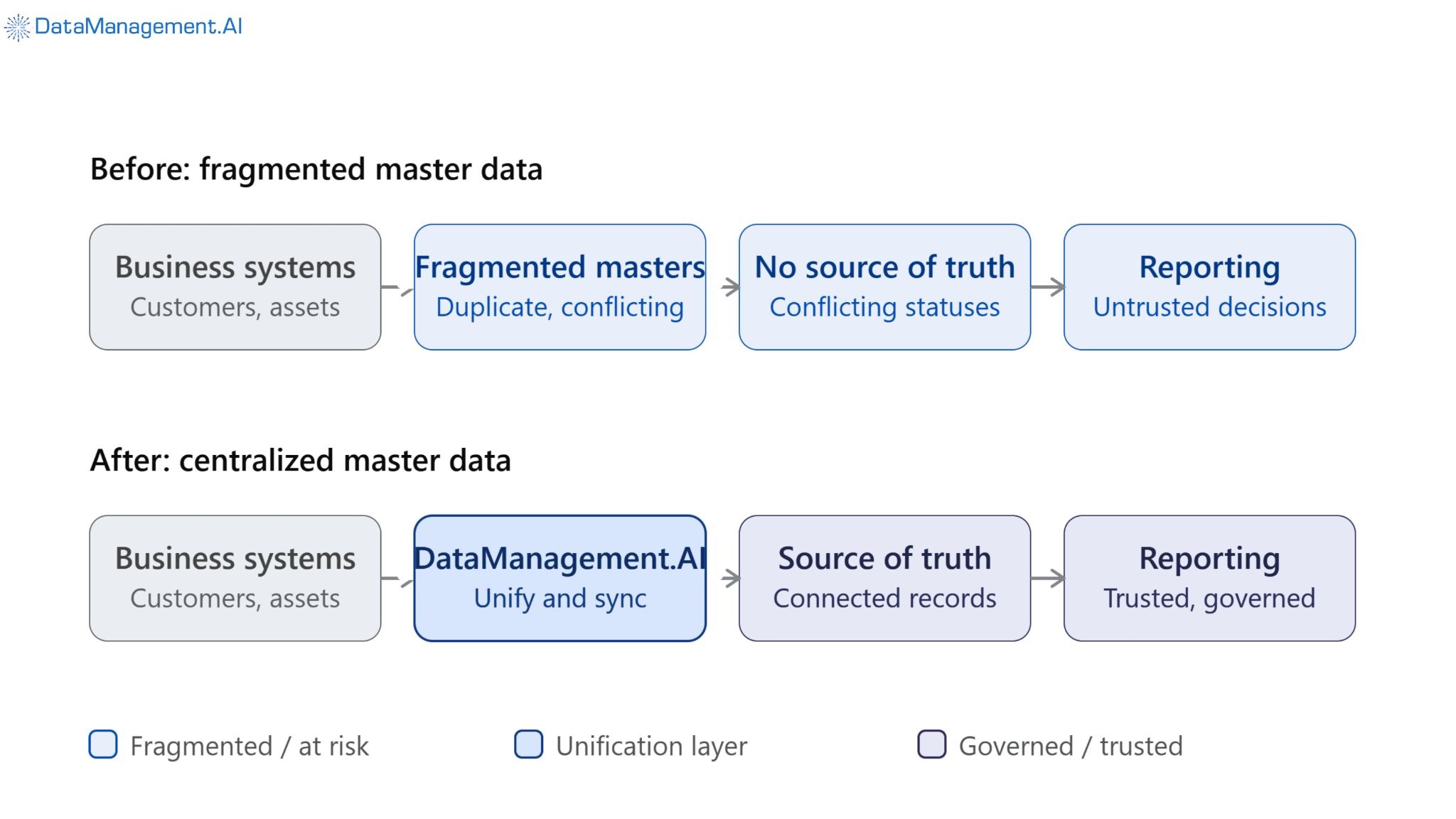
Organizations often maintain multiple versions of customers, products, suppliers, and assets across different business systems. This results in inconsistent identifiers, conflicting attributes, duplicate records, and the absence of a single source of truth
In asset-intensive industries, fragmented master data can produce conflicting maintenance and operational statuses, reducing trust in enterprise reporting decision-making.
Solution
You should implement a centralized master data strategy with DataManagement.AI to unify fragmented records, establish connected data relationships, and continuously synchronize master data across systems.
This gives you an opportunity to create a trusted single source of truth while improving governance, reporting, accuracy, and enterprise-wide data consistency.
Metadata loss and lineage gaps
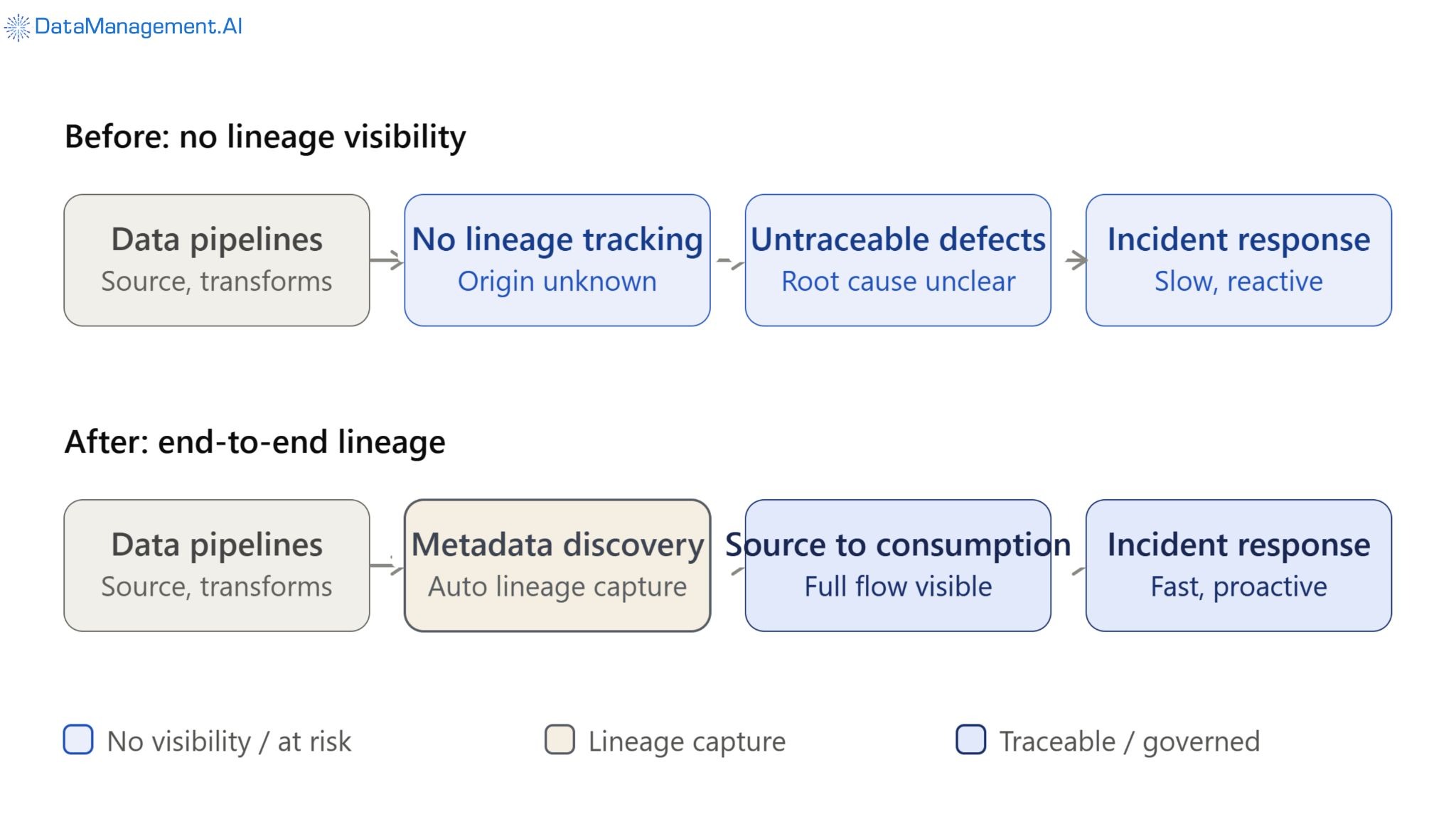
Many enterprises lack visibility into where their data originated, how it has been transformed, who modified it, and which reports or applications depend on it.
Without complete metadata and end-to-end lineage, most organizations struggle to trace quality issues back to their source. Limited visibility, slow root cause analysis, increases operational risk, and allows minor defects to escalate into enterprise-wide incidents.
Solution
You should automate metadata discovery during data ingestion and transformation, standardize a business definition across systems, and integrate linear tracking into every pipeline. This allows you to visualize data flows from source to consumption, quickly identify impacted datasets during incidents, reduce investigation time, and make governance more proactive instead of reactive.
Data pipeline reliability failures
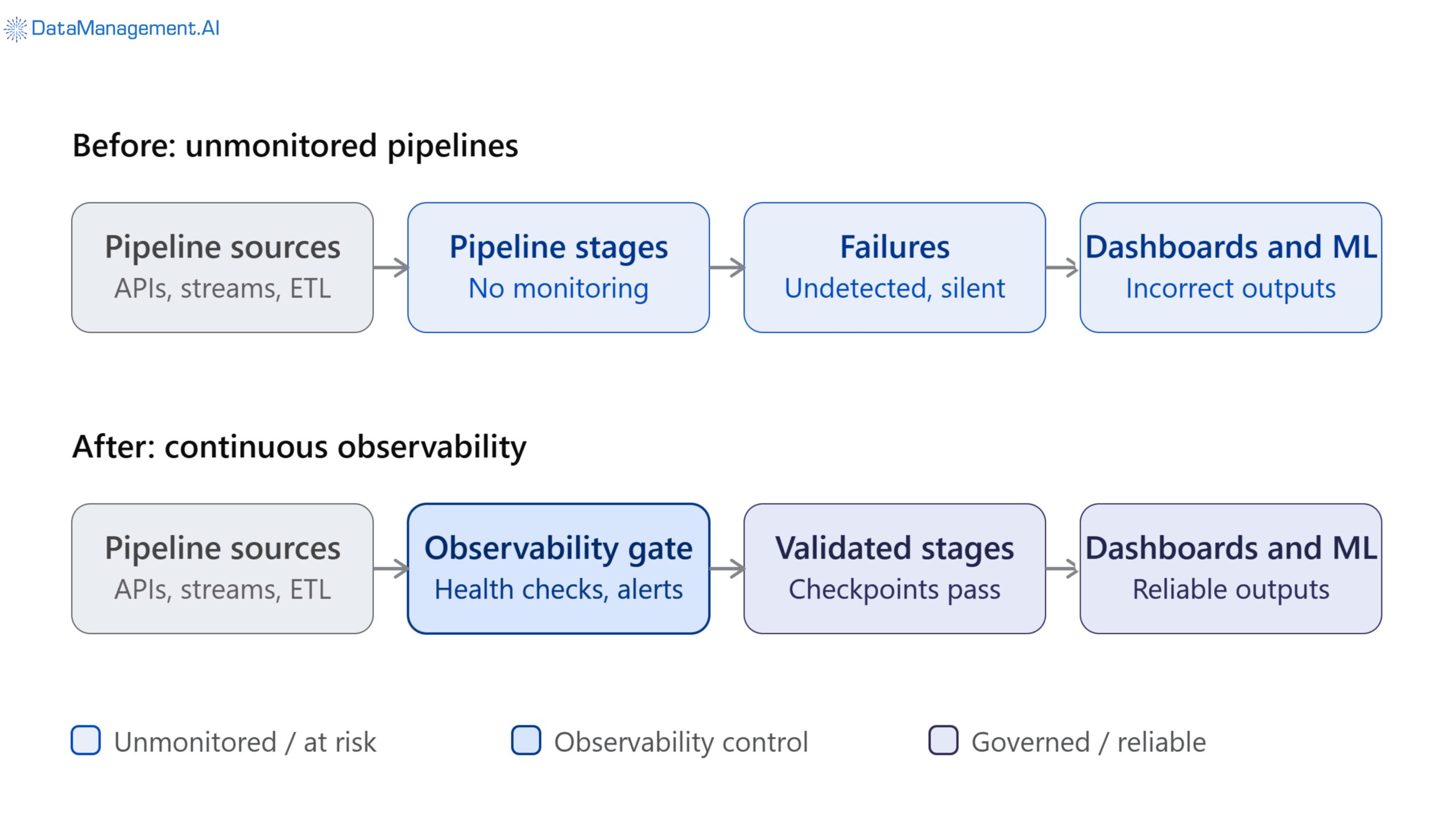
If your organization relies on modern architectures, then they depend on complex pipelines involving APIs, event streams, ETL processes, and real-time integrations. In this scenario, failed transformations, delayed ingestion jobs, and broken dependencies can result in incomplete or inconsistent datasets.
These reliability features often remain undetected until dashboards, ML models, or operational processes begin producing incorrect outputs.
Solution
You should implement a continuous pipeline, observability with automated health checks, validation, checkpoints, and failure alerts at every stage of data movement.
By monitoring pipeline performance, retraining failed jobs automatically, and validating data. After each transformation, you can identify reliability issues early and prevent defective data from reaching downstream systems.
Data freshness and synchronization latency
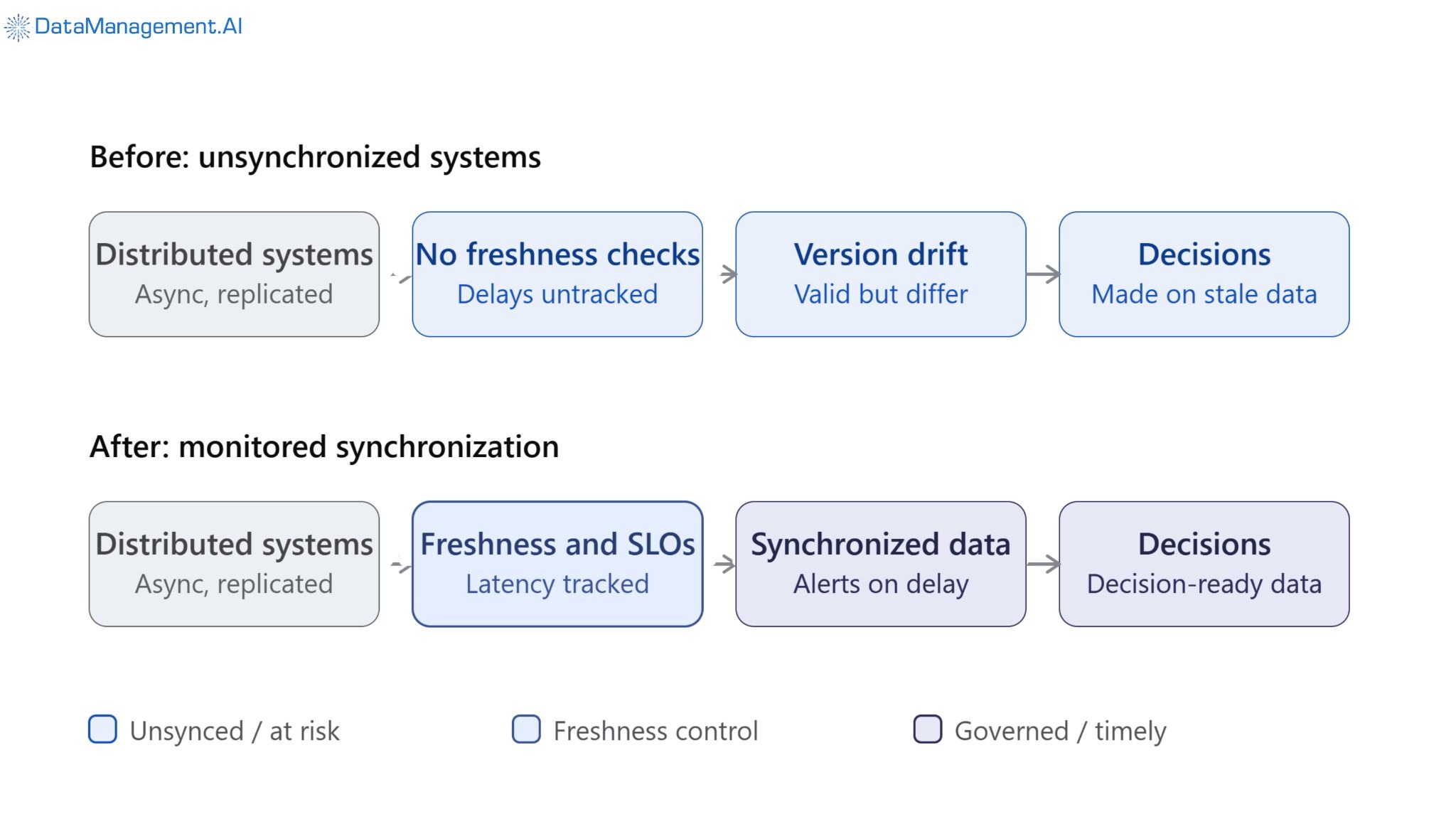
Data quality is not only about correctness, but also about timelines. Distributed environments frequently experience replication delays, asynchronous updates, and inconsistent refresh cycles.
This creates situations where multiple systems contain technically valid, but operationally different versions of the same information.
Effective data quality issue management process capabilities, therefore, require continuous monitoring of freshness, latency, and synchronization metrics.
As data ecosystems in your organization become more distributed and event-driven, data quality management tools will play a critical role in maintaining timely, synchronized, and decision-ready data across the enterprise.
Solution
To avoid this, you should establish automated synchronization, schedules, implement real-time, streaming where required, and configure observability tools to track freshness and latency service level objectives (SLOs).
By generating alerts for delayed updates and failed replications, you can resolve synchronization issues before outdated data impacts business operations or analytical workloads.
Semantic inconsistencies and business rule violations
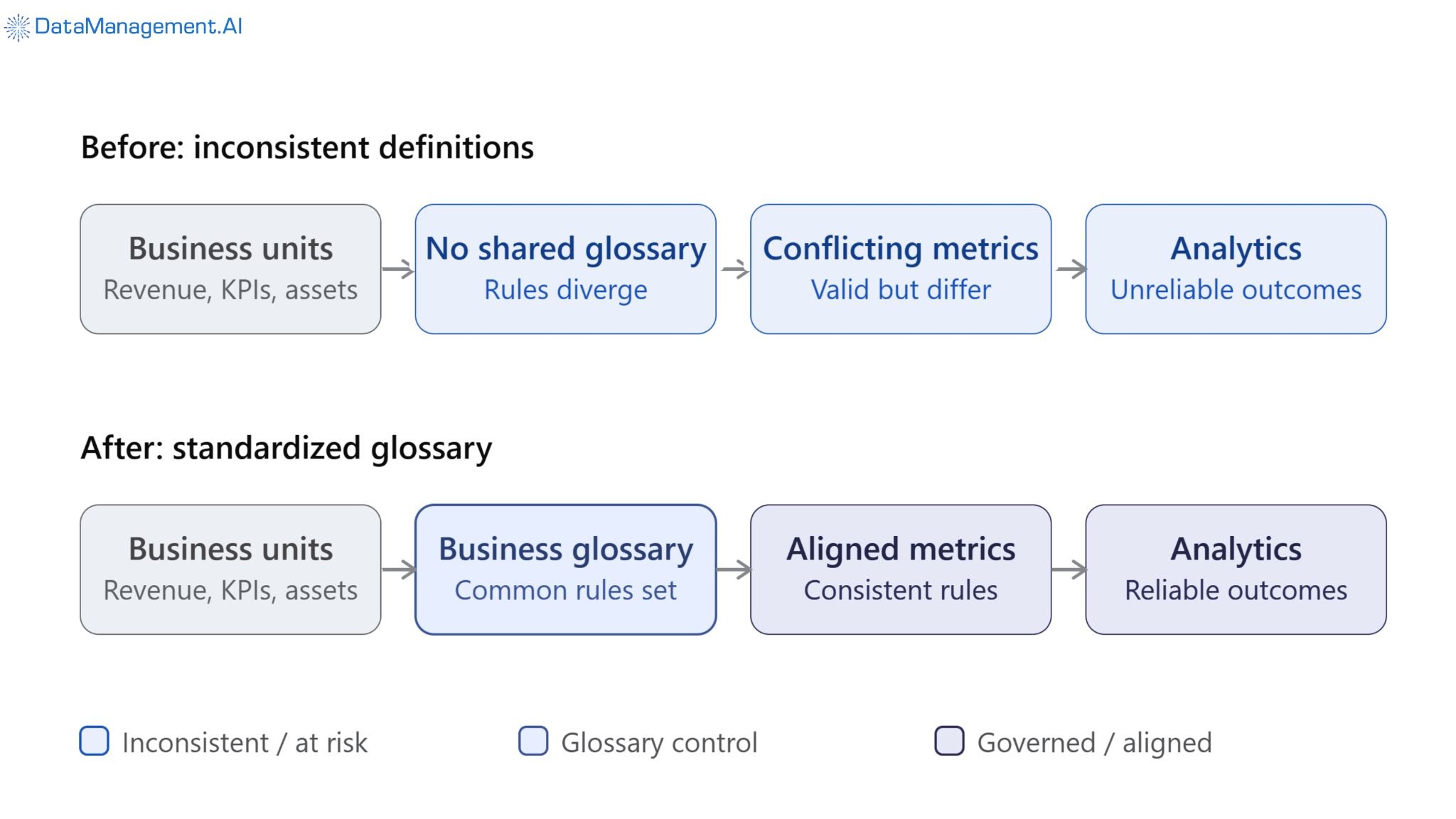
Some of the most challenging data quality issues occur when data is technically valid, but interpreted differently across the organization. Business units may calculate revenue using different methodologies, classify assets differently, or define KPI using inconsistent rules.
These variations create conflicting reports, unreliable analytics, and inconsistent business outcomes, even when the underlying issues are functioning correctly.
Solution
To avoid this, you should have standardized business definitions, maintain a centralized business glossary, and enforce common validation rules across every data pipeline.
Modern data quality management tools will help you operationalize these standards by automatically validating business rules, monitoring policy compliance, and detecting semantic inconsistencies before they affect downstream analytics.
Aligning business logic with governance policies ensures every team measures critical metrics consistently, improving decision-making, reporting, accuracy, and cross-functional collaboration.
How to build data quality as an enterprise capability
Building data quality as an enterprise capability requires embedding quality controls throughout the entire data lifecycle, rather than treating them as isolated remediation activities.
Thus, understanding how to improve data quality management should begin with shifting from reactive data cleansing to continuous monitoring, governance, and automated quality assurance across enterprise systems.
For this, you should integrate governance, metadata management, observability, master data management, and automated validation directly into your data architecture.
By enforcing standardized policies and resolving issues at their source, you can also improve the reliability of analytics, AI, and operational processes.
Organizations that operationalize data quality as a continuous engineering discipline are better equipped to scale trusted, decision-ready data across the enterprise.