




It’s January 2025, and Robinhood settles with the SEC.
The penalty being USD 45 million for data management failures, security violations and customer misinformation.
Seven million customers were affected all because of poor data controls.
To put this into context, your bank handles billions in transactions daily. Every single one requires accurate reference data. This data includes securities codes, market data, and counterparty information.
Get one digit wrong and trades fail, compliance gets violated, fines are hit, and customer trust lost.
Understanding what is reference data management for the banking industry isn’t optional, it’s survival.
Today, I’ll show you exactly what financial reference data management means, why it matters, and how to get it right.
Let’s start!
What is reference data management for the banking industry?
As seen by the above tweet, reference data is your financial infrastructure’s backbone. Think of it as the dictionary for your financial transactions.
These include client IDs, security identifiers like ISIN, CUSIP, SEDOL, along with exchange identifiers. Currency codes and counterparty codes also get tagged along as financial transactions.
But in short, what is reference data management for the banking industry can be phrased as creation, maintenance, and distribution of accurate reference financial data across your organization.
Without it, there’s chaos.
Take a simple example of your trading desk using one client code. Your risk team uses another. Your compliance uses a third code. Different identifiers and different data.
This leads to broken processes, failed trades, and regulatory nightmares.
Now, you see little ROI in the above stat. Why? Because they skipped the foundation. They build analytics before fixing their reference data.
What is reference data management in investment banking?
Investment banking magnifies every data challenge.
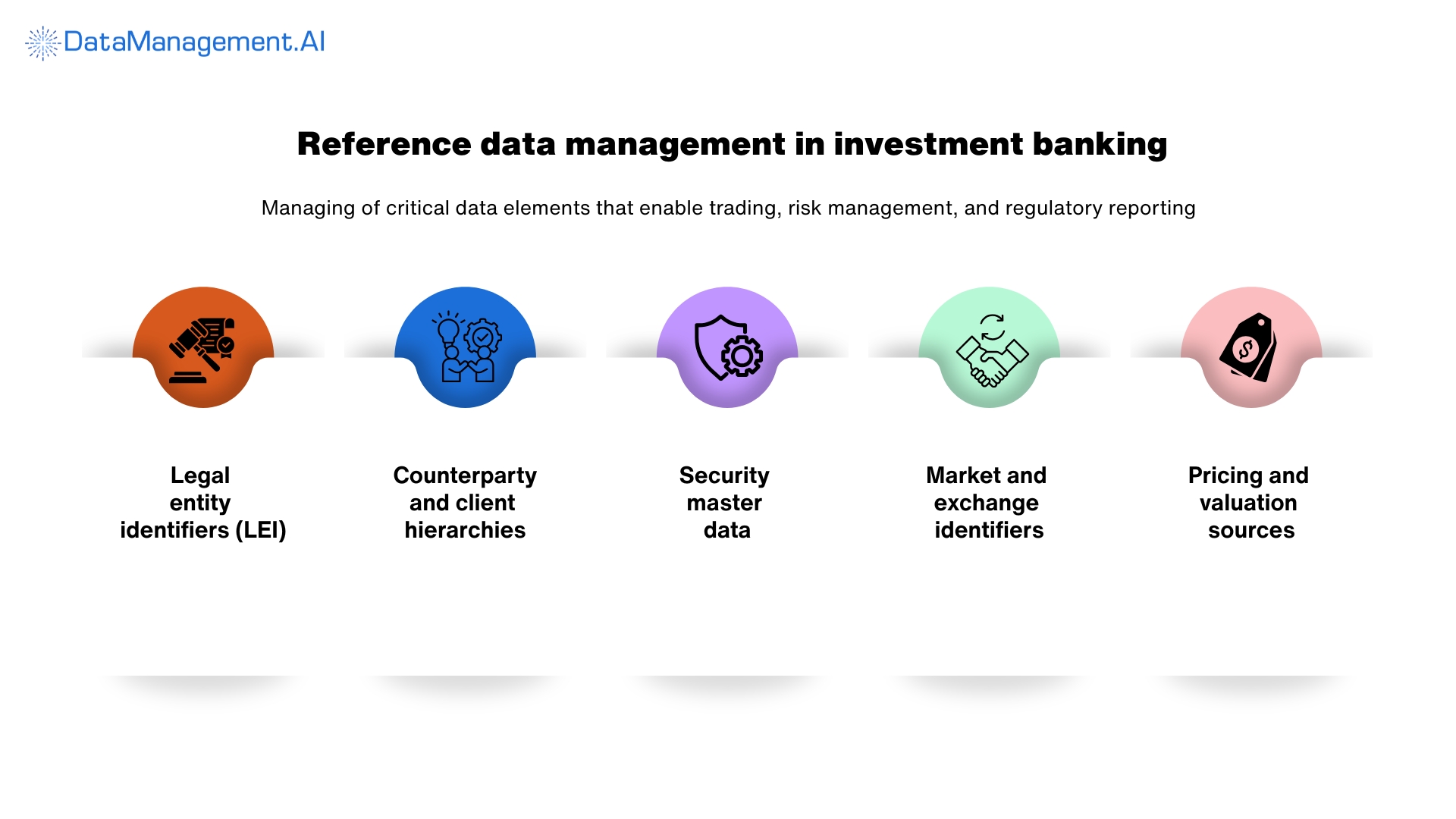
What is reference data management in investment banking relates to managing critical data elements that enable trading, risk management, and regulatory reporting.
Your traders execute hundreds of transactions daily.
Each requires precise reference data, security master data management, market identifiers, pricing sources, and counterparty information.
One wrong identifier and your trade fails. Your client loses money and your reputation suffers.
Reference data management in investment cover the following:
- Legal entity identifiers (LEIs)
- Counterparty and client hierarchies
- Security master data (bonds, equities, derivatives)
- Market and exchange identifiers
- Pricing and valuation sources
According to a Deloitte research, the role of a Chief Data Officer has evolved from setup to operations as data requirements intensify.
Reference data management investment banking teams now centralize operations. They implement governance frameworks and automate data quality checks.
That’s a problem…a big one.
Core components of financial reference data management
Financial reference data management requires four critical components.
Security Financial Master Data
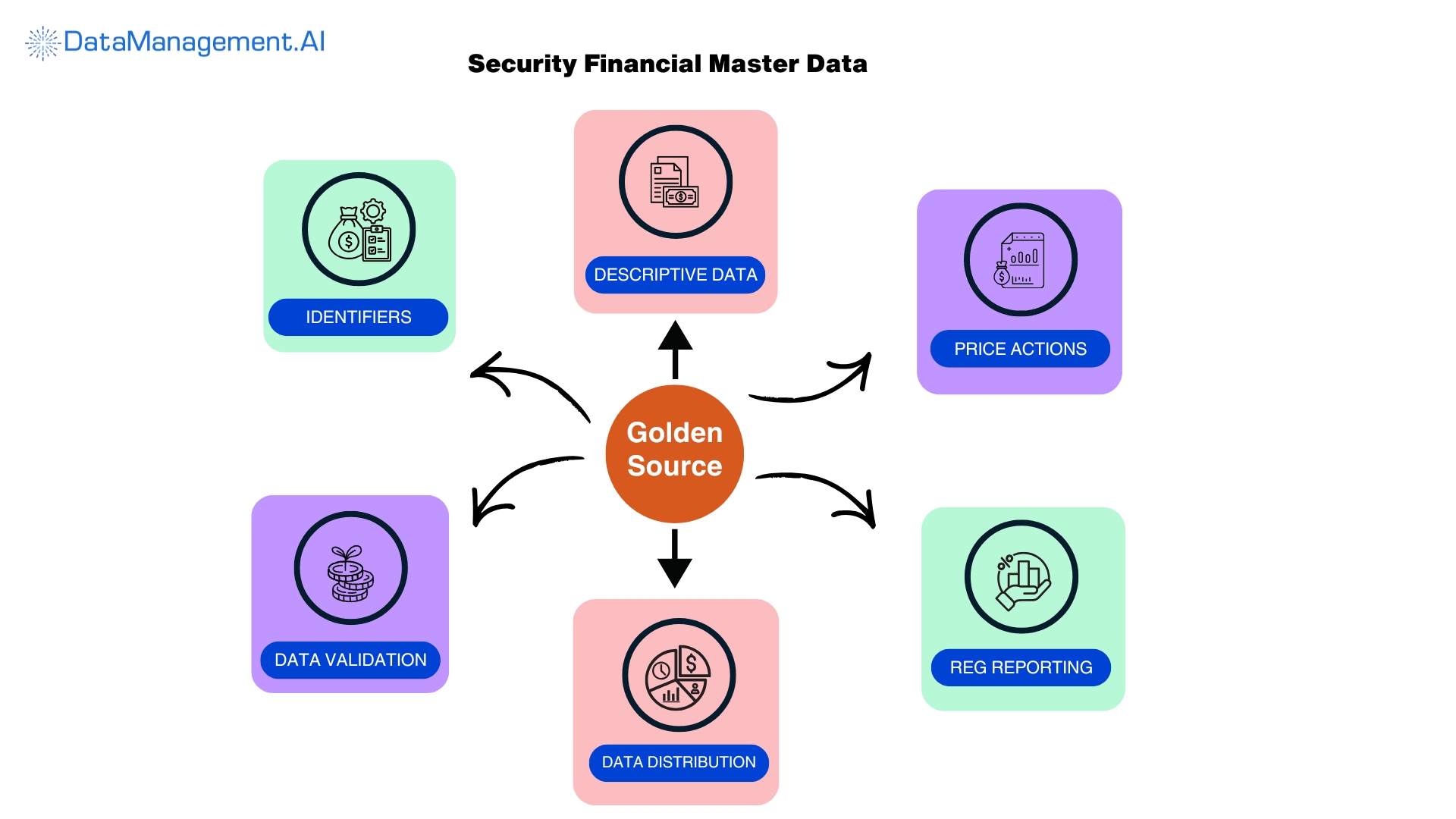
This is your securities database. Every tradable instrument needs accurate financial reference data.
This component of financial reference data includes:
- ISINs, CUSIPs, SEDOLs
- Security descriptions
- Issue dates and maturity dates
- Coupon rates
- Call/put provisions
Your front office trades securities. Your middle office settles them. Then, your back office reports them. All need the same data consistently.
Counterparty and Legal Entity Data
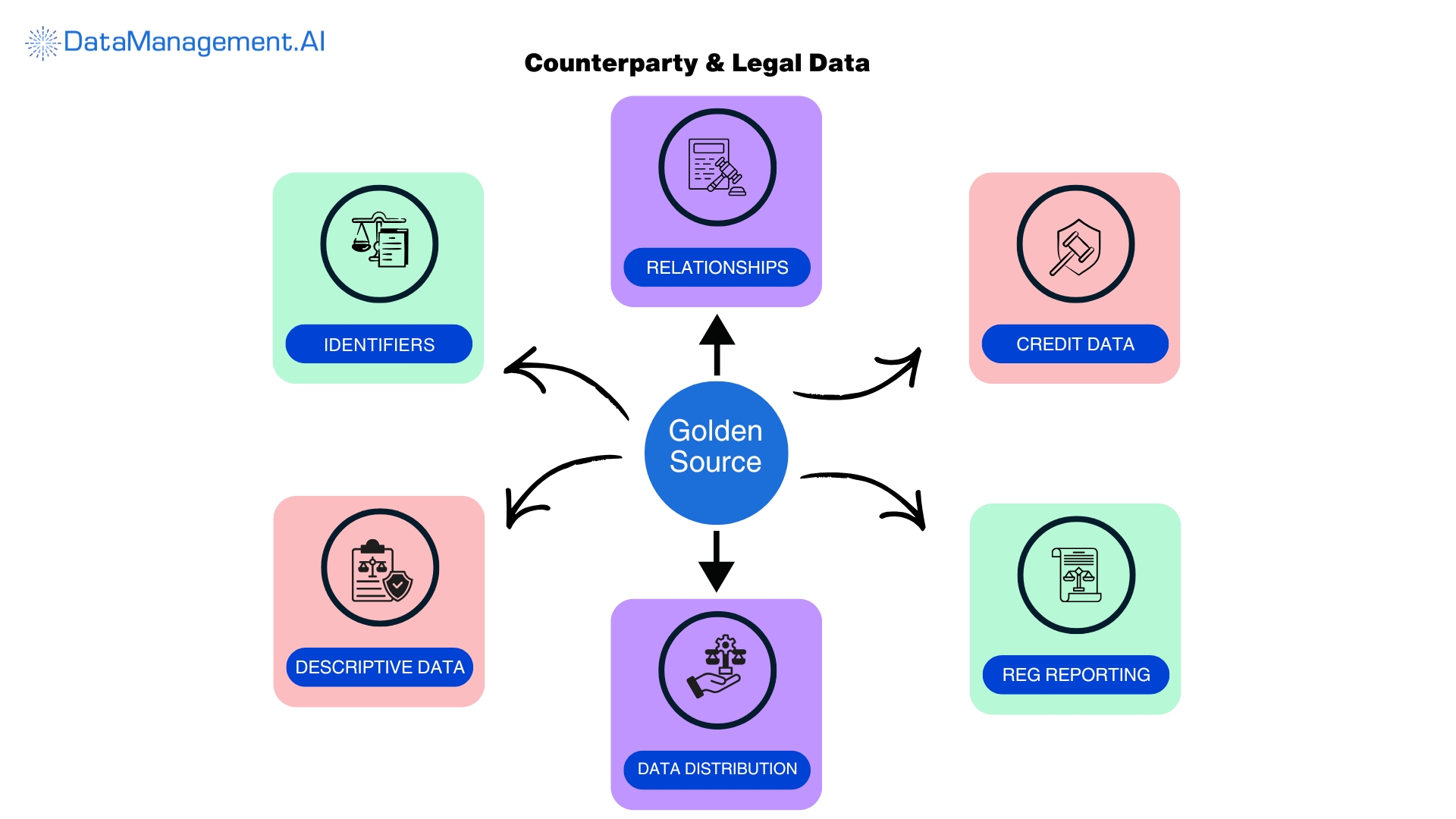
Know who you’re trading with. Sounds simple? It’s not.
Large banks have thousands of counterparties. Each with multiple legal entities, different jurisdictions, and complex hierarchies.
Large Entity Identifiers (LEIs) standardize this. GLEIF maintains the global LEI system.
Still, maintaining accurate counterparty hierarchies challenges most banks.
Market and Reference Data
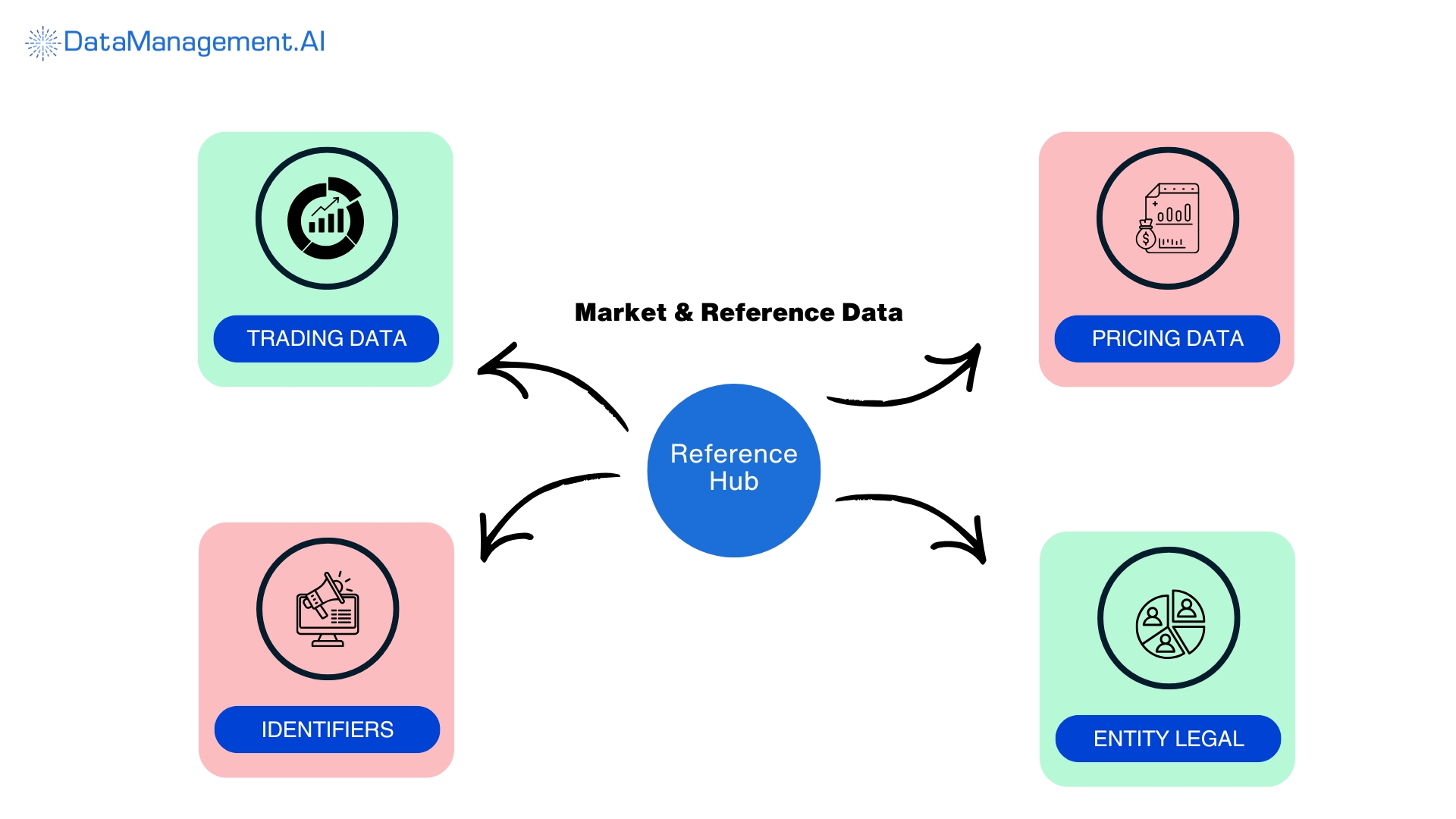
This component of financial reference data covers the aspect of where you are trading, which exchange, and in what market?
Market Identifier Codes (MICs) define this. But markets merge, exchanges consolidate, and rules change.
Your reference data must keep pace.
Pricing and Valuation Data
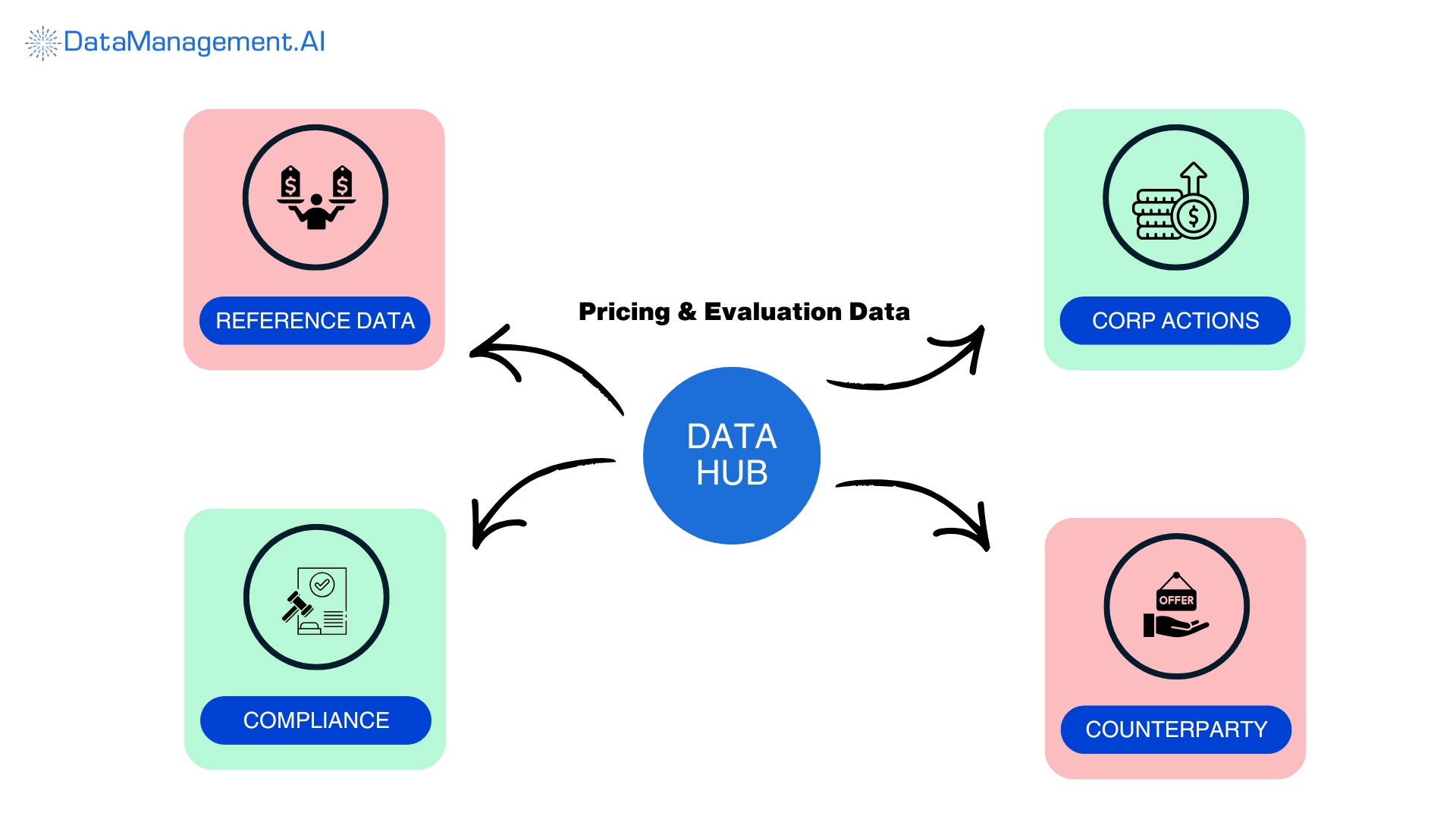
Mark-to-market requires accurate pricing.
Fair value calculations depend on it. Which pricing source do you use? Bloomberg, Reuters or internal models?
Inconsistent pricing sources make your P&L statement unreliable.
For deeper insights on managing complex data structures, check out our guide on master data management best practices.
Common challenges in financial reference data management
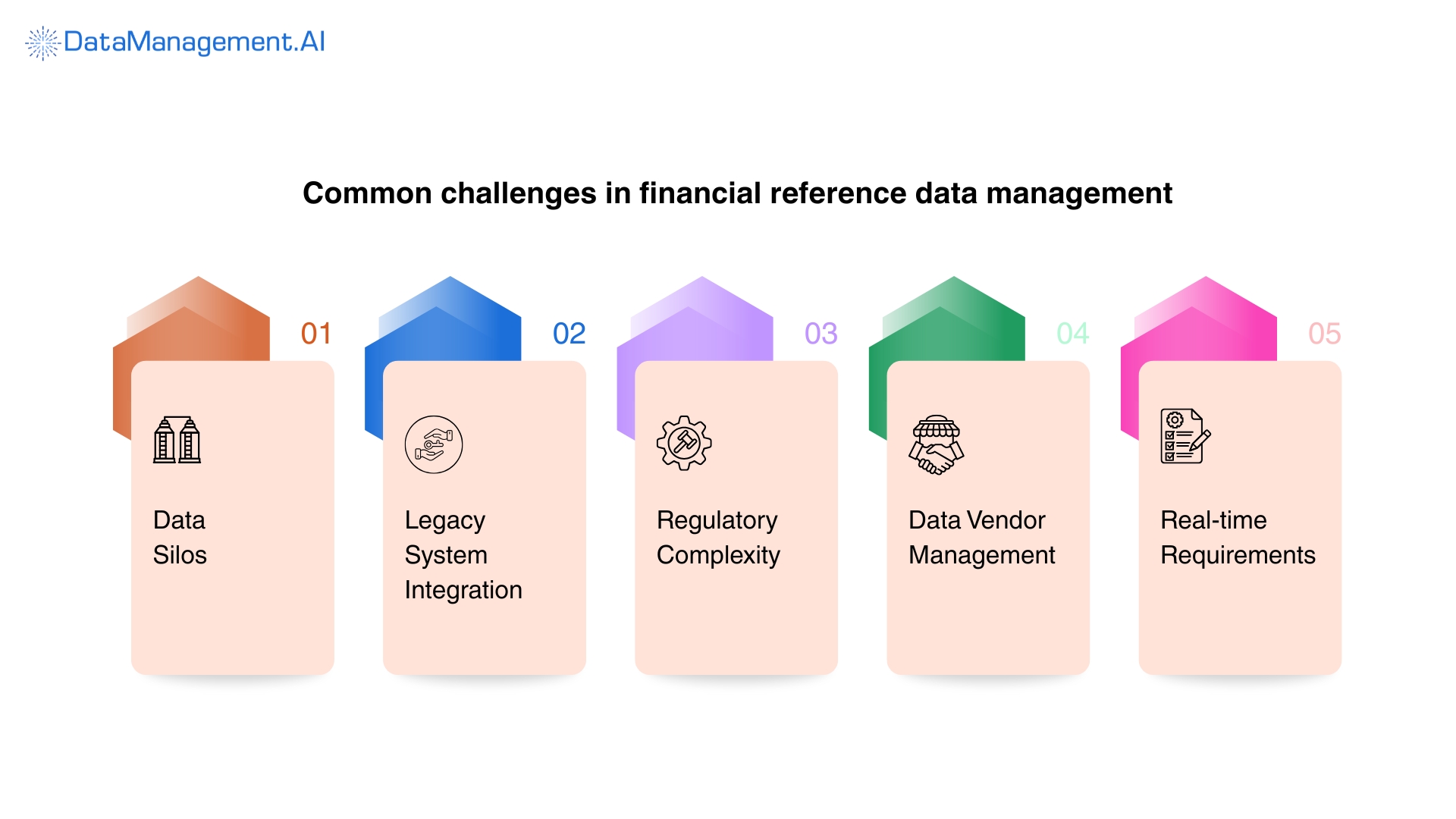
Even with best practices, challenges persist.
Challenge No. 1 – Data Silos
Your trading system has one set of reference data. Your risk system has another. Then, the accounting system has one too.
This reconciliation nightmare goes on and on.
Challenge No. 2 – Legacy System Integration
Modern financial institutions run on decades-old systems that include mainframes, COBOL, and proprietary databases.
Integrating these with modern reference data platforms is complex and expensive.
Challenge No. 3 – Regulatory Complexity
BCBS 239, MiFID II. EMIR, and Dodd-Frank all require specific reference data.
Maintaining compliance across all regulations strains resources.
Challenge No. 4 – Data Vendor Management
Bloomberg, Reuters, ICE, Markit, multiple costs, and multiple formats all consolidate vendor data.
This data vendor reference data is then segregated to consistent reference data, which is a challenge.
Challenge No. 5 – Real-time Requirements
Markets move in milliseconds. Your financial reference data must keep pace.
Mosaic Smart Data states that 83% of banks lack real-time data access.
This gap costs you bigtime.
For comprehensive master data vs reference data strategies on overcoming these challenges, explore our blog post on the same.
“In today’s financial services environment, data is not just an asset—it’s the foundation of every decision, every transaction, every regulatory filing. Reference data management isn’t a back-office function anymore. It’s strategic infrastructure.”
— Jamie Dimon, Chairman & CEO, JPMorgan Chase
Financial Reference Data Management Transformation
You understood financial reference data management challenges, but here is the solution.
DataManagement.AI revolutionizes financial reference data management with intelligent automation.
We provide a specialized suite of AI-driven agents, such as CleaseAI, ReconcileAI, and GovernAI to streamline the complex lifecycle of financial reference data management.
Your accuracy is paramount.
This includes trade settlements and regulatory reporting alike.
Our platform automates ingestion, validation, and standardization of data.
We do this for disparate legacy systems and external providers.
By utilizing an agentic workflow, our platform reduces manual reconciliation efforts and ensures consistency across your golden records.
Our AI-powered approach not only mitigates the risks associated with data inconsistencies and human error, but also accelerates compliance with regulations related to BCBS 239 and GDPR.
Traditional approaches fail because they’re manual, reactive, and disconnected.
We at DataManagement.AI are different.
AI-powered data discovery and classification
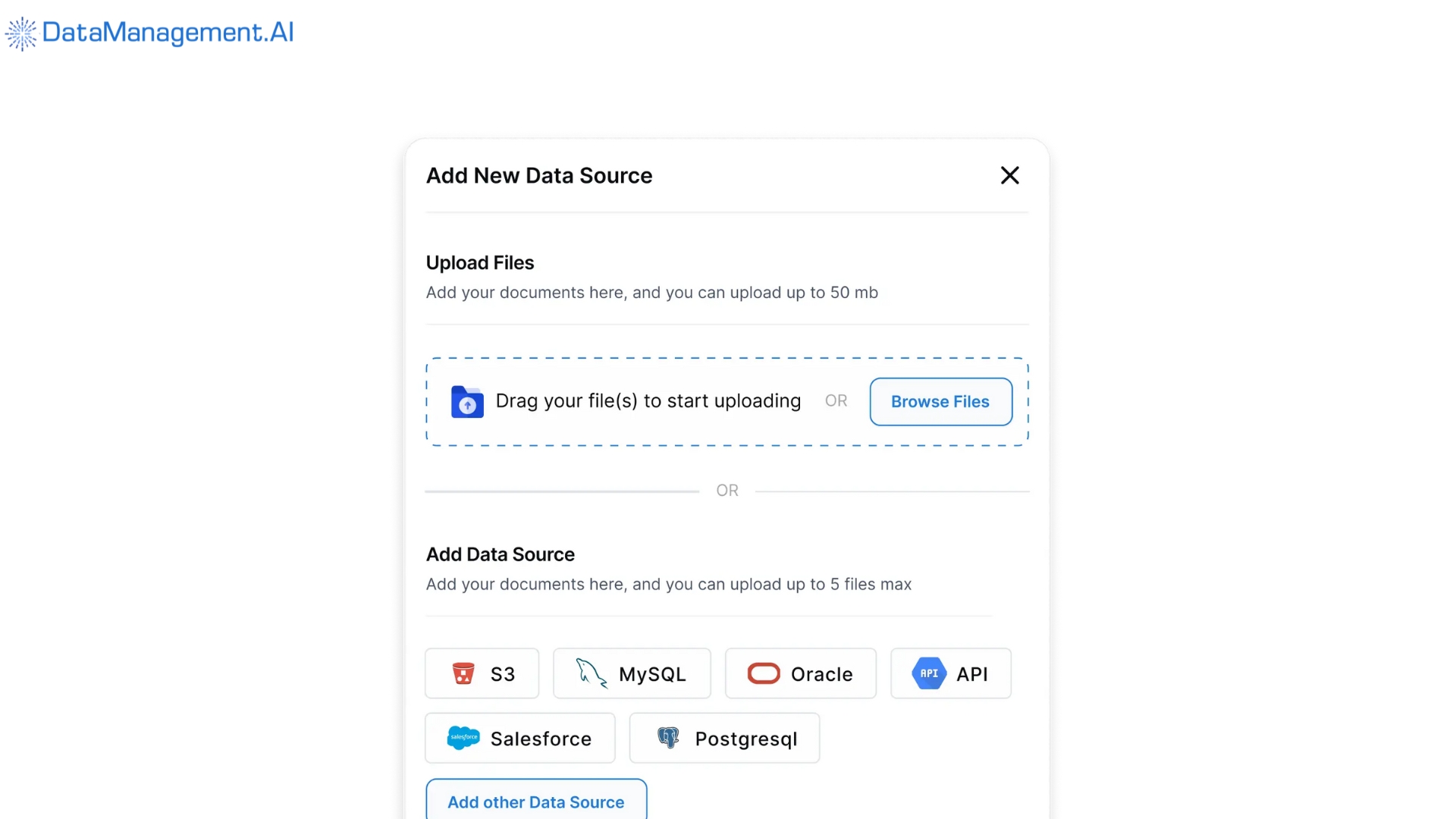
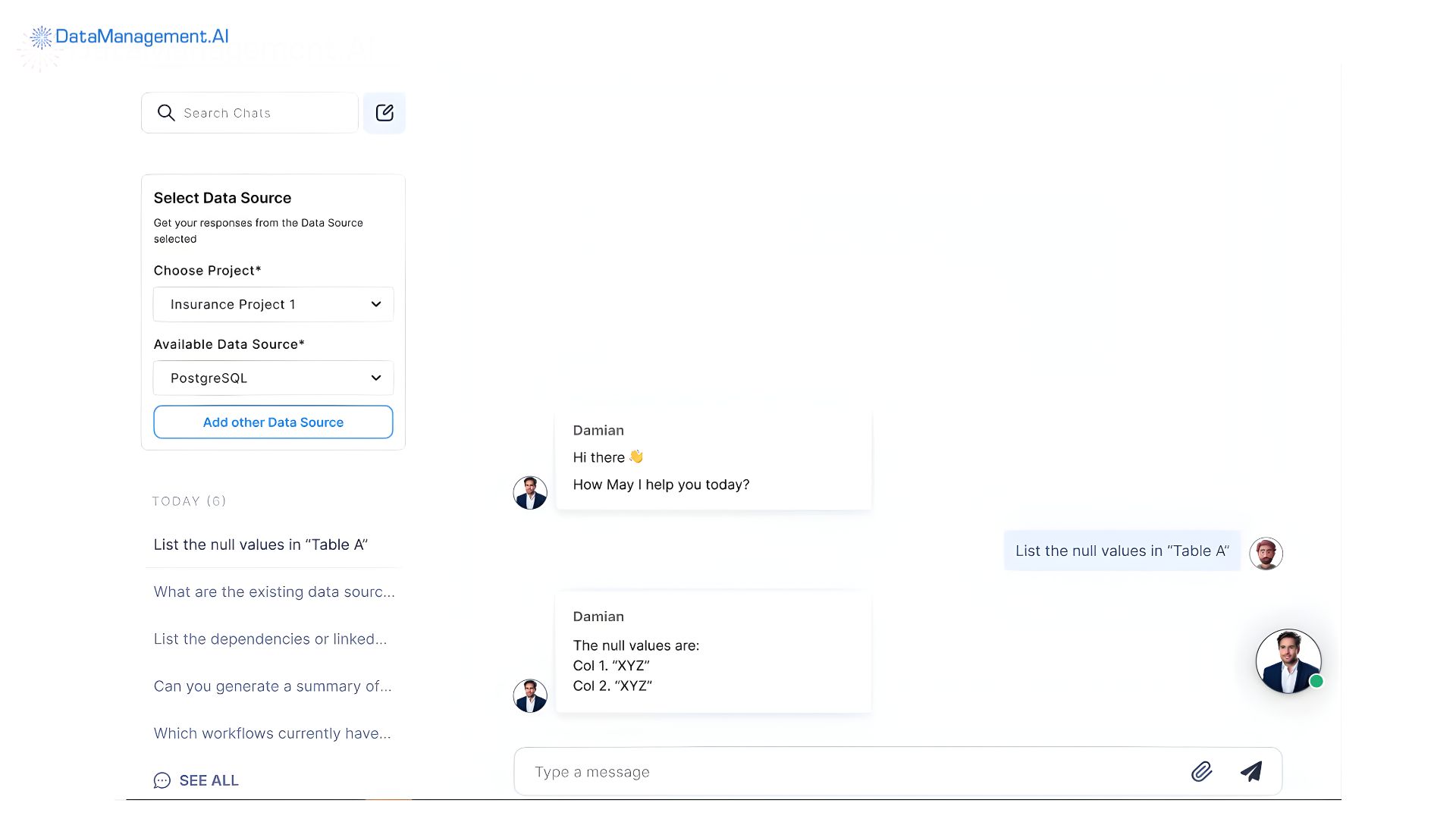
Our intelligent AI agents scan your entire data landscape automatically.
As seen in the image, you can specify from where you need the data to be discovered or retrieved.
They identify reference data across all systems, trading platforms, risk systems, and reporting databases.
The result? Complete visibility with no blind spots.
We don’t just find data, we classify and secure financial reference data, counterparty information, market identifiers, and pricing sources.
Everything is categorized, governed, and connected.
Automated data quality and reconciliation
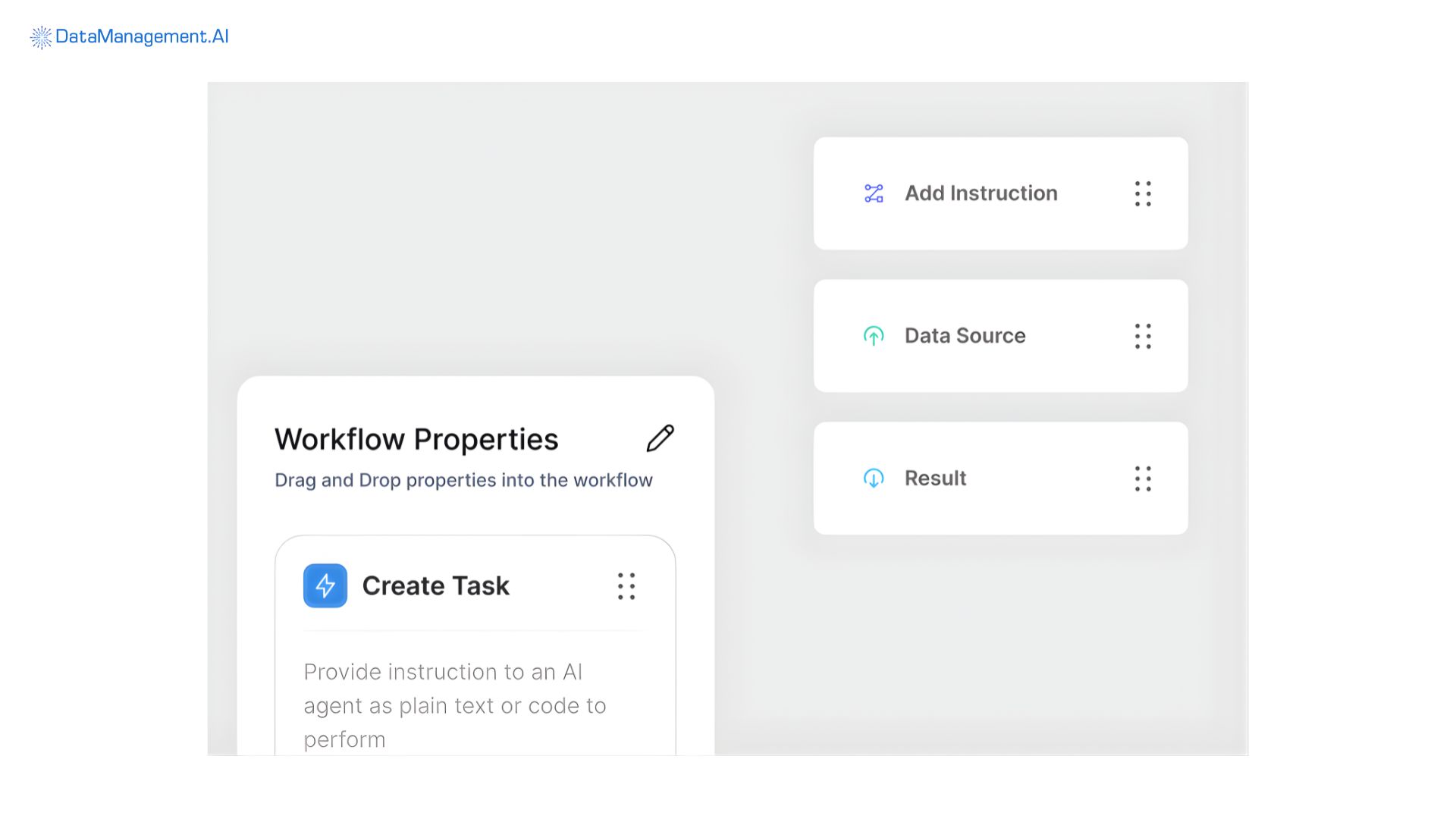
Data quality issues cost you millions. We eliminate them.
Our AI continuously monitors your reference data.
It defects anomalies, identifies inconsistencies, and flags errors before they cause problems.
What about cross-system reconciliation, you ask? Automated. As seen in the image above.
We compare financial reference data iden\ifiers across your platforms. We match counterparties and verify pricing sources.
When we do find discrepancies, our system alerts you, suggests corrections, and implements fixes.
Intelligent data governance and lineage
Understanding what is reference data management for the banking industry means knowing where your data comes from, where it goes, and who changes it.
DataManagement.AI provides complete data lineage. We do this automatically through intelligent agents.
You see the full journey. Source to consumption.
Our platform implements governance policies automatically, along with access controls, change management, and audit trails.
Regulatory reporting, you ask? Simplified.
We track every data transformation, document every change and maintain complete audit history.
Best Practices for Financial Reference Data Management
Implementing effective financial reference data management requires strategy.
DataManagement.AI creates this strategy based on the following best practices.
Establishing Single Source of Truth
Multiple systems create multiple truths.
We suggest picking one authoritative source for each data type.
Have one system for security financial master data and one for counterparty data.
All other systems can consume from these sources. No exceptions.
Implement Automated Financial Data Quality Rules
Manual data quality checks fail. They’re slow, inconsistent, and incomplete.
Automate your validation rules. Check ISINs against ANNA databases. Verify LEIs against GLEIF or validate market codes against ISO 10383.
Run checks continuously and not just once.
Enable Cross-system Data Lineage
Who owns your reference data, who can change it, and who approves the changes?
Define ownership clearly, assign data stewards, and document processes.
Understanding financial reference data management means tracking data flows. Document everything from which systems consume data and how it’s transformed.
Document everything, maintain lineage, and enable traceability.
Invest in Data Architecture
Legacy systems hamper financial reference data management. They create silos and duplicate data.
Modern financial data architecture enables centralized reference data management, cloud platforms, APIs, and real-time synchronization.
Cognitive Market Research states that the financial data services market will reach USD 52.97 billion by 2033. This means investment in data infrastructure is accelerating.
Financial Reference Data Management Isn’t Glamorous
Financial reference data management isn’t glamorous but essential.
Your trades depend on it. Your risk calculations require it.
Your regulatory reporting demands it.
Understanding what is reference data management for the banking industry gives you the foundation.
Understanding what is reference data management in investment banking shows you the complexity.
But here’s the truth. Manual approaches don’t work anymore.
The data volumes are too large, regulatory requirements too complex, and need for speed being too urgent.
You need intelligent automation with AI-powered governance that enables real-time financial reference data synchronization.
You need DataManagement.AI.
We’ve helped banks transform their financial reference data management. We’ve reduced reconciliation time by 85% and achieved regulatory compliance effortlessly.
Schedule a demo today to discover how DataManagement.AI can transform your financial reference data management by modernizing its data infrastructure.