




2022 was a crucial year for numerous US-based companies.
These companies had faced at least one fraud attempt. The entry point for these frauds were suppliers.
70% of manufacturers are still entering data manually. Bad master data still costs the US economy close to USD 3.1 trillion annually.
These mistakes compound, disrupting your purchasing, logistic, sourcing, and finance aspects. Then follows operational delays, audit exposure, and higher costs.
Global supply chains are a complex and hyper-connected network. For CTOs and CDOs such as yourself, this connectivity is a massive risk exposure.
Supplier master data management is not just about organising vendor files. It’s about ensuring compliance, preventing duplicate payments, and maintaining supply chain resilience.
This oversight confirms the truth of what the companies in 2022 faced – Governance without data and unified supplier data can avoid risks. That’s what supplier master data management can do.
What is Supplier Master Data Management?
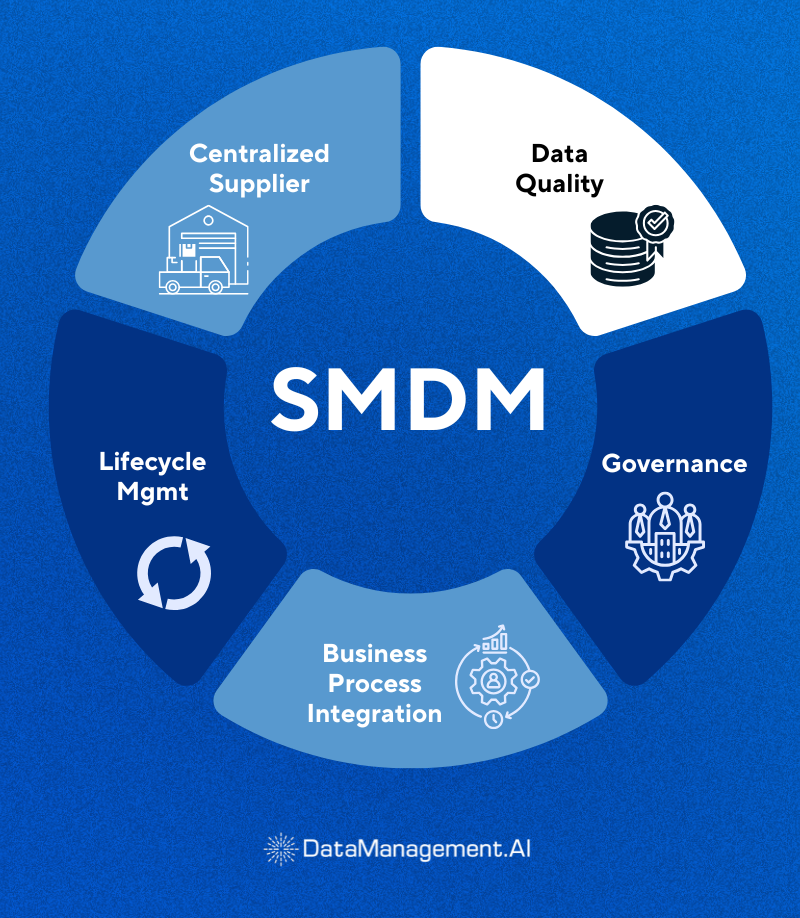
Supplier master data management (SMDM) creates and maintains supplier records.
It establishes a single source of truth for vendor data across your enterprise system.
A good supplier master data management framework will drive your enterprise value. Its key function is to mitigate third-party risks.
Supplier chain master data management consolidates fragmented supplier records. This prevents paying the wrong entity/vendor. It also prevents purchasing from non-compliant vendors.
SMDM ensures consistency across all your systems. It validates key attributes such as tax IDs, legal entity names, and banking details. This accuracy is key towards automated processes.
Supplier chain master data management ensures full transparency and auditable history of changes. This lineage is key towards financial compliance (S0X). It streamlines Know Your Vendor (KYV) checks.
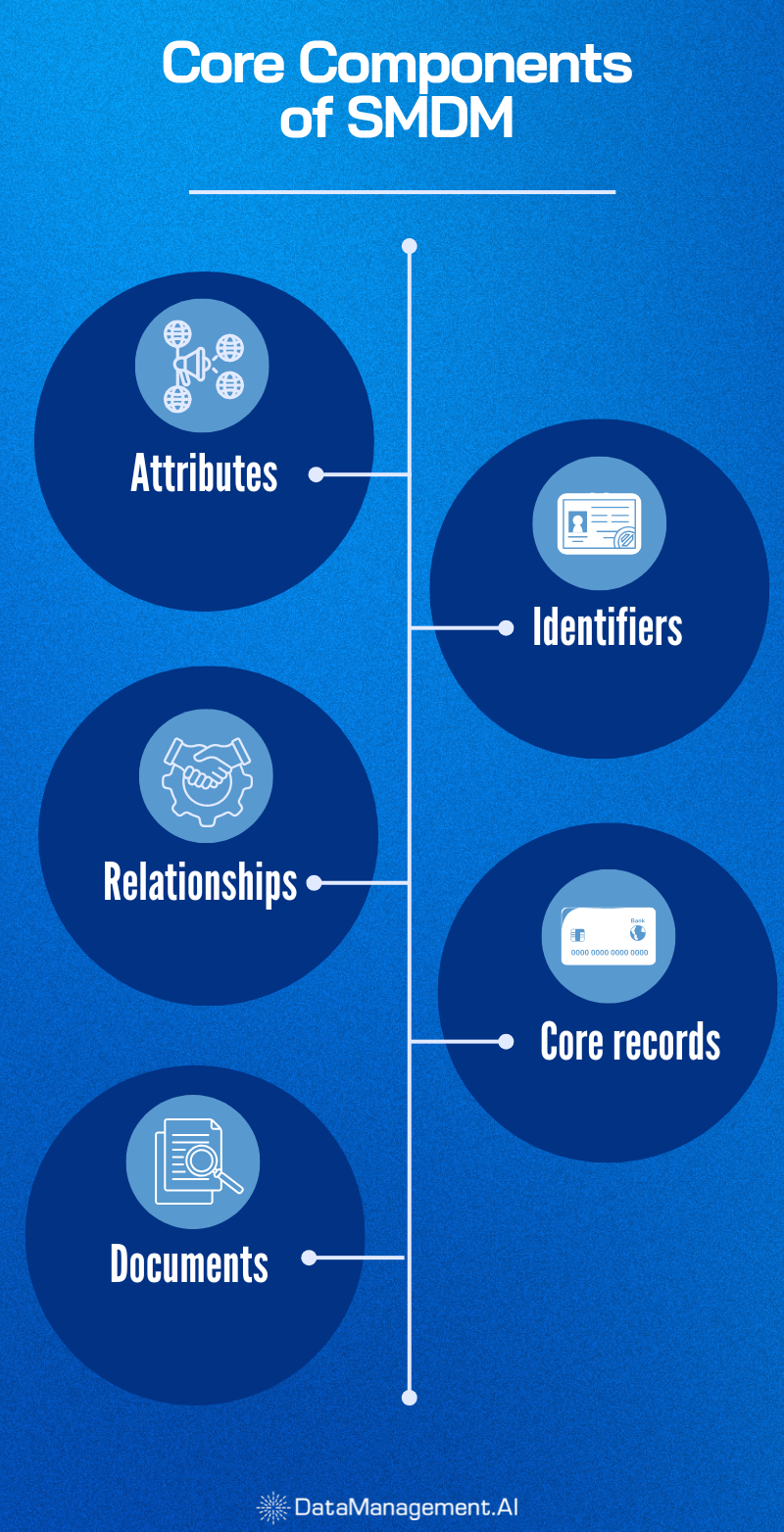
The core components of supplier master data management are:
- Attributes – Supplier characteristics and classifications
- Core records – Basic supplier identification data
- Identifiers – Unique codes tracking vendors across systems
- Relationships – Supplier hierarchies and business connections
- Documents – Certifications, contracts, and compliance records
Supplier chain master data management doesn’t stop at database storage but also adds data quality checks, governance, and process control.
Benefits of Supplier Master Data Management
Supplier master data management validates attributes, tracks audit trails, and manages approvals. Some of its benefits are:
- Creation of a single source of truth – SMDM creates a centralized, standardized, and consistent record for every supplier. This eliminates data silos across your organization.
- Improving accuracy and data quality – SMDM ensures your supplier information (bank accounts, tax IDs, certifications) are complete and reliable so that there are no errors in transactions.
- Boosting of operational efficiency – SMDM streamlines procurement workflows, new supplier setup, and automation of invoice validation. This accelerates the supplier onboarding process.
- Reducing costs and driving savings – SMDM eliminates duplicate supplier records and prevents duplicate payments for better spend analysis.
- Ensuring compliance and audit readiness – SMDM helps businesses meet regulatory, tax, and internal governance requirements, which are essential for certifications and documentation.
What are some Supplier Master Data Management best practices?
Implementing supplier master data management best practices requires you to follow a structured approach. It’s not simply a software installation. It’s a fundamental data governance shift. The following table shows you what tasks are to be prioritized in SMDM implementation.
| SMDM Best Practice | Technical Action Required | Business Value |
|---|---|---|
| Data Standardization | Define a universal data model for all supplier attributes. Enforce naming conventions (legal entity format). | Ensures data is fit for purpose across all consuming systems (ERP, SRM). |
| Data Stewardship | Establish clear ownership. Assign data stewards for supplier domains. | Provides accountability and dispute resolution authority over data quality issues. |
| ‘Golden Record’ Creation | Implement matching algorithms (fuzzy logic, clustering). Define survivorship rules for merging records. | Creates the single, authoritative ‘golden record’ for all transactional use. |
| Integration Strategy | Utilize RESTful APIs for real-time synchronization with source systems. | Guarantees all consuming systems use the most current, validated data. |
SMDM is that structured discipline that collects, unifies, governs, and maintains all your vendor’s critical information in a single, reliable source of truth.
Establishing a data governance framework
Define your SMDM structure.
Also establish your internal vendor policies and processes to manage supplier data. This involves assigning data ownership (the one accountable for the data).
Data stewardship (the one accountable for daily data quality and maintenance) also needs assigning.
A good idea would be to introduce a governance committee that sets standards, approves new data fields, and enforces policies on validation.
This framework ensures consistency and accountability across all your departments that interact with supplier data.
Centralizing and unifying a single source of truth
The goal of SMDM is to eliminate data silos and create a golden record for every supplier.
Implement a dedicated MDM to consolidate supplier information from various disparate systems. This centralized repository should be your only place where master data is managed.
This ensures all your downstream applications and reports use the same, validated set of supplier info.
Looking for a MDM solution that’s AI-native and solves all your problems related to complex pipelines, repeatable tasks, and poor data quality?
DataManagement.AI revolutionizes your master data management through autonomous AI agents.
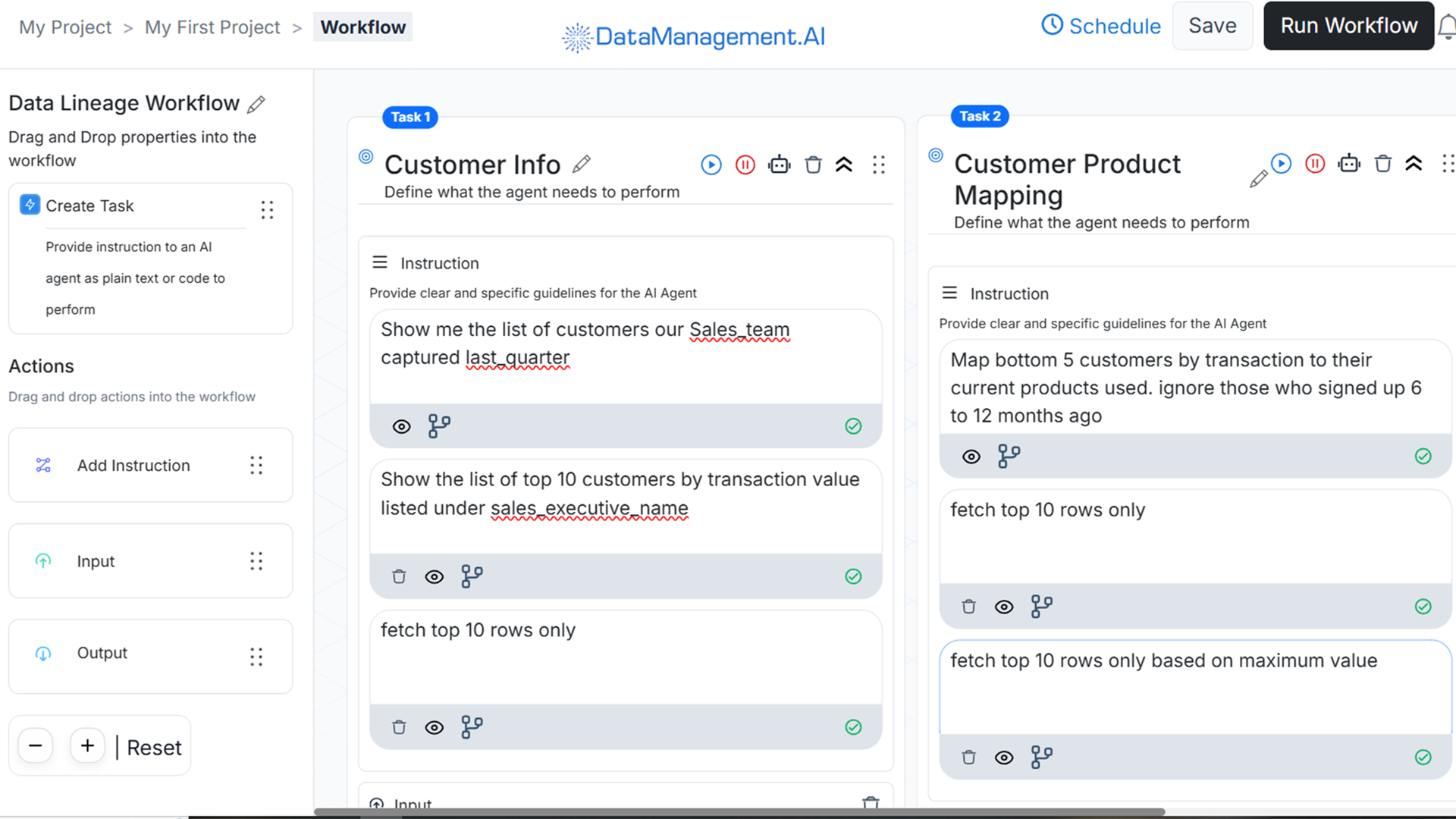
The platform provides you with intelligent data quality assessment, along with predictive data governance and automated metadata management.
The ‘Chain-of-Data’ and ‘Agentic Workflow’ approaches focus on automation, operational efficiency, and speed.
Another ideology that’s unique to DataManagement.ai is Context Cloud.
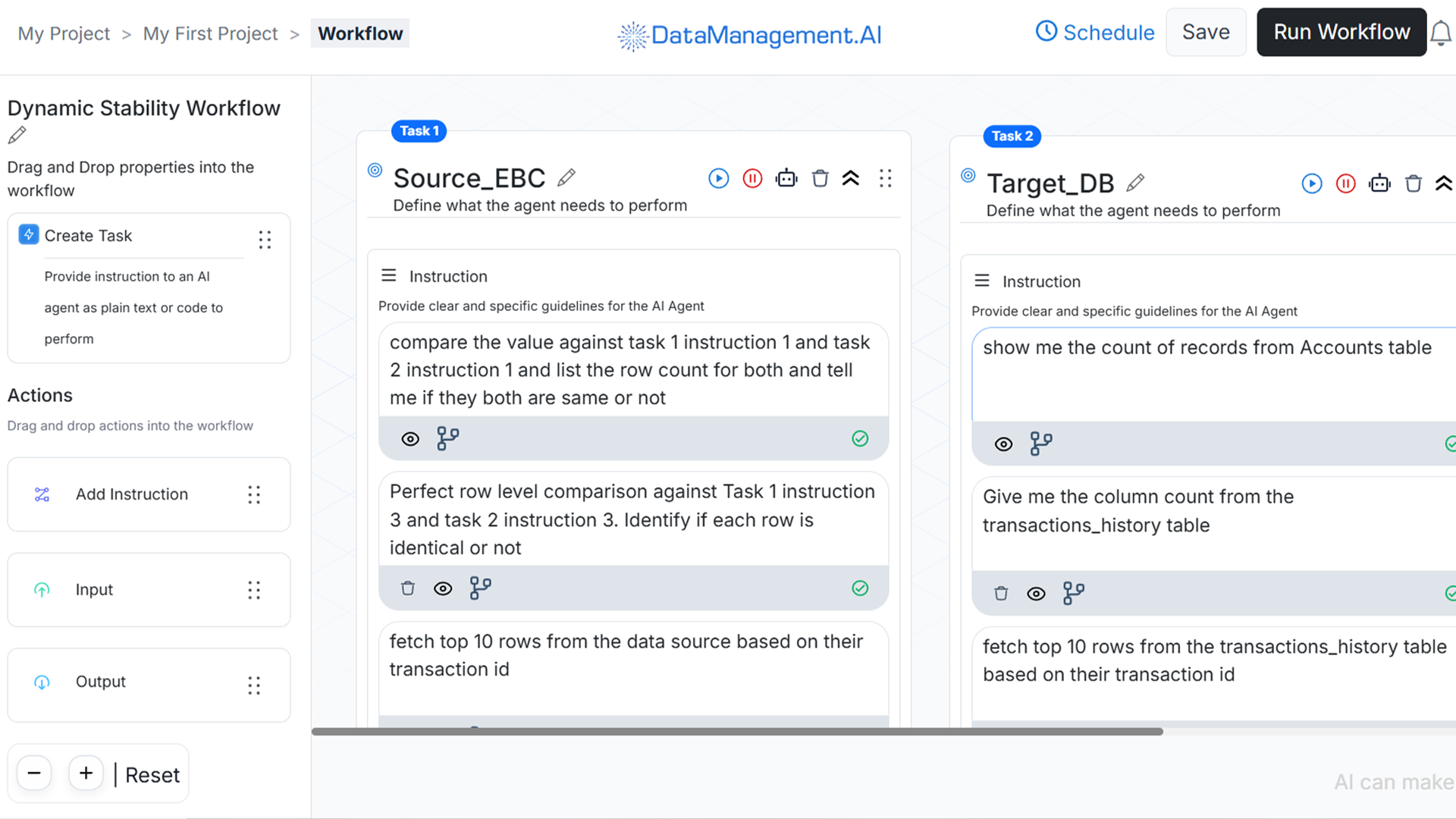
As you can see in the Context Cloud image above, imagine data with a story.
A full, rich story. It connects all your data points. It adds missing information. It makes data complete. It understands relationships. This creates a ‘chain-of-data.’
This chain enriches data. It reconciles data. It governs data effectively. Your data becomes smart. It gains deep understanding.
This is not just an approach, it’s an intelligent layer. This layer sits over your systems.
It connects them all seamlessly. Agents ingest your data by gathering it from sources. They bring it into one place. Then the magic happens.
Data gets contextualized. It is cleaned and organized. It is prepared for use automatically. It is highly efficient.
Schedule a demo with our MDM experts to link every step of your data journey into one efficient data matrix.
Enforcing and standardizing data quality from onboarding
Garbage In, Garbage Out. The quality of output is determined by the quality of input.
Implement strict data validation and data standardisation rules at all data entry points. This is especially important during supplier onboarding processes.
This includes mandatory data fields such as company names, addresses, and payment terms.
Utilizing a self-service SMDM platform allows suppliers to enter and maintain their own data, shifting the data entry burden from you and still enforcing quality controls.
“The ultimate measure of a supply chain management tool is not speed, but the quality of the data underpinning its resilience. Data is the oil, but SMDM is the refinery.”
– Dr. John Sviokla, Marsh McLennan.
Implementing continuous monitoring and data enrichment
Supplier master data is not static.
It degrades over time due to address changes, mergers, and regulatory shifts.
Make sure you schedule periodic data audits for cleansing data that’s outdated or incomplete.
Leverage third-party data enrichment to automatically validate and update critical information like financial health, tax IDs, and compliance certifications.
Prioritizing security and compliance (Know Your Supplier)
Supplier master data management handles highly sensitive supplier information. This could be bank details, contracts, SOPs or tax IDs.
When setting up a SMDM, implement a Role-Based Access Control (RBAC) to restrict who can view, edit, or approve changes to sensitive supplier data.
Currently SMDMs require integration with regulatory compliance checks such as OFAC screening, sanction or anti-money laundering (AML) lists.
This due diligence, which should be in-built in your SMDM, is important for mitigating regulatory and financial risk.
Speaking of mitigating risks, here’s an informative social media post about autonomous agents and their role in mitigating risks.
Which are some Supplier Master Data Management tools?
Choosing the right SMDM tool is key to supporting your organization’s data complexity.
It must handle high-volume data integration and accommodate decentralized data sources. Modern SMDM tools utilize a hybrid architecture that combines transactional and registry styles.
Gartner states that 60% of enterprises report issues with inconsistent master data. A specialized supplier master data management tool is essential for maintaining data integrity and reducing operational risks.
Your SMDM platform must integrate with your ERP such as SAP, Ariba, Coupa or Oracle, along with treasury systems.
Integration should be almost real-time. This removes latency that can lead to errors. A hub-and-spoke model is often employed that also acts like a central hub.
The core of any supply chain master data management tool must combine the following engines,
- Data quality engine – This is important for automated profiling, cleansing, and standardization.
- Matching engine – This is key for high-performance algorithms to identify resolution.
- Workflow engine – This is for automating onboarding, changing requests, and approval processes
- Data governance layer – Tools for defining data ownership, lineage, and policies.
Here’s a list of some Supplier Master Data Management tools.
DataManagement.AI
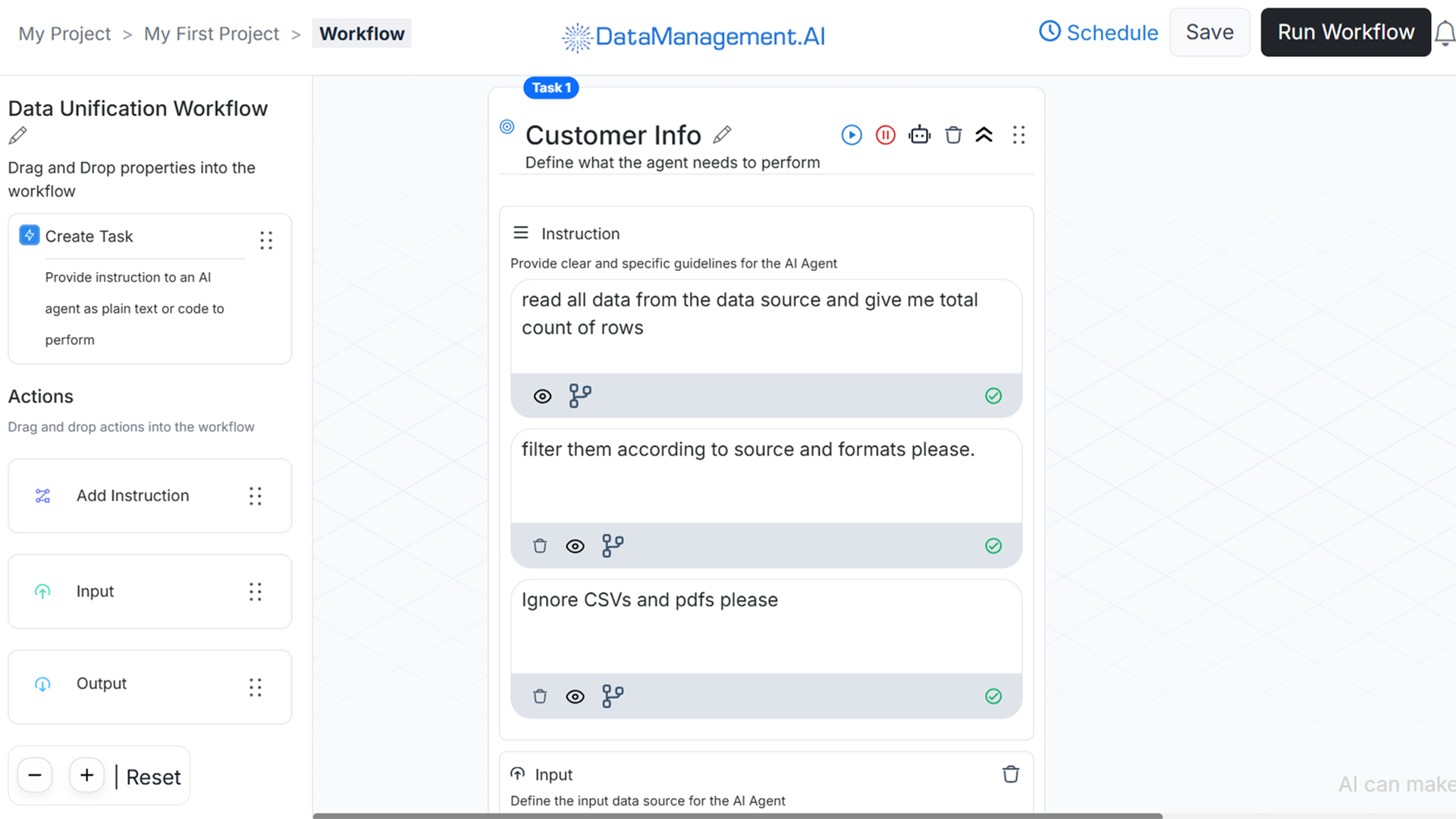
DataManagement.AI transforms SMDM by deploying specialized AI agents.
These agents automatically cleanse, standardize, and enrich supplier records across disparate systems without requiring data migration.
Our agent, DiscoveryAI, explores data landscapes to uncover hidden relationships and dependencies.
CleanseAI intelligently detects and fixes inconsistencies, duplicates, and data quality issues that hamper supplier databases.
Through its Chain-of-Data architecture, you can connect supplier data from ERP systems, external sources, and ERP systems.
You get a unified view without costly ETL processes. DataManagement.AI’s end-to-end lineage tracking maintains a living metadata catalog.
This catalog completes audit trails for regulatory compliance and quality metrics that are critical for supplier governance and risk management.
Your procurement team gets access to accurate and complete supplier master data for decision-making/ This reduces the manual effort that’s required to maintain supplier records.
Traditional supplier master data management platforms require manual data entry. DataManagement.AI uses generative AI supplier master data management capabilities.
Segment
Agile/Cloud-native with AI-native focus.
Primary focus
Speed, flexibility, and AI-driven automation via ‘agentic workflow’ for real-time, in-place data governance and quality.
| Core Features |
|
|---|---|
| Key Strengths |
|
| Weaknesses |
|
| Pricing Model |
|
| Best Suited For | Organizations looking for autonomous data management with minimal human intervention. |
| Deployment Strategy | Cloud-native architecture with API-first design enabling rapid deployment across hybrid environments. |
| Integration & Scalability | Offers instant integration and high scalability through in-place data access (no replication required). |
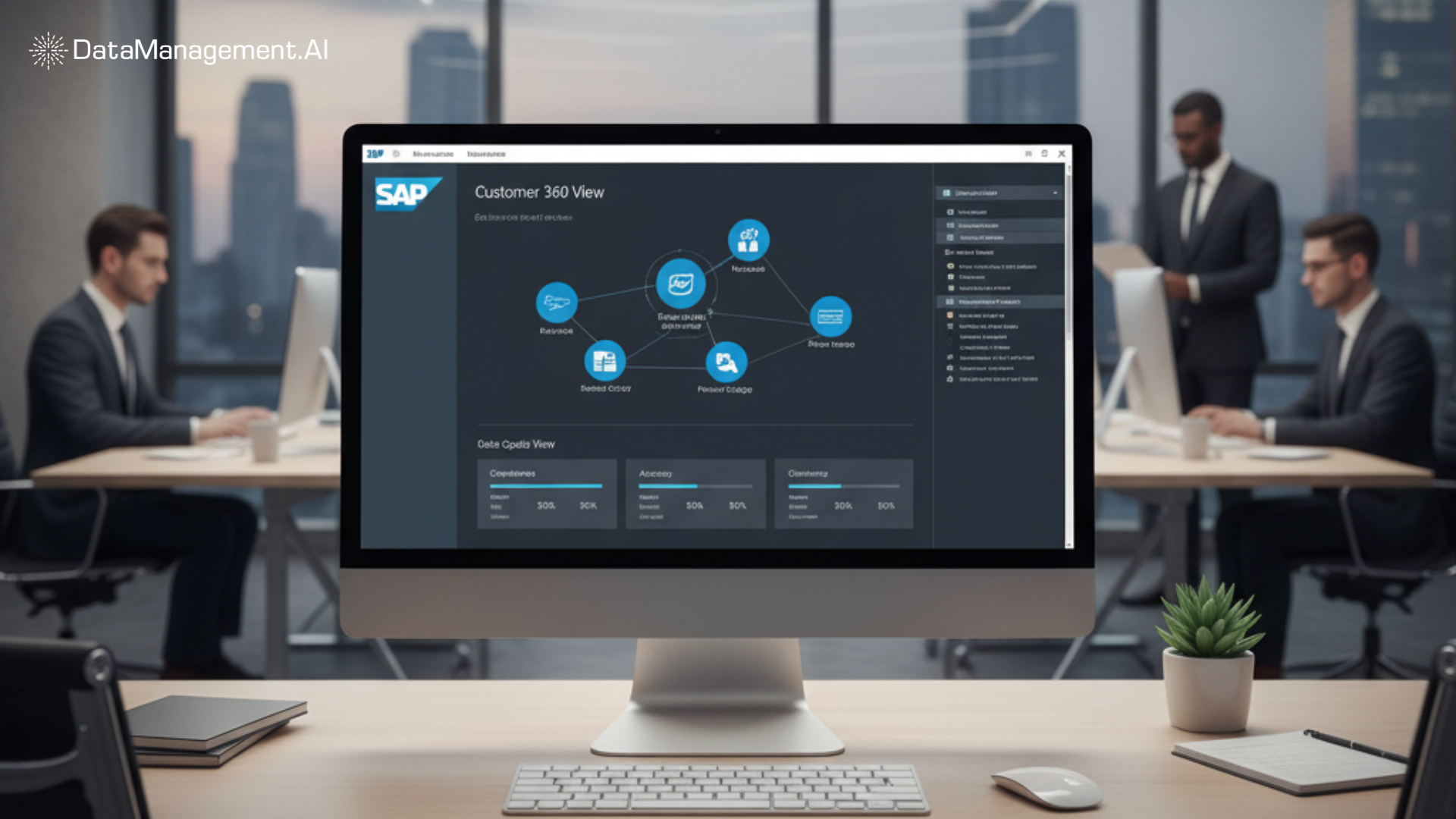
SAP Master Data Governance (SMDM)
Segment
Enterprise multi-domain.
Primary focus
Centralized consolidation and governance. Deeply integrated into SAP S4/4HANA transactional and process ecosystems.
| Core Features |
|
|---|---|
| Key Strengths |
|
| Weaknesses |
|
| Pricing Model |
|
| Best Suited For | SAP-centric organizations require a tight ERP integration.. |
| Deployment Strategy | On-premises or SAP cloud with phased rollout approach. |
| Integration & Scalability | Excellent integration with SAP products. High scalability on the HANA platform. Strong ecosystem support. |
Informatica Multidomain SMDM
Informatica SMDM is scalable and flexible as a multi-domain SMDM.
It comes with advanced data quality and data governance tools for supplier data. It offers capabilities also linked to data integration from various source systems.
It also delivers data quality management with survivorship logic to create a ‘golden record’ by selecting the best data elements from different sources.
Segment
Enterprise multi-domain.
Primary focus
Centralized governance across suppliers and other domains. Data quality and data integration capabilities over a cloud-native platform (IDMC).
| Core Features |
|
|---|---|
| Key Strengths |
|
| Weaknesses |
|
| Pricing Model |
|
| Best Suited For | Large enterprises with complex data ecosystems and dedicated IT teams. |
| Deployment Strategy | On-premises, hybrid, and cloud deployment with extensive customization options. |
| Integration & Scalability | Leveraging IDMC platform for native integration with demonstrated ability to manage diverse systems. |
Profisee SMDM Platform
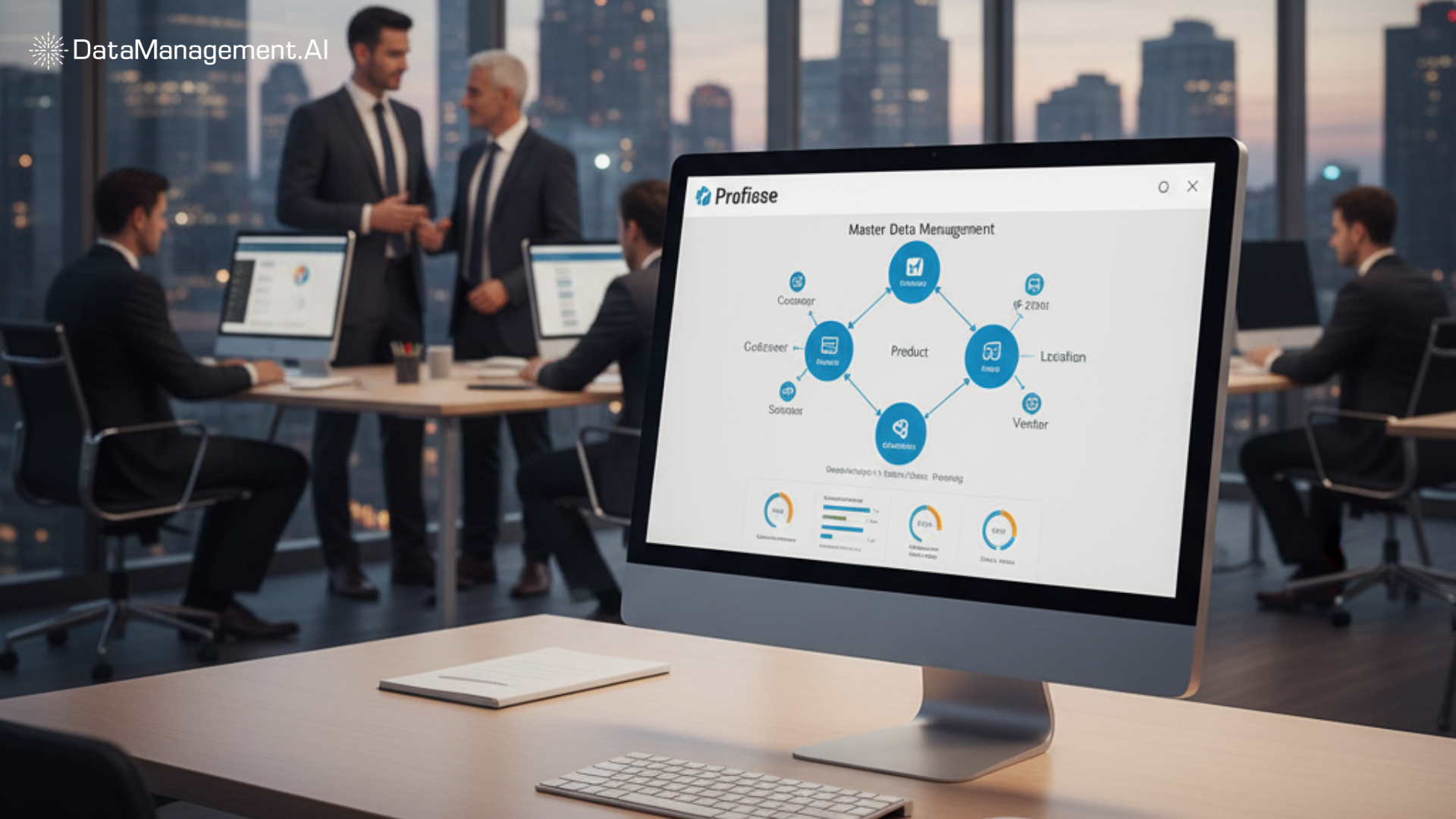
The Profisee SMDM tool is a cloud-native tool that focuses on delivering trusted data with a ‘make it easy, accurate, and scalable’ approach.
For suppliers, it provides an intuitive data stewardship user interface. There’s also a visual relationship management feature to understand complex supplier hierarchies.
It also provides robust matching and survivorship algorithms. It features a native integration option particularly for Microsoft Azure services.
Segment
Agile/cloud-native multi-domain.
Primary focus
Cloud-native deployment, speed, and flexibility. Accelerates time-to-value and deeper integration with modern data ecosystems (especially Microsoft Fabric/Azure).
| Core Features |
|
|---|---|
| Key Strengths |
|
| Weaknesses |
|
| Pricing Model |
|
| Best Suited For | Mid-market organizations seeking rapid MDM deployment. |
| Deployment Strategy | Cloud-first with accelerated implementation methodology. |
| Integration & Scalability | Containerized cloud-native architecture enabling infinite horizontal scale. Native integration with Snowflake plus REST API support. |
Semarchy xDM
Semarchy xDm is a supplier chain master data management tool that is recognized for its simplicity, agility, and machine learning-powered automations.
It excels at unifying supplier data by using algorithms for survivorship, advanced matching, and classification. This accelerates the data mastering process.
Its architecture supports transparent lineage and audibility – which is crucial for governance and compliance.
Segment
Agile/cloud-native multi-domain.
Primary focus
Unified platform combining master data management, governance, and data integration. AI-ready data delivered via low-code Intelligent Data Hub approach.
| Core Features |
|
|---|---|
| Key Strengths |
|
| Weaknesses |
|
| Pricing Model |
|
| Best Suited For | Organizations wanting integrated master data management software and data quality tools. |
| Deployment Strategy | Agile implementation with iterative domain delivery. |
| Integration & Scalability | Metadata-driven architecture with native support for Snowflake, major clouds, and on-premises deployment. It scales horizontally through application server clustering. Built-in REST and SQL endpoints. |
Supplier master data management is your data pillar
Effective supplier master data management is your pillar for a resilient supply chain.
An effective SMDM requires policies, practice, and a powerful AI-powered SMDM tool.
The maturity of your SMDM tool directly correlates with risk reduction.
It directly impacts your bottom line as fragmented supplier data becomes a massive liability.
Remember that poor supplier master data management costs the US economy USD 3.1 trillion annually.
Organisations such as yours, face compliance failures, fraud attempts, and operational inefficiencies.
Don’t let fragmented supplier records hold you back. Discover how AI-powered supplier master data management accelerates your supply chain initiatives by also maintaining control and compliance.
Schedule a demo to unify and automate your supplier data management with AI.
Frequently Asked Questions (FAQs) on Supplier Master Data Management
Q. Why does supplier master data management matter?
A. Supplier master data management is a framework for creating and maintaining authoritative supplier records across enterprise systems. It matters because fragmented supplier data costs organizations significantly – leading to duplicate payments, compliance failures, and operational delays.
Q. What is the difference between a supplier master data management system and a data warehouse?
A. A supplier master data management system focuses on consolidating, cleansing, and governing the core attributes. A data warehouse is a system of analysis. It stores historical and aggregated transactional data. The SMDM feeds clean, governed data into the warehouse.
Q. What are the key benefits of supplier master data management beyond risk reduction?
A. Beyond risk reduction, the benefits of supplier master data management include working capital optimization. Clean supplier data enables early-payment discount capture. It supports automated invoice reconciliation. This reduces accounts payable overhead. It provides consolidated spending visibility for better negotiations.
Q. What are the architectural models for a supplier master data management?
A. The three common architectural models are Registry, Hub-and-Spoke, and Coexistence. The Registry model links data without centralizing it. Hub-and-Spoke centralizes data for cleansing, then distributes it. Coexistence blends these approaches. The Hub-and-Spoke model is often preferred for supplier master data management deployment.
Q. Why is a dedicated supply chain master data management better than ERP?
A. An ERP system is designed for transaction processing. It lacks the specialized data governance and reconciliation capabilities needed for supply chain master data management. A dedicated supply chain master data management platform provides advanced matching, survivorship rules, and complex data modeling across multiple domains.
Q. How does generative AI supplier master data management work?
A. Generative AI supplier master data management revolutionizes traditional MDM approaches by adding intelligent automation, context awareness, and predictive capabilities. Generative AI automates supplier data classification by analyzing descriptions and assigning correct taxonomy automatically.