




Did you know?
British Airways paid USD 20 million for weak data security.
This 2018 breach exposed 40,000 customer records.
Payment card details, CVV codes, and personal addresses were all compromised.
The root cause?
Poor data quality management practices.
This includes no multi-factor authentication, plaintext storage of card details, and inadequate monitoring systems.
PWC states that 67% of organizations don’t completely trust their own data for decision-making, leading to false promises within data quality.
Today, I’ll walk you through the exact best practices for data quality management that’ll transform your data from a liability into your competitive edge. Let’s start!.
Why do data quality management best practices matter?
Every CDO knows the statistics.
But let me be blunt.
Poor data quality costs organizations USD 12.9 million per year. That’s according to Gartner.
Not ‘might cost’ or ‘could cost’. But, ‘actually cost’.
British Airways learned this the hard way.
Their breach started with compromised credentials, no MFA protection, and hackers moving through Citrix systems.
This wasn’t a sophisticated attack, it was basic hygiene failure.
The cost of USD 20 million in fines was okay. Customer trust being destroyed was far worse.
What you need to understand by this is that data quality management isn’t about clean spreadsheets or avoiding regulatory fines.
MIT Sloan suggests that companies lose 15-25% of revenue annually due to poor data quality and need to seize the opportunity towards better data quality.
Your competitors are investing heavily in data quality.
The question isn’t whether you can afford to invest in best practices for data quality management, it’s whether you can afford not to.
5 best practices for data quality management
I am being direct.
Most data quality initiatives fail.
Not because of the lack of technology, but because organizations treat data quality as an IT problem instead of a business imperative.
Here are the best practices in data quality management that separate winners from losers.
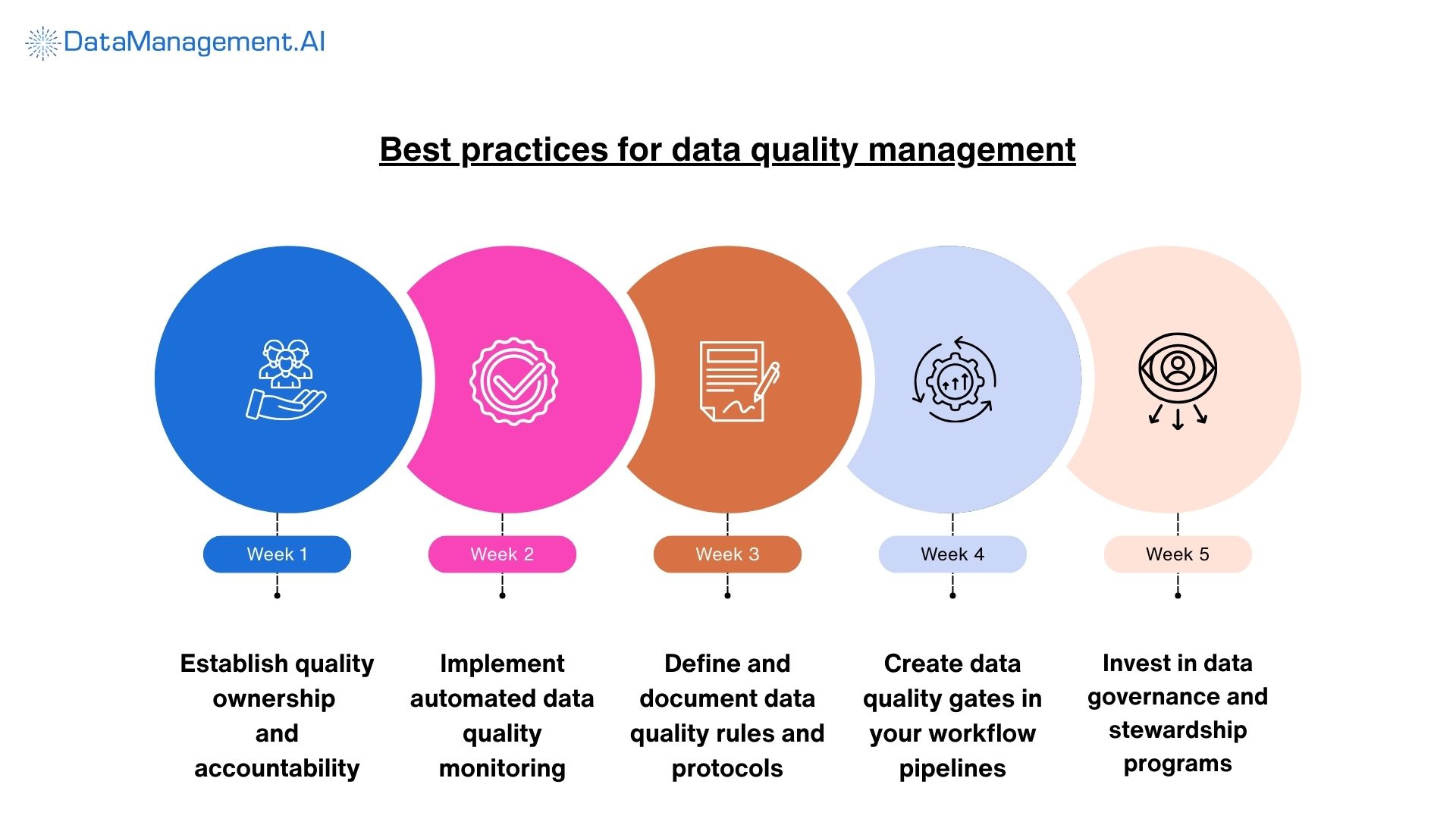
Establish quality ownership and accountability
Your data quality problems won’t fix themselves.
Set measurable metrics for each quality dimension.
Define acceptable accuracy thresholds. 95%? 99.9%? Whichever you deem best.
Next, look at document completeness requirements. Which fields are mandatory and which are optional?
British Airways failed here. They didn’t have standards for logging payment data.
A testing feature remained active in production. That’s what happens without clear standards.
You need to clear ownership. Designate data stewards for each critical data domain. Give them authority, not just responsibility/
Hold them accountable with KPIs tied to data quality metrics.
According to the 2024 State of Data Quality Report, 60% of organizations cite data quality as their top investment priority.
Why?
Because they’ve learned that without ownership, quality initiatives die.
Implement automated data quality monitoring
Manual data quality checks don’t scale.
The 2025 State of Data Quality Survey found that data downtime nearly doubles year-on-year.
Why?
Because 68% of respondents took four hours or more to just detect data incidents.
Automated monitoring catches issues in real-time. Profile your data continuously. Set up automated alerts for anomalies.
Monitor data freshness, completeness, accuracy, and consistency automatically.
The best practices of effective data quality management include ML-driven data observability.
These tools assess data across your entire ecosystem from a single dashboard.
They provide root cause analysis, automated logging, data lineage, and real-time alerts.
“Data quality is the most important thing you can do to make your business successful. If your data is bad, your decisions will be bad.”
– Thomas C. Redman
Define and document data quality rules
Data quality isn’t a one-time project.
Implement continuous monitoring tracks:
- Quality metrics across all dimensions
- Anomaly patterns in data flows
- Threshold breaches in real-time
- Data lineage and transformations
British Airways didn’t detect their breach for over two months. Continuous monitoring would have caught it within hours.
Create a data quality framework that everyone understands.
Don’t just count errors. Track improvements in decision-making accuracy.
Create data quality gates in your pipelines
Bad data should never enter your systems.
Implement data quality gates at every entry point. Before data moves from source to warehouse, validate it.
Before it enters your analytics system, check it.
Monte Carlo’s research found organizations average 290 manually-written tests across data pipelines.
That’s not enough.
Invest in data governance and stewardship programs
Governance isn’t optional anymore.
Assign data stewards for each domain. Give them authority. Hold them accountable.
Governance provides the framework while stewardship provides the execution.
Your governance program should include:
- Data catalogs that document what data you have
- Data lineage tracking that shows where data comes from
- Access controls that determine who can use what
- Quality standards that define acceptable data
- Compliance policies that ensure regulatory adherence
Target’s data breach ordeal
A quick and costly example of poor data quality management is Target.
Hackers stole credit card information of over 40 million customers.
The breach is often discussed as a cybersecurity failure, but the issue was actually the failure of quality and internal alerts.
The fallout from this mismanagement was amplified by inconsistent data silos across the organization.
Target struggled to accurately identify and communicate this breach with the affected customers.
Public relations was a disaster and the company was forced to pay over USD 18.5 million in legal settlements.
A lesson for you.
When you fail to prioritize the quality of data or accuracy of reporting systems, you lose the ability to distinguish between a routine system glitch and a massive threat.
Steps to improve data quality management: Quick framework
You understood the best practices. Now let’s get technical.
Here’s your roadmap for how to improve data quality management in your organization.
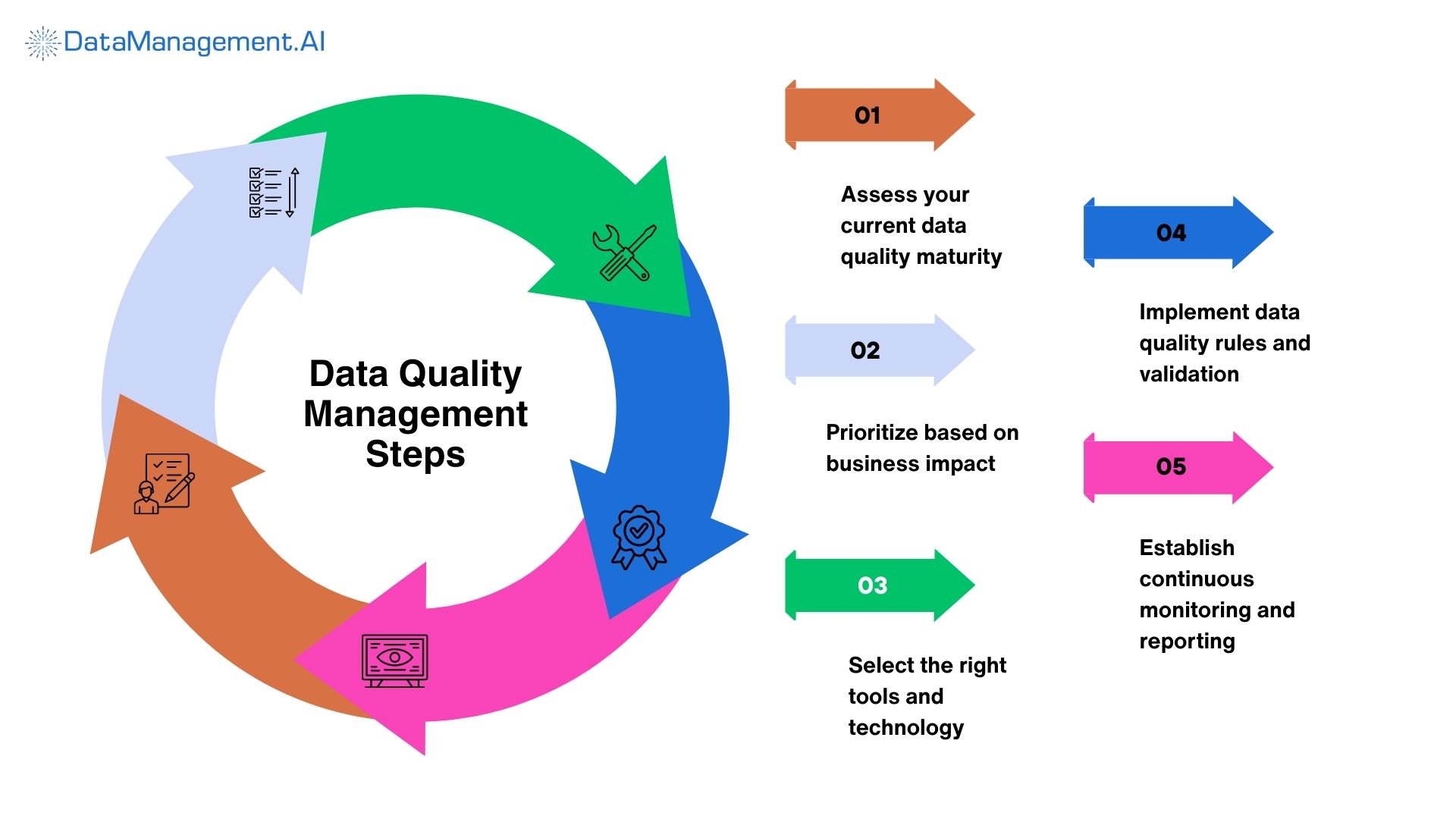
Step 1 – Assess your current data quality maturity
Start with an honest audit.
How good is your data really?
Use the six dimensions of data quality as your framework. They are:
- Accuracy
- Completeness
- Consistency
- Timeliness
- Validity
- Uniqueness
Sample your most critical datasets.
Run quality profiling and document what you find.
The TDWI 2024 State of Data Quality Report recommends conducting a thorough audit to identify rogue datasets, untagged data assets, and issues in data lakes.
Identify the gaps.
Where are the biggest quality problems and which data domains have the most impact on business outcomes?
Step 2 – Prioritize based on business impact
Not all data is created equal.
Focus first on data that directly impacts revenue, customer experience, or regulatory compliance.
For retailers, product master data is critical. For healthcare, its patient records. For financial services, transaction data.
Don try to fix everything at once. Prioritize, get quick wins and build momentum.
Step 3 – Select the right tools and technology
You need the right weapons for this fight.
The data quality management software market was valued at USD 2.23 billion in 2024. It’s projected to reach USD 6.89 billion by 2033.
Why such explosive growth?
Because manual approaches don’t work.
Look for solutions that offer:
- Automated data profiling and discovery
- Real-time data quality monitoring
- ML-driven anomaly detection
- Data cleansing and standardization
- Integration with your existing data stack
Your partner in data quality excellence
This is exactly where (not after step 3 but holistically) DataManagement.AI transforms your data quality journey.
Our platform embeds governance by design.
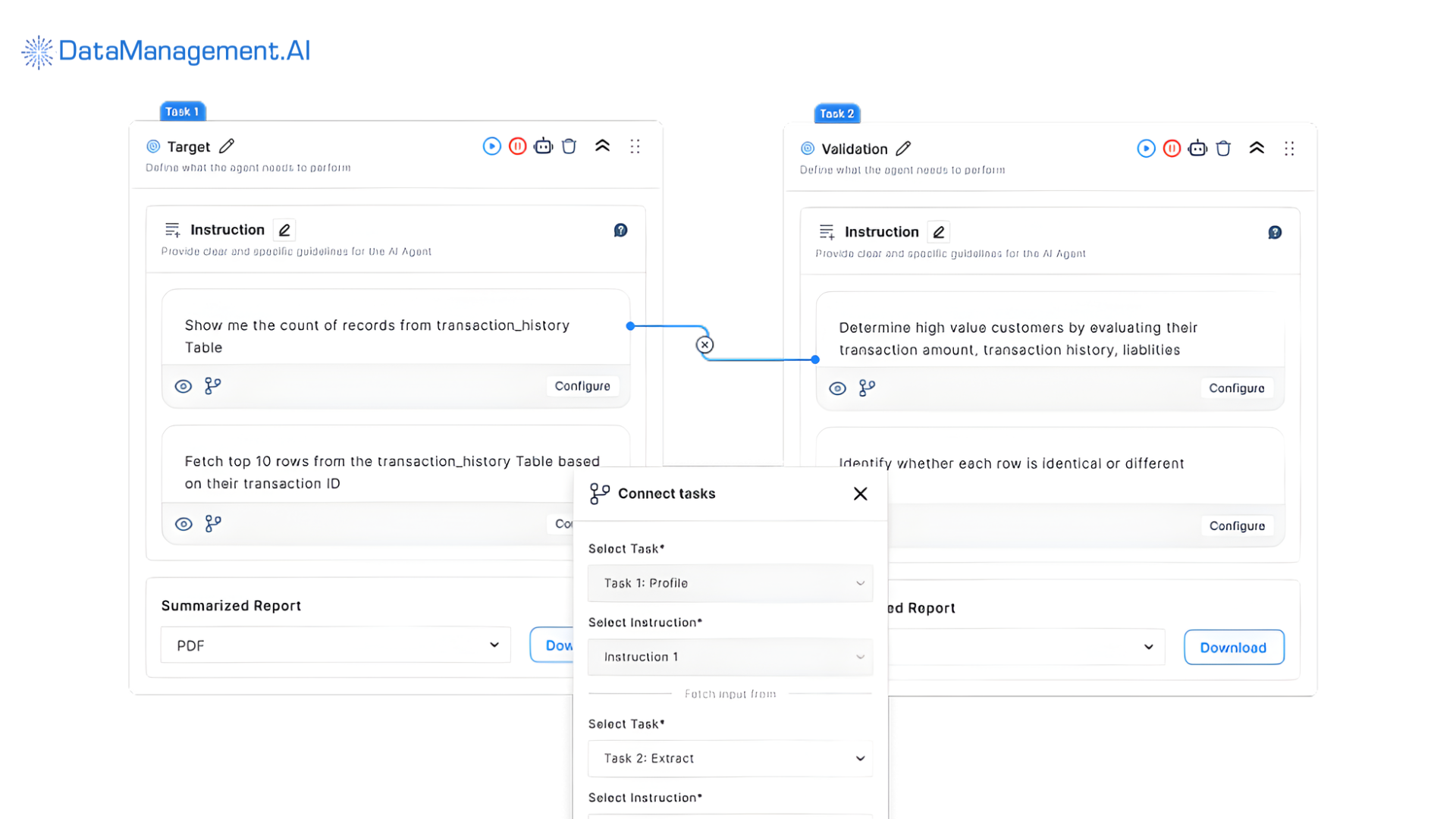
Every operation is tracked. Complete audit trails achieved and compliance automated.
One customer reduced data processing time from 5 days to under 4 hours. Another cut customer query processing time by 70%.
These aren’t small improvements.
They’re transformational outcomes.
DataManagement.AI implements all the 5 best practices for data quality management in a single platform.
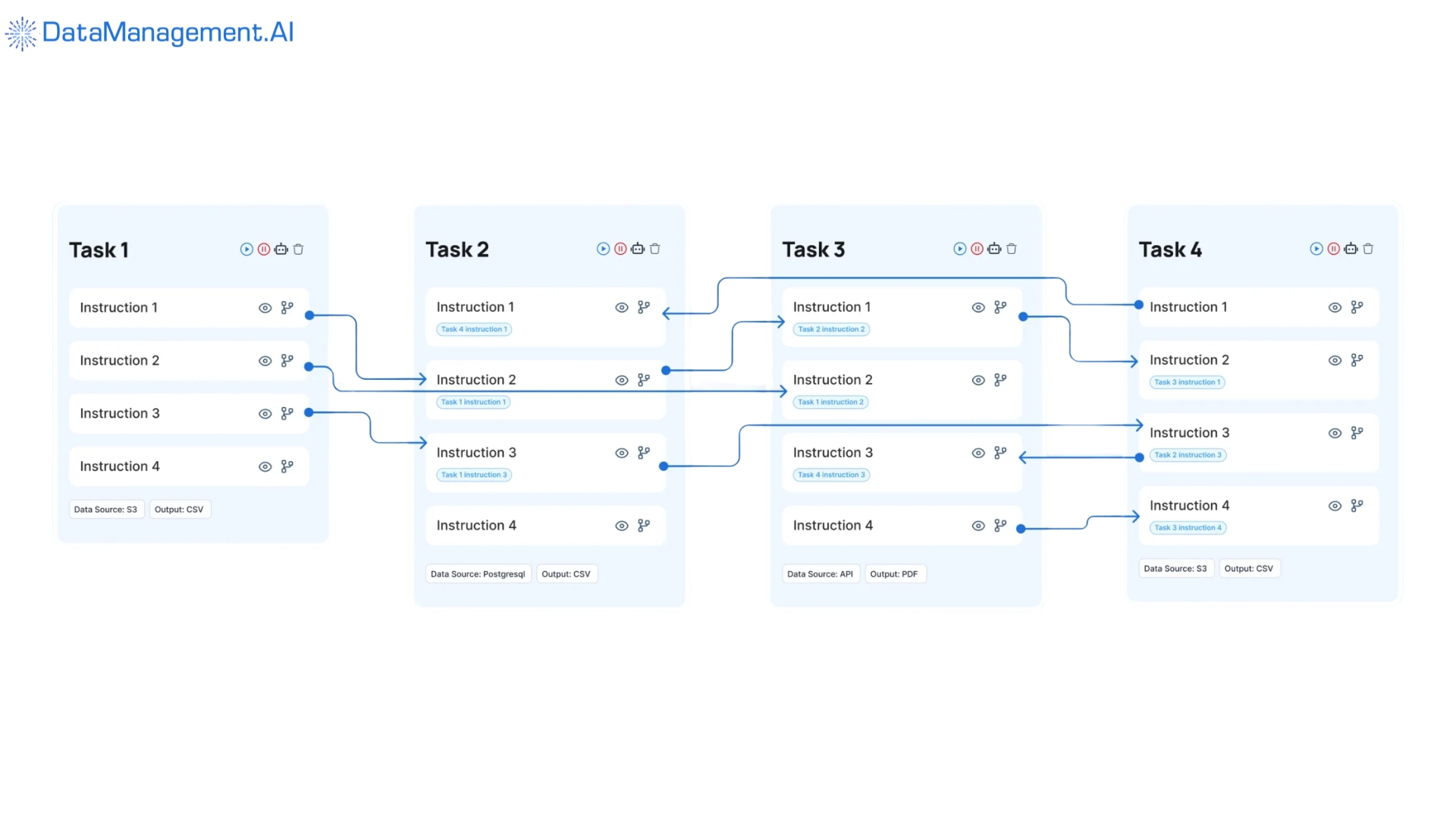
No integration nightmares and manual processes.
DataManagement.AI’s intelligent agents automate your heavy lifting.
- Profile AI automatically analyzes your data. It identifies patterns, anomalies, and quality issues instantly.
- Quality AI validates your data against business rules, catching errors before they propagate.
- Cleanse AI intelligently detects and fixes data quality issues.
Our Chain-of-Data approach connects every step of your data journey.
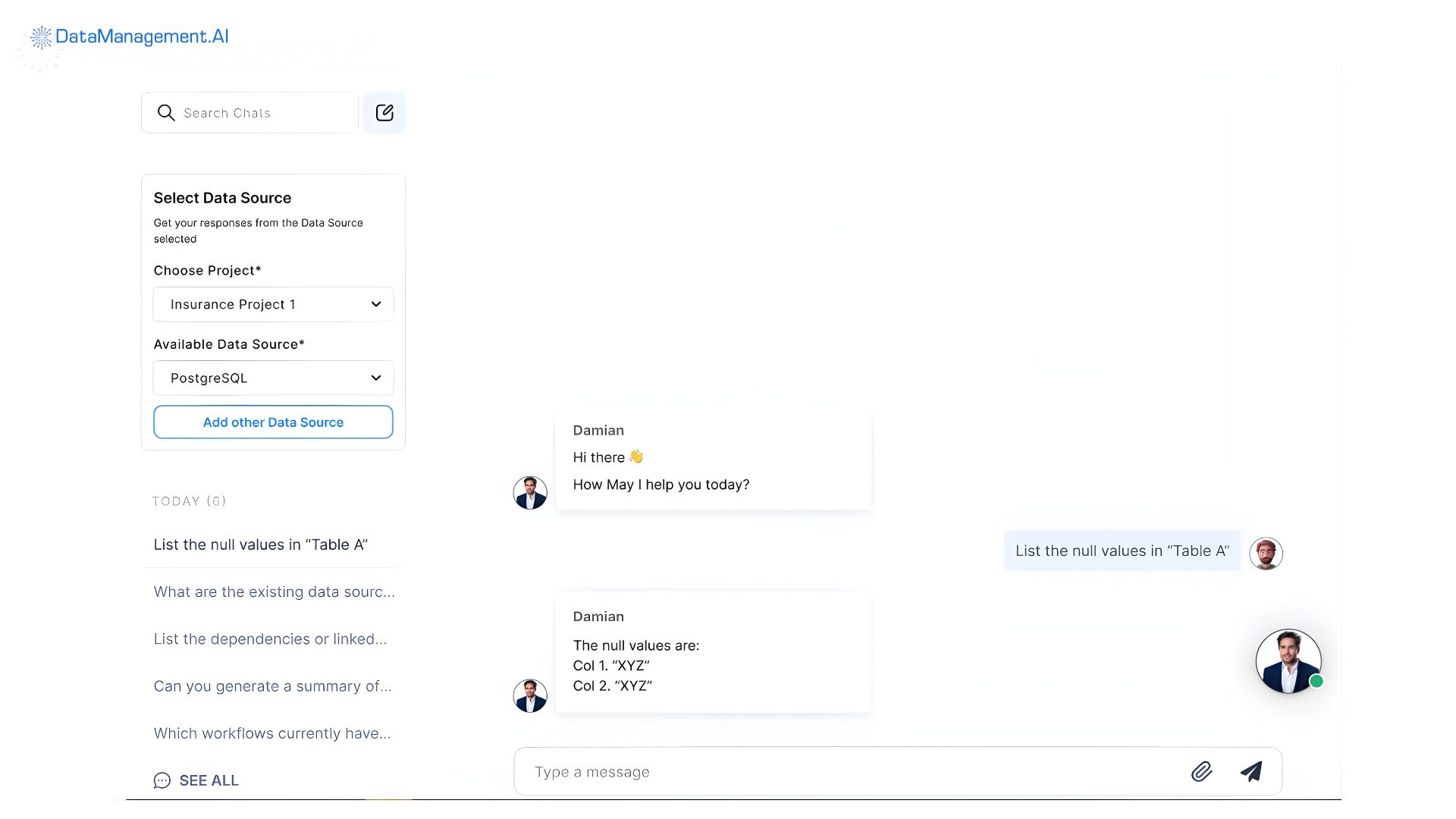
From collection to cleansing to consumption, you get end-to-end lineage, complete audit trails, and compliance by design.
Your team designs complex data quality pipelines in minutes thanks to a visual drag-and-drop interface.
No coding required. Intelligent agents handle the execution automatically.
Recovery from failures? Automatic. Resource optimization? Built-in.
This isn’t just a tool. It’s your data quality command center.
Step 4 – Implement data quality rules and validation
Define your quality rules clearly.
For customer email addresses, choose a valid format. Avoid duplicates.
For product prices, select them within an acceptable range that are consistent across channels.
For patient records, complete demographic information, such as valid insurance numbers.
Step 5 – Establish continuous monitoring and reporting
Data quality isn’t a project, it’s a program.
Setup dashboards that show quality metrics in real-time. Track trends and identify degradation before it becomes critical.
Continuous monitoring catches issues in minutes, not hours. Automated alerts notify stakeholders immediately.
Report quality metrics to executives regularly. Show improvement over time and demonstrate business impact.
Measure success via frameworks
Poor data quality costs your organisation up to USD 12.9 million annually.
It drains your revenue by 31%.
It destroys trust.
But here’s the good news!
Best practices for data quality management are clearly explained above.
Organizations implementing comprehensive frameworks see dramatic improvements within months.
DataManagement.AI makes this possible with intelligent agents that automate the complexity.
The market is speaking. Organizations are investing because they’ve learned the cost of poor quality.
Your competitors are improving their data quality right now.
While you read this, they’re implementing automated monitoring.
They’re deploying quality gates. They’re building competitive advantage.
The question isn’t whether you need best practices in data quality management, but will you implement them before your next data disaster?
Schedule a quick demo with our team to see how intelligent agents can automate your data quality management and reduce costs.