



Your enterprise no longer competes on data volume. The real edge is now knowing how effectively you can convert distributed signals into coordinated, high-impact decisions.
Every capital move you make, like capital allocation, risk positioning, pricing, expansion, and compliance, depends on how quickly and accurately your organization integrates information across functions.
Yet as enterprises scale, complexity compounds.
This is because operational metrics, regulatory requirements, market signals, and customer behavior all interact in nonlinear ways. Thus, if your intelligence architecture is not structured, your decision cycles will slow down.
This is why big data and knowledge management are not just a fancy theory; they are strategic exercises that every enterprise should follow.
So, before you evaluate your enterprise’s growth trajectory, let’s clarify what exactly big data and knowledge management are.
What is Big Data and Knowledge Management?
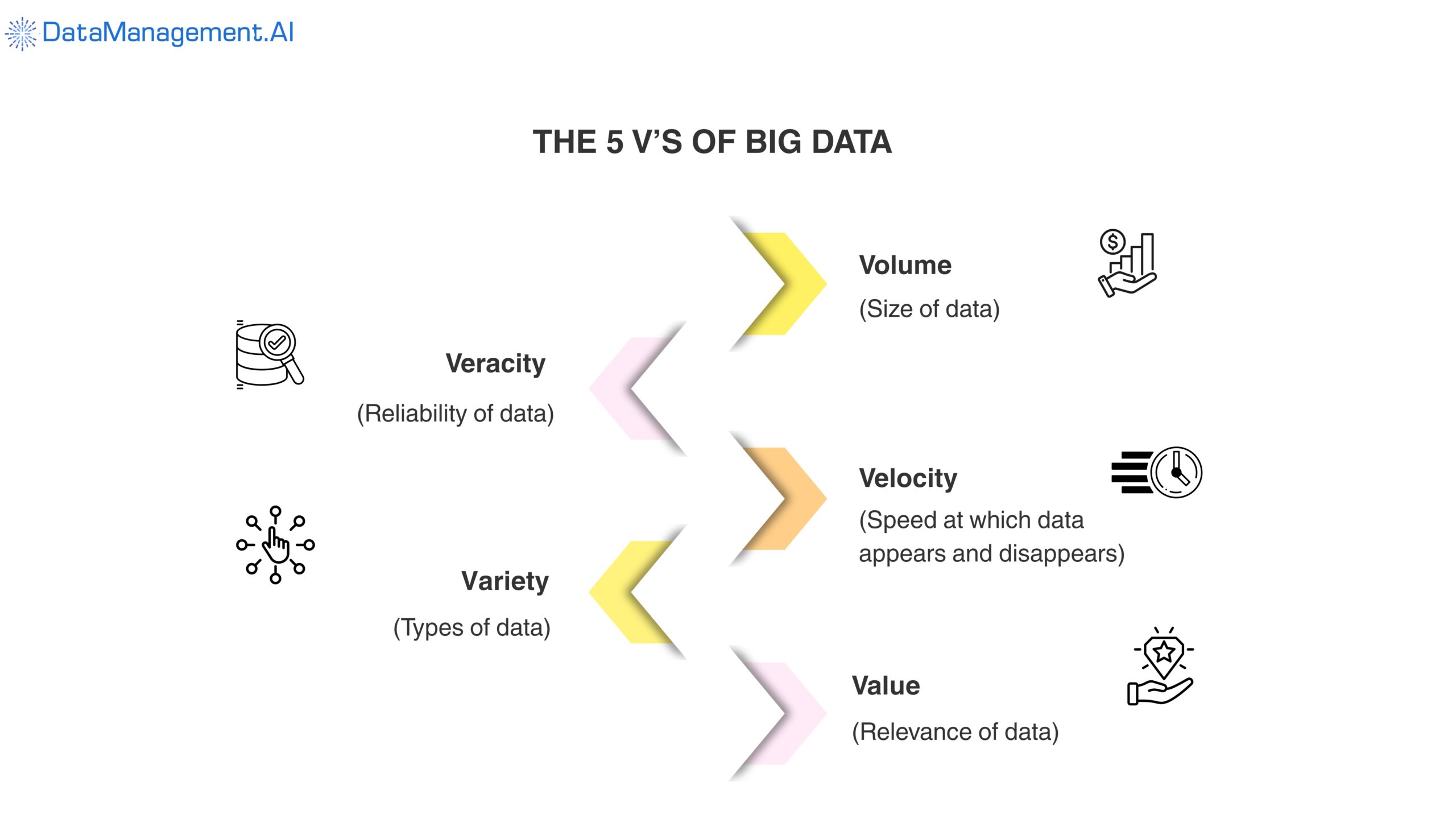
Big data refers to datasets that are too large, too complex, and too fast for traditional databases to handle efficiently.
In your enterprise, this could be transaction records, ERP data, CRM systems, sensor feeds, API logs, contracts, emails, or customer interaction data.
But when we are saying “big data,” we are not referring to its size but rather its computational complexity.
It means processing this kind of data requires distributed architectures, parallel processing frameworks, cloud-native storage, and machine learning pipelines.
Now let’s learn about knowledge management.
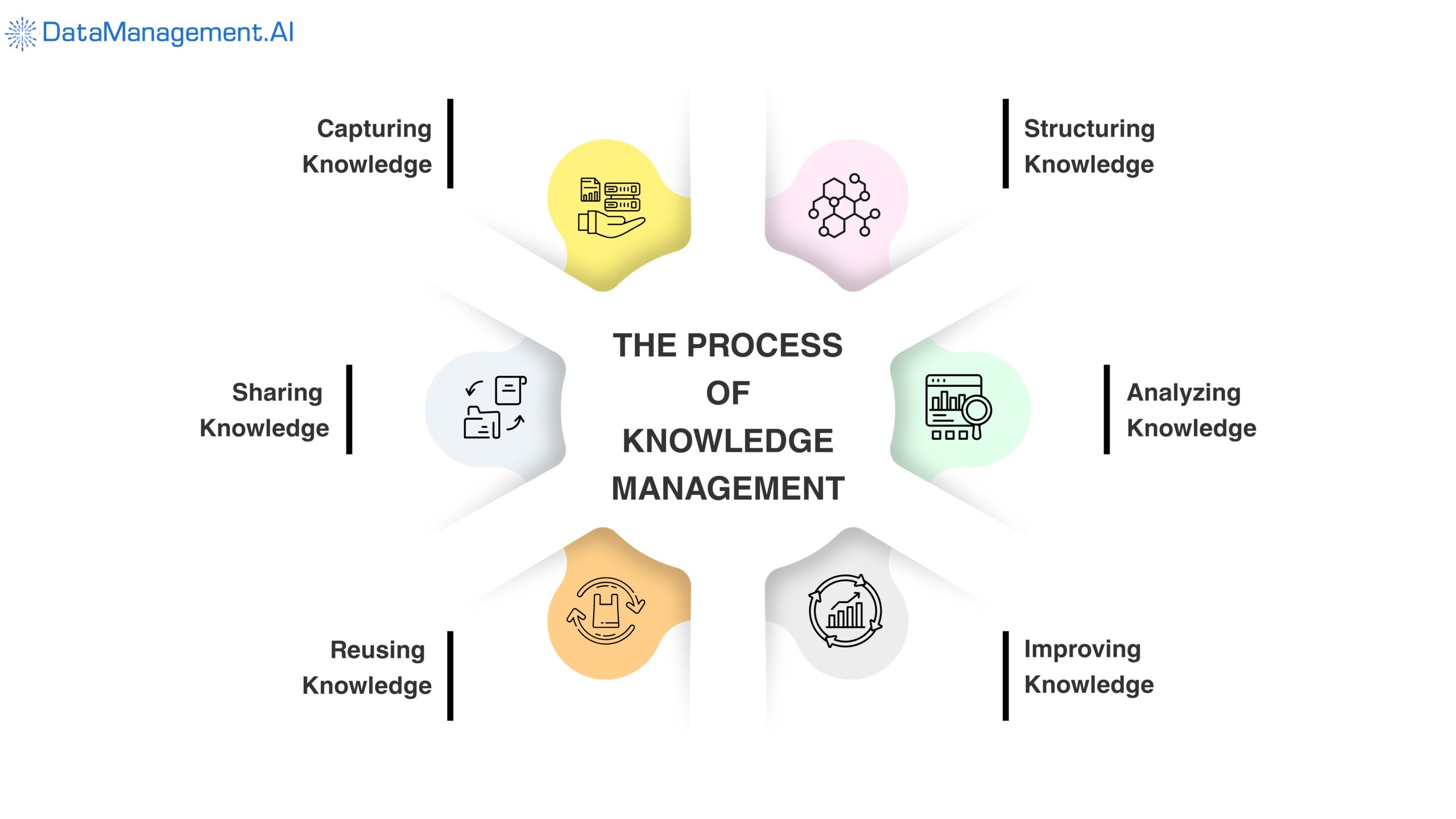
It operationalizes what your organization learns. For example, it governs how data becomes validated information, then how that information becomes contextual insight, and finally how that insight becomes reusable enterprise knowledge.
This is how the knowledge management value chain adds value to raw data.
Instead of leaving analytical outputs inside dashboards or isolated reports, KM frameworks classify, contextualize, validate, and embed them into decision workflows.
If you apply it in your enterprise, you’ll notice that knowledge management and data analytics intersect in several ways, such as through taxonomies, metadata models, lineage tracking, governance controls, and collaborative platforms.
Data mining plays a very important role here.
So, what is data mining in knowledge management?
It is the systematic extraction of patterns, associations, anomalies, and predictive indicators from large datasets, but within a governed structure that ensures that findings are documented, validated, and reusable.
Without this structure, data mining will only produce insights, but with it will create enterprise-level governed knowledge that will be useful for a long time.
Thus, in short, if big data helps you understand “what happened” and “what is likely to happen,” knowledge management helps you translate those findings into coordinated action.
The role of Big Data and Knowledge Management in enterprise
So, what does big data and knowledge management do inside a real enterprise environment?
We already know that they help transform raw data into strategic knowledge, but their use cases go beyond just transforming knowledge into insights.
Here are some other ways big data and knowledge management are used in enterprises:
Strengthen enterprise decision-making
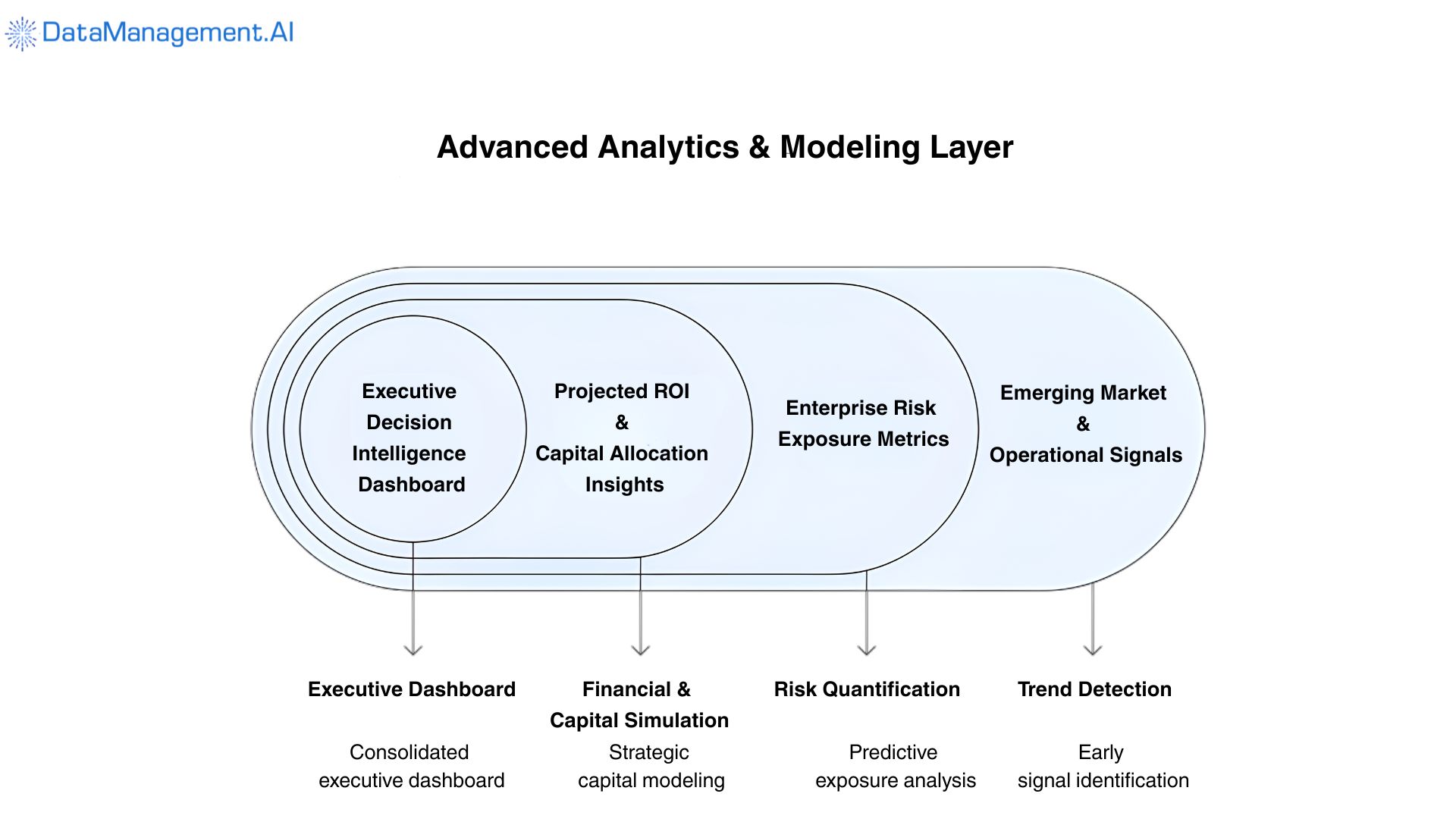
Modern big data analytics knowledge management frameworks enhance both the speed and precision of executive decision making by integrating real-time data ingestion, advanced analytics models, and governed knowledge repositories into a unified architecture.
They help you detect:
- Detect emerging market and operational trends earlier using streaming analytics and anomaly detection models.
- Quantify risk exposure through predictive modeling, scenario analytics and anomaly detection models.
- Simulate financial and capital allocation outcomes using dynamic modeling and sensitivity testing.
- And, optimize resources across business units through cross-functional data integration and performance benchmarking.
This requires aligned data pipelines, standardized semantic layers, metadata-driven governance, and model outputs that are documented and reusable.
The benefit is that when your analytics engines feed directly into structured knowledge workflows, the insights are not lost after a single decision cycle.
As a result, you successfully reduce decision latency, improve model interpretability, and maintain strategic consistency whether by responding to real-time operational signals or shaping long-term enterprise strategy.
This is where architectural continuity becomes critical.
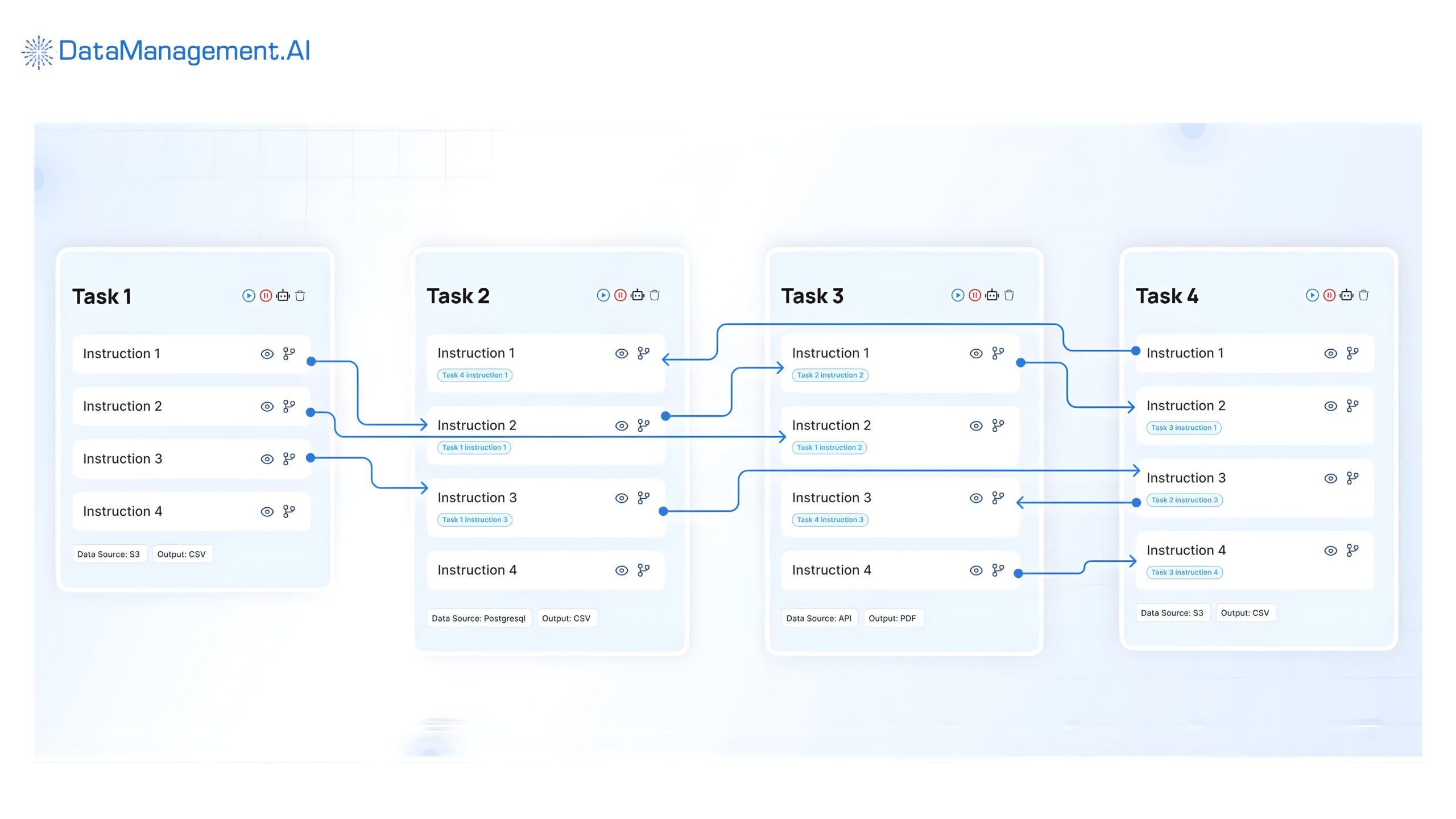
DataManagement.AI addresses this through its ‘Chain-of-Data’ framework, which connects every stage of the data lifecycle, starting from data ingestion and transformation to analytics and insight delivery into a single, governed flow.
Thus, instead of fragmented pipelines and manual handoffs, your data moves through an integrated matrix designed for efficiency and clarity.
Fix data quality in enterprise knowledge management
Any serious implementation of enterprise knowledge management while maintaining the data quality starts with structural integrity.
It’s because your knowledge systems are only as reliable as the data pipelines, validation rules, and governance controls supporting them.
Therefore, at an enterprise level, this requires more than just basic cleansing. It involves:
- Automated validation checks and anomaly detection.
- Standardized data definitions applied through semantic layers.
- Implementation of Master Data Management (MDM) for consistency across systems.
- Version-controlled KPIs with traceable calculation logic.
- And, end-to-end lineage and audit trails for regulatory transparency.
When all these controls are embedded into your architecture, data information, and knowledge management become measurable and defensible. Without them, metrics diverge across departments, reports conflict, and trust within teams and with customers erodes.
So, you need to understand that high data quality is not just an operational detail; it is the backbone of a scalable, governed enterprise intelligence.
Bridge Knowledge Management vs Data Management
There is a widespread and ongoing confusion in the industry around knowledge management vs data management especially in enterprise transformation programs.
Let’s address that.
Data management focuses on the technical backbone, i.e, storage architecture (data lakes, warehouses, lakehouses), data modeling, ETL/ELT pipelines, access controls, encryption, regulatory compliance, and quality enforcement.
In short, it ensures your data is secure, accurate, and available to the right teams.
On the other hand, Knowledge Management operates one layer above.
It governs how validated data is interpreted, contextualized, shared, and embedded into workflows. This includes taxonomy design, metadata frameworks, collaboration systems, decision logs, institutional playbooks, and reusable insight repositories.
| Key differences | Data Management | Knowledge Management |
| Primary Objective | Ensure data availability, integrity, and performance | Ensure insight usability, continuity, and institutional learning |
| Core outputs | Clean datasets, structured databases, governed pipelines | Playbooks, documented insights, best practices, and decision frameworks |
| Ownership structure | Typically IT, data engineering, and governance teams | Cross-functional leadership, operations, strategy, and HR |
| Lifecycle focus | Data ingestion => storage => processing => archival | Insight creation => validation => dissemination => reuse |
| Measurement of success | Uptime, latency, data accuracy, compliance metrics | Decision quality, knowledge reuse rate, reduced redundancy, and faster onboarding |
Integrate data mining in knowledge management
Another very common question we have heard several times is: Is data mining similar to knowledge management?
Their proximity in the workflow leads to this confusion, but the short answer is no. They operate at completely different layers of enterprise intelligence.
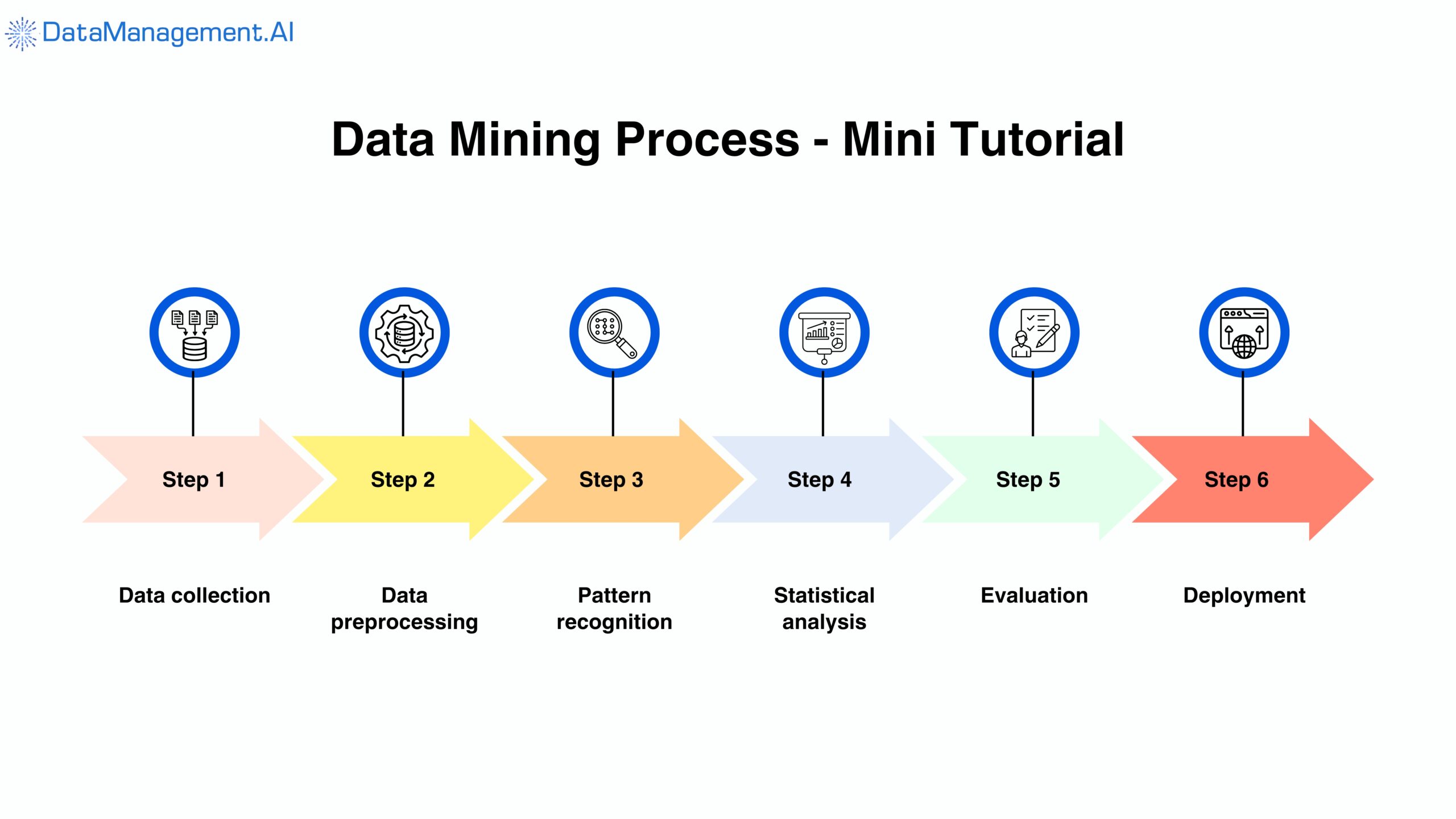
Data mining in knowledge management focuses on applying statistical models, clustering algorithms, classification techniques, association rule learning, and anomaly detection to large, complex datasets.
It extracts correlations, behavioral patterns, risk indicators, and predictive signals from structured and unstructured sources.
Other benefits of Big Data and Knowledge Management
As we know, the benefits of big data and knowledge management extend far beyond just reporting; here are some other benefits that you can experience by implementing them:
Operational efficiency
If you integrate data knowledge in your systems, it’ll help reduce redundancy across analytics, reporting, and decision workflows.
Thus, instead of multiple teams extracting similar datasets or recreating models, centralized pipelines and governed knowledge repositories ensure validated insights are reusable.
Through structured knowledge management and data analytics, you can, therefore, automate recurring reporting cycles, standardize KPI definitions, and embed analytics directly into operational systems.
This will lead to faster reporting cycles, fewer reconciliation errors, reduced manual intervention, and stronger cross-functional coordination.
Risk management
In regulated and high-volatility industries, big data and knowledge management in business give you clearer, earlier visibility into risk exposure.
It means when you integrate real-time data ingestion with anomaly detection models, you can flag suspicious transactions, operational breakdowns, model drift, or compliance deviations as they occur and not days later.
But detection alone is not enough.
When your analytics outputs are connected to governed knowledge frameworks, risk indicators are documented, categorized, and linked to predefined response protocols. That means your teams don’t just see the risk, they know how to respond.
| Reactive firefighting | Systematic risk control |
| Issues are addressed after escalation or financial impact | Risks are detected early through real-time monitoring and predictive analytics |
| Documentation is reconstructed during audits, increasing stress and exposure | Audit trails, lineage, and controls are continuously maintained and readily available |
| Frequent operational disruption and inconsistent decision-making | Structured governance frameworks strengthen resilience, consistency, and regulatory confidence |
Competitive advantage
When you align data mining and knowledge management, you create structural advantages that competitors struggle to replicate.
Predictive models help you refine customer segmentation, optimize pricing, forecast demand, and test product-market fit with greater precision.
Also, when your insights are documented and embedded into workflows, you avoid repeating experiments or losing strategic lessons during leadership transitions. This allows you to launch products faster, personalize services more effectively, optimize pricing dynamically, and enter new markets smoothly.
Innovation and growth
Sustainable innovation depends on how well you capture and reuse what you learn. Big data knowledge management ensures that your analytical discoveries, operational experiments, and strategic outcomes are preserved and made accessible across the enterprise.
Thus, instead of reinventing processes or duplicating analysis, your teams build on validated knowledge assets. This shortens innovation cycles, improves experimentation quality, and reduces wasted investment.
Challenges enterprises face
Even with advanced analytics capabilities, you may notice that scaling big data and knowledge management in business is not just a technology problem; it’s an architectural, governance, and organizational challenge.
Here are some common problems that most enterprises face:
Data silos
As your enterprise grows, departments adopt specialized systems like CRM platforms, ERP suites, marketing automation tools, etc, each optimized for local efficiency.
But the primary issue is architectural isolation. When systems don’t share standardized schemas, metadata, or APIs, your insights remain trapped within functional boundaries.
Thus, without integrated data and knowledge management, analytics outputs cannot be reused across teams, leading to slower decision cycles, duplication of efforts, and weak enterprise-wide visibility.
Governance complexity
Scaling knowledge management and data governance is not just about policy documents. It’s also about enforceable control mechanisms embedded into your architecture.
As privacy laws tighten and regulatory scrutiny increases, you must manage access controls, encryption standards, retention policies, and lineage tracking with precision.
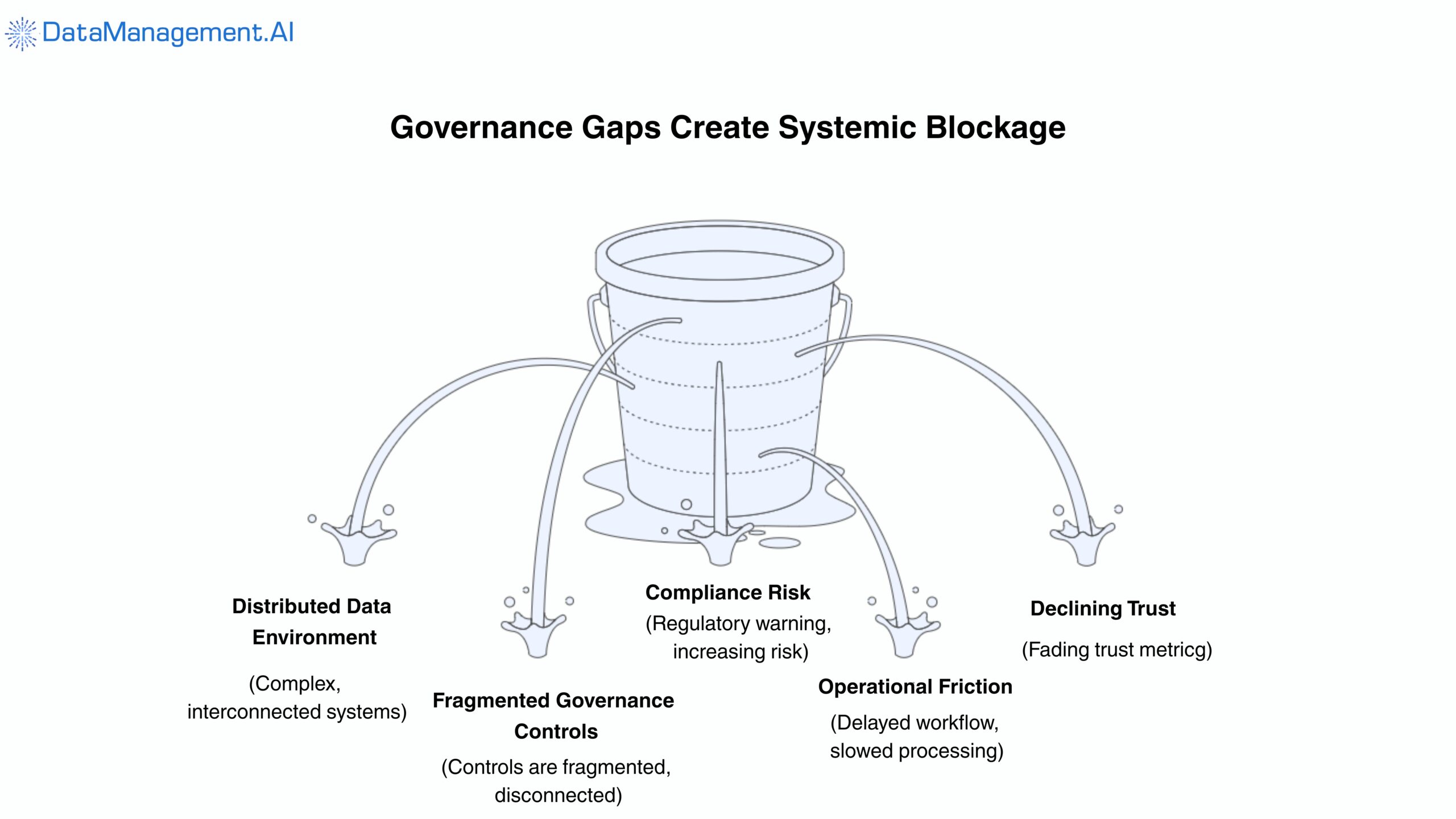
The complexity multiplies when data spans cloud environments, third-party platforms, and internal systems. Thus, without structured governance, compliance risks rise and trust declines.
To address this, DataManagement.AI’s ‘Data Lineage & Governance’ capability traces every data element from origin to consumption.
It automatically retrieves metadata from ETL pipelines and job schedules, captures transformation logic (SQL scripts, processing workflows), tracks schema version histories, logs data access activity, and maps business rules and classification labels.
This whole process results in a navigable lineage graph and audit-ready governance reports, which replace months-long compliance exercises with instant traceability.
If governance complexity is slowing your enterprise, schedule a demo and see how full-stack lineage visibility can simplify compliance.
Technology fragmentation
Many enterprises accumulate disconnected tools over time from separate platforms for warehousing, analytics, documentation, and collaboration.
Thus, you may have robust tools for data warehousing in knowledge management, advanced analytics engines, standalone knowledge repositories, and independent collaboration systems, but little architectural cohesion.
When these systems do not communicate through unified metadata layers or governance controls, operational friction increases.
So, you should understand that enterprises that are leading the industry are not those with a huge volume of data, but those with the most disciplined architecture.
90-day executive action framework
Lastly, here’s a focused 90-day execution roadmap to help you translate big data and knowledge management in business from strategy into measurable results.
| Timeline | Focus Area | Key actions |
| Days 1-30 | Audit and align | 1. Assess data management vs knowledge management maturity 2. Identify siloed systems 3. Evaluate data quality |
| Days 31-60 | Integrate and optimize | 1. Implement tools for data warehousing in knowledge management 2. Deploy scalable analytics pipelines 3. Standardize data definitions 4. Establish structured knowledge sharing workflows. |
| Days 61-90 | Scale and institutionalize | 1. Introduce advanced data mining in knowledge management 2. Automate reporting and knowledge distribution 3. Track KPIs tied to business impact 4. Embed analytics into operational and executive decision-making |
FAQs
What are the best tools for data warehousing in knowledge management?
The best tools for data warehousing in knowledge management combine scalable cloud native architecture, strong metadata governance, end-to-end lineage, semantic standardisation, and seamless integration with analytics workflows.
DataManagement.AI stands out by unifying warehousing, governance, and knowledge workflows through its chain-of-data framework, ensuring proper insights that are not just stored, but structured, traceable and decision-ready.
How do big data and knowledge management work together?
To put it simply, Big data generates high-volume, high-velocity signals through advanced analytics and distributed processing frameworks.
Knowledge management then structures, validates, and embeds those insights into governed workflows so they become reusable, enterprise-wide intelligence rather than one-time analytical outputs.
What are the benefits of knowledge management and big data in business?
Basically, what knowledge management and big data do is enable faster, evidence-based decision-making by transforming complex, distributed data into structured, reusable enterprise intelligence.
They improve overall operational efficiency, strengthen risk control, enhance innovation, and create sustainable competitive advantage through governed, data-driven workflows.