




You pay so much for tech stack subscriptions, but your data remains difficult to manage.
Let’s figure out why.
When we talk about Master Data Management (MDM), we know we are talking about the backbone of a company. It keeps critical information about systems, suppliers, and customers in an accurate, clutter-free format.
But that’s not enough.
Traditional MDM systems are struggling to keep up with today’s complex and vast enterprise data.
And that’s exactly where and why we need AI in the mix.
AI’s automation helps clean, match, and validate data in minutes, saving a team’s hours worth of work.
But it’ll be unfair if we bring down AI’s significance in this domain to just automation. Master Data Management with AI can also help uncover often-overlooked patterns and insights in data.
| For example, a company using Master Data Management AI can help clean supplier data and also flag customers that regularly delay payments. Without AI, this could have taken analysts months, or worse, this could have gone completely unnoticed. |
The good thing is, the numbers back up everything we just said.
Gartner reported that companies that use AI for Master Data Management can cut their data quality issues by 70% and boost their efficiency by 30%.
Now, let’s get into the key use cases of AI in Master Data Management.
AI Master Data Management use cases
If you thought AI-based Master Data Management is only about automating tedious work, you’re wrong.
Yes, it’s a critical one, but here are five other uses that you would want to know.
Smart duplicate detection
With AI doing some really smart things out there, you cannot possibly get excited about a duplicate detection feature.
So, AI Master Data Management takes it up a notch by connecting related entities even if the information is not exactly the same.
| For example, Different branches of the same supplier spread across the system will get automatically linked. So, if you’re working with Yuza Corp., Yuza Electronics, and Yuza Pharmacy, AI will detect that they refer to the same company and will provide you with all their data in a consolidated form. |
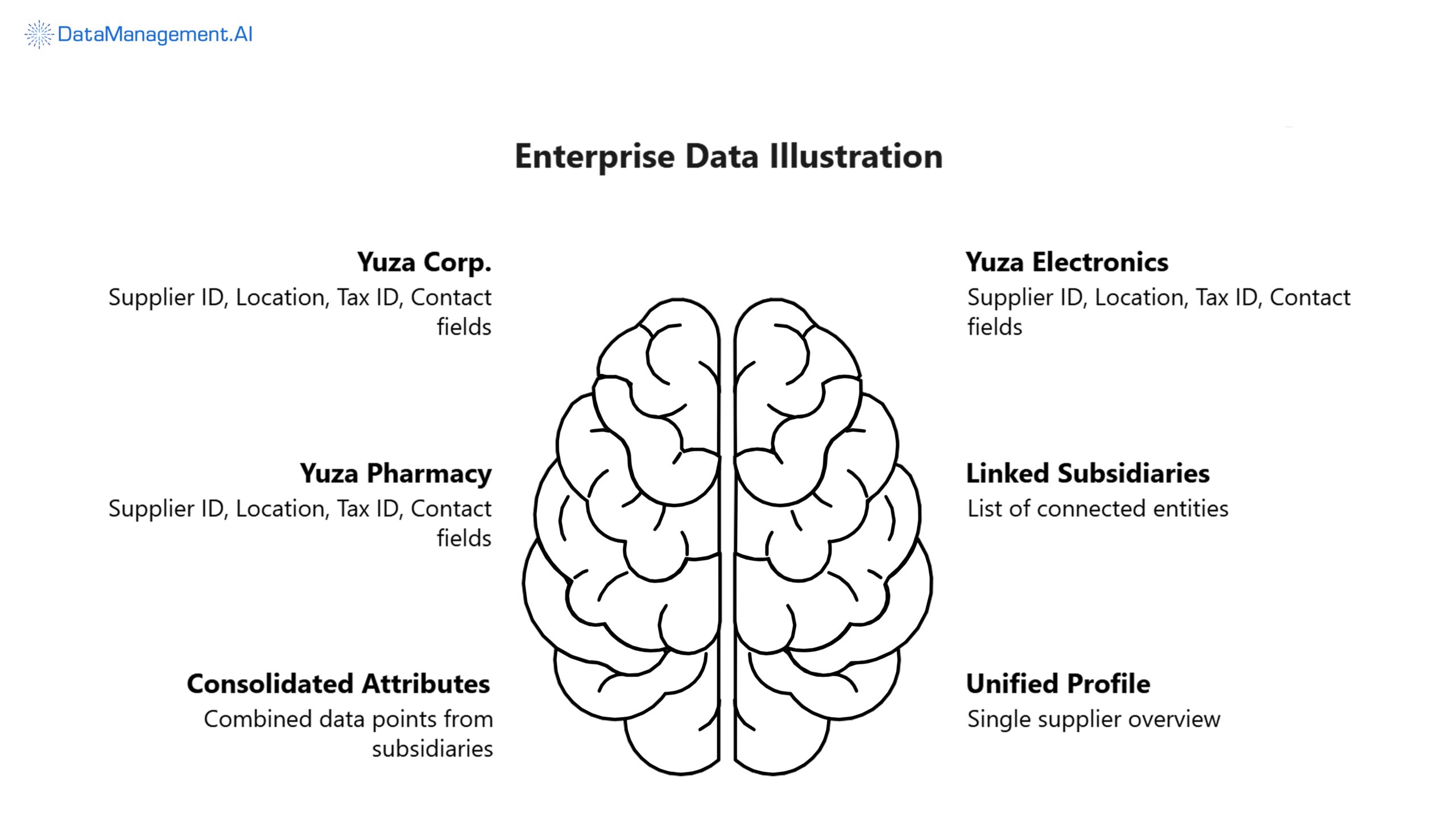
This is where the concept of ‘Context Cloud’ comes into the picture of Master data management.
If I have to explain in layman’s terms, I would say the software would help you see why a data exists and how it is connected to others without having you brainstorm for hours.
So, earlier, if you were confused why a product is getting returned regularly, MDM using AI would map supplier branches, customer behavior, and transaction histories together to connect the dots.
You’ll realize its importance when planning a campaign or restocking your inventory as after integrating Master data management tools, you will see the exact numbers that you need, and not just a guesstimate by a team member.
Data prioritization
We are all scared that data may gain awareness. But what if we tell you that it already has?
Of course, we are not talking about conscious awareness, but AI in Master Data Management can now detect which data is important during which phase.
If you didn’t get it yet, let’s go through this case study:
Lynn University once struggled to help students with their queries beyond office hours. This was causing frustration among students, and the college was also missing opportunities to engage them properly.
That’s when they integrated Halda AI’s artificial agents in the University’s CRM system (Slate) so that students can have one-to-one communication with it. The agents were context-aware, so they were equipped to provide subject-related, relevant information 24/7.
After this experiment, they saw a 25% increase in their email CTR and a 45% jump in their website engagement.
So, AI for Master Data Management can do the same for your business.
During a product launch, it’ll prioritize repeat customers, check inventory, and even predict purchase trends, whereas during a campaign launch, it’ll focus on new accounts.
And that’s the best part about Master Data Management AI. It learns your business.
Data behaviour simulation
We always say AI is fun, and we mean it.
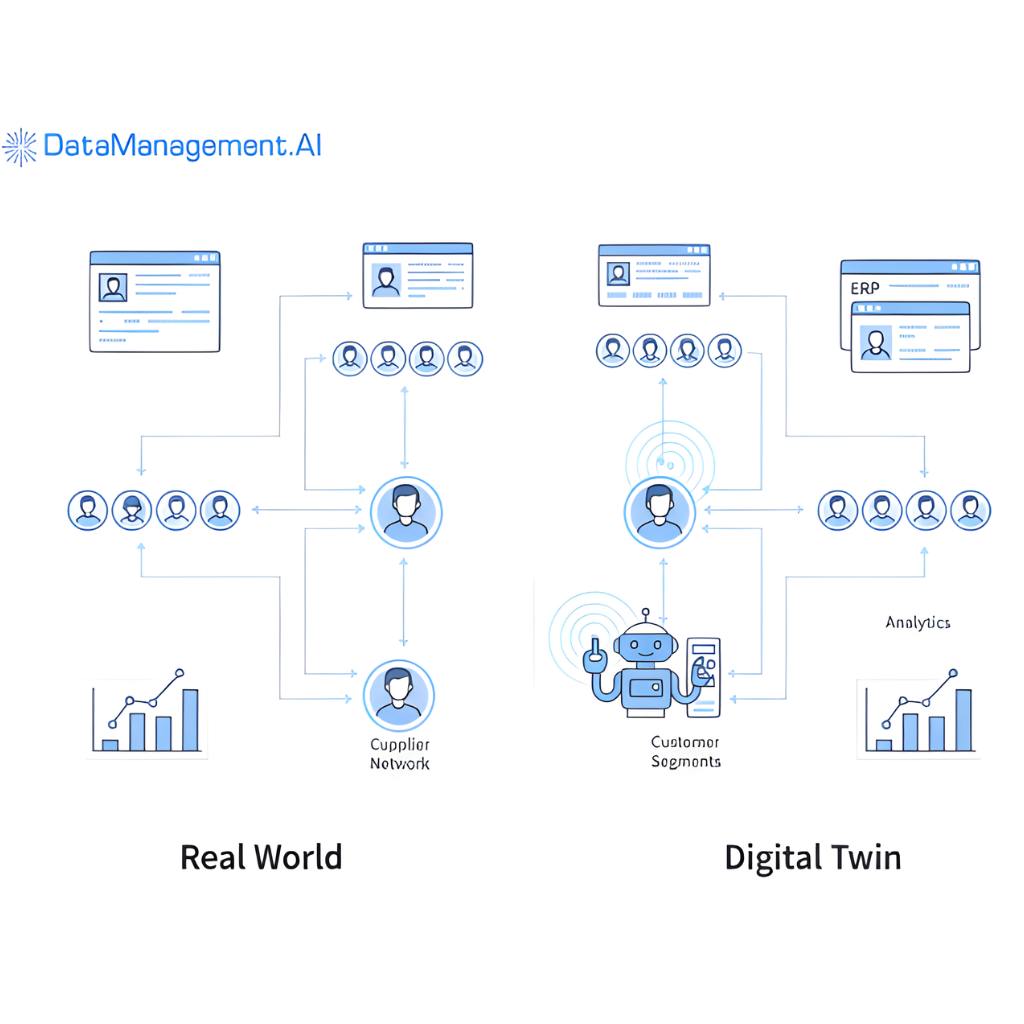
Just imagine, if you could create a ‘digital twin’ of all your data and test a decision there before implementing, to check what disruption it might cause, it would save you tons of resources and time.
And AI-based Master Data Management actually enables you to do it.
In this simulation, you can do something as simple as modify a customer segment to check what changes it will bring in your ERP or other analytics.
This is because AI doesn’t look at data in isolation. Instead, it creates the Chain of data.
It links every system, supplier, and customer detail to help you visualize how one business decision will ripple across the whole chain. This way, you get a heads-up before anything actually falls.
Several small organizations and big enterprises are already implementing this, and Gartner predicts that by 2027, almost 40% of all companies will use such task-specific AI tools.
Adaptive data governance
We have been in the data industry long enough to realize how vulnerable data management can be.
With so many policies in place, compliance to be taken care of, and permissions pending, any team can easily get overwhelmed and mess up a few details here and there.
So, in that case, instead of waiting for your IT team to flag an issue, you can use Master Data Management AI software to automatically fix it.
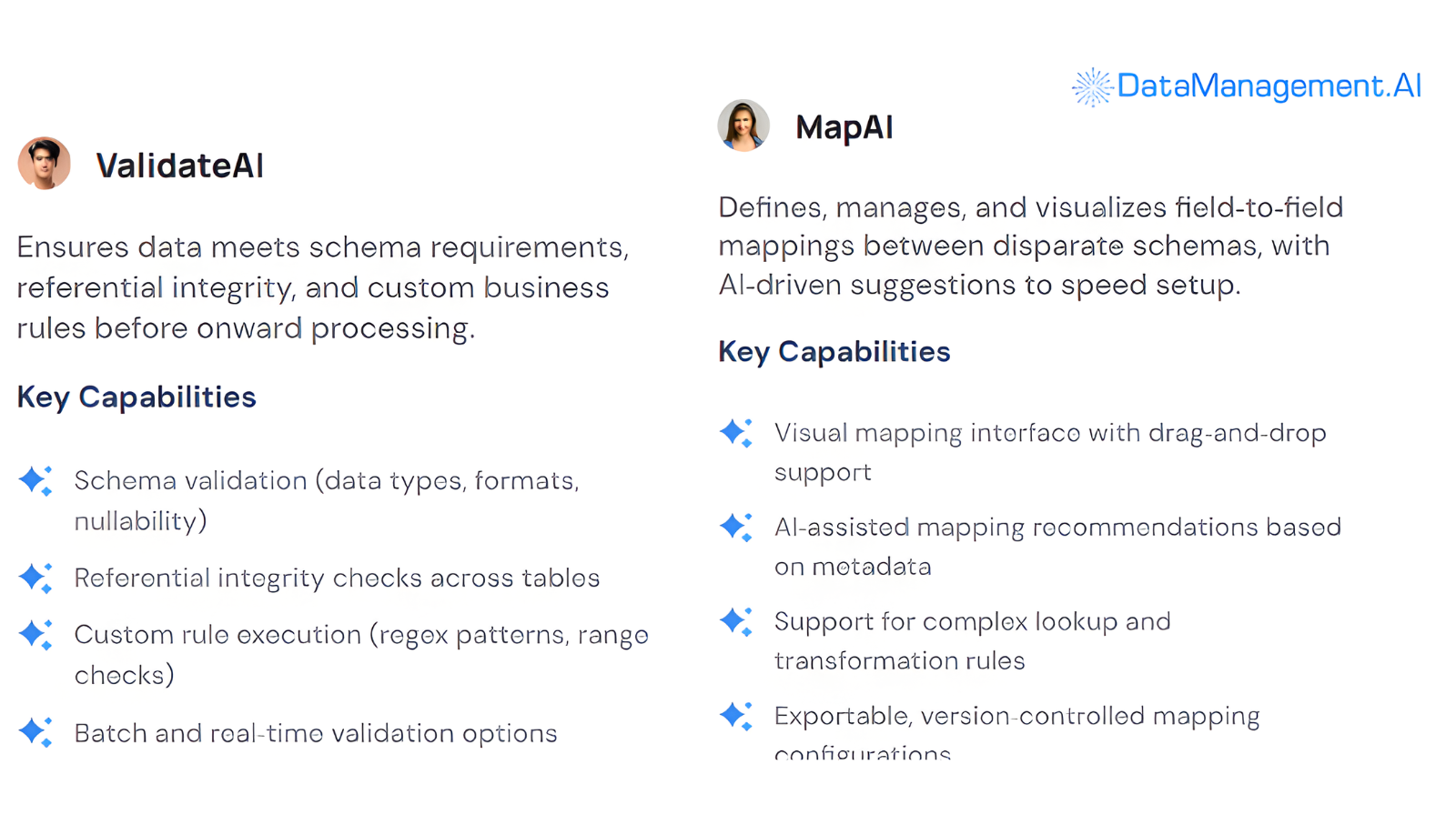
Industry leaders prefer DataManagement.AI for the same. We have AI agents like ValidateAI and MapAI that act as watchdogs for your data.
They clean up issues, match records, and make sure every piece of data is in line with government policies.
Data lifecycle awareness
It’s almost annoying that whenever a team receives a set of data, they analyse it and keep it aside.
We cannot blame them either, as they usually deal with huge data sets. Thus, keeping track of when one is expiring and the other requires an update might get hectic.
| For example, keeping supplier details you no longer work with is just a waste of space and some extra resources. Similarly, there’s no point keeping product details of an SKU that has been discarded. |
You may think that one extra data set won’t cause any harm to the workflow. But it actually does.
During launches or highly productive sessions, one mis-click on the wrong data set can mess up a production line or delay a campaign by days.
However, here, if instead of relying on humans for this tedious task, you integrate a Master Data Management AI tool in your system, your team will have one less repetitive task, and more time for something that requires human intelligence.
Now, let’s talk about the Master Data Management AI possibilities in a business:
How can you use AI for Master Data Management in different business stages?
The best part about investing in Master Data Management AI is that you don’t have to keep paying at different stages.
Tools like DataManagement.AI come equipped with multiple solutions that you can use throughout the execution of a business idea.
Here’s how:
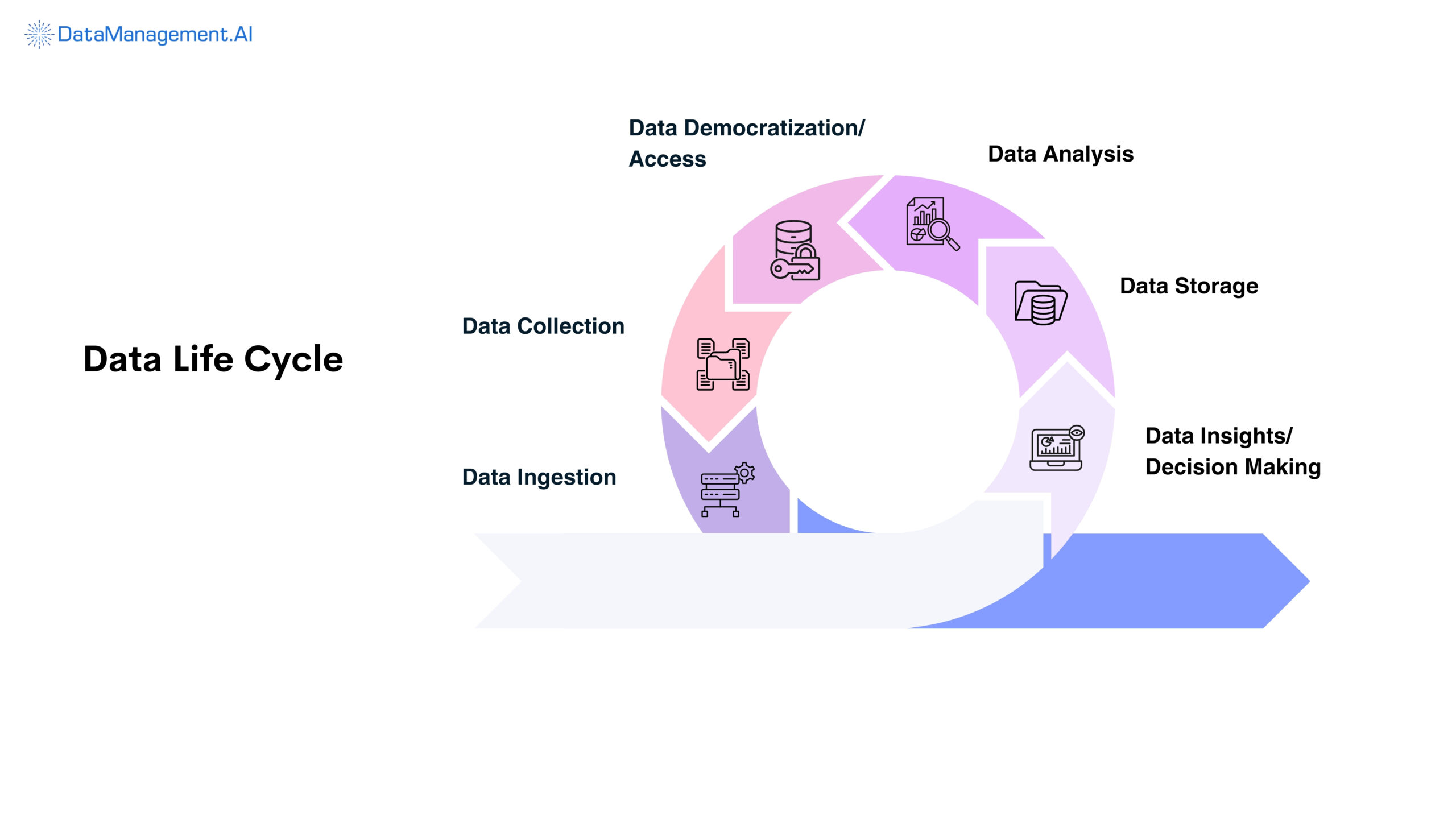
During data ingestion & discovery
This is the first part of any project and probably the most complicated part, too.
Without tons of data getting downloaded from ERPs, CRMs, APIs, spreadsheets, and marketing sites, it is almost impossible for a human to classify all this without losing their cool.
But having a Master Data Management AI helps, as it can instantly identify what kind of data it is receiving (like either its customer details, or supplier’s payment info), and classify them accordingly.
It can also detect anomalies like mismatched details and missing information instantly, thus eliminating potential bottlenecks.
Another very important thing that MDM AI tools do is they prevent data from getting stuck in silos (repositories with limited access) or in huge data lakes (where data resides in its native format) so that every department can easily access, understand, and use it.
To democratize data
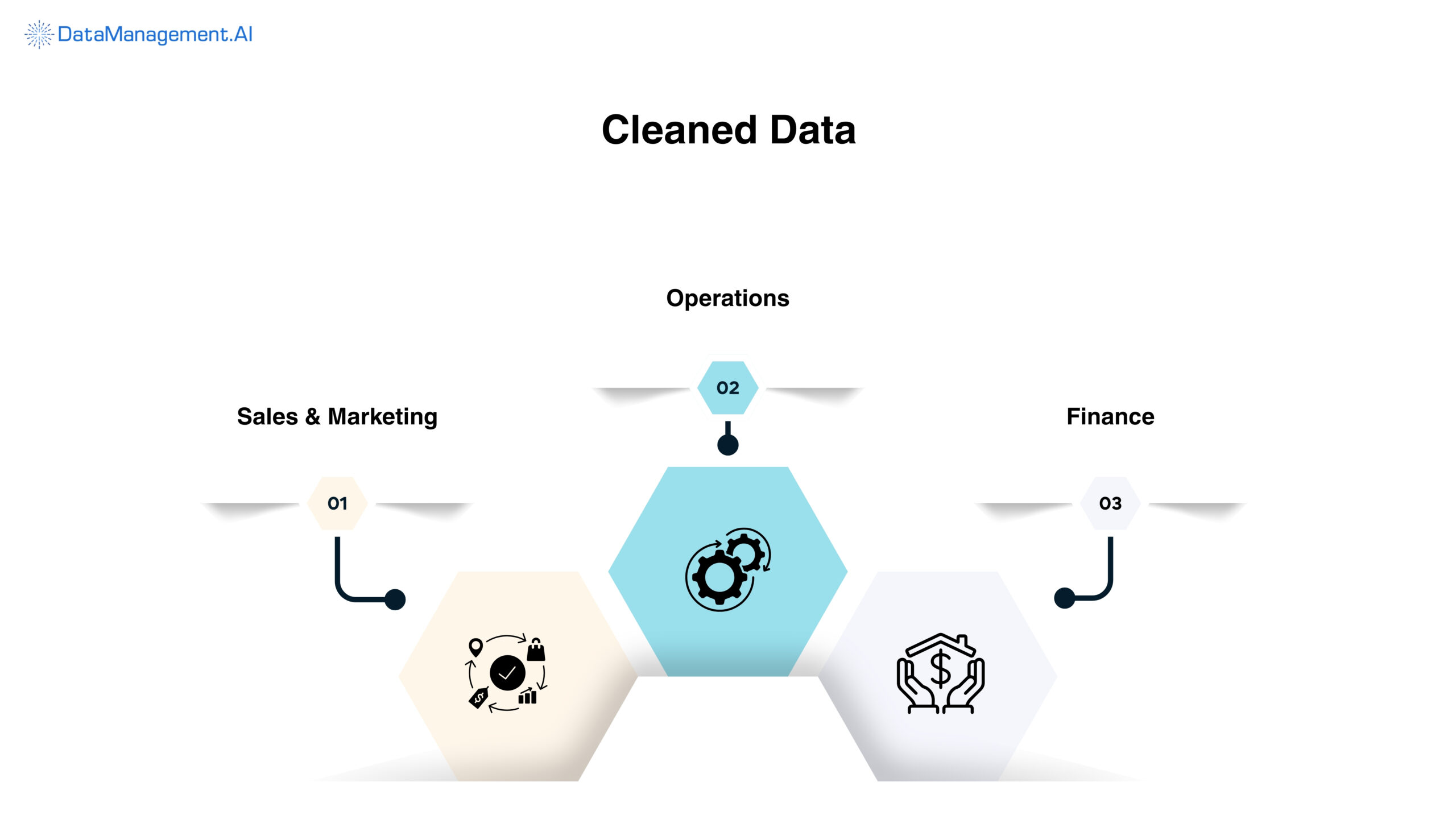
After the data has been cleaned, the next step is to provide team members access to it. This process is called data democratization.
But there’s one unique thing about this. In this process, the MDM AI tool gives data access to every team member who will need the information for work. Meaning it does not limit access to only analysts and IT teams.
The benefits of data democratization are clear. It breaks the unnecessary queue. If someone needs the data urgently, they can instantly fetch it instead of continuously raising tickets. Thus, decision-making gets faster, and there are fewer chances of miscommunication.
For policy management and data governance
Once you have your data sorted, the next challenge is data governance.
Again, going through vast data sets to ensure that they align with government policy is a tedious and time-consuming task that can be easily automated.
Master Data Management AI can automatically identify sensitive fields (like bank details or social security numbers) and mask them instantly so that no unauthorized member can access them.
It can also instantly flag suspicious activity so that you don’t lose any sensitive data.
To monitor the data life cycle
Once you have ‘corrected’ data in place, the main task is to make sure that they stay that way, so that they can be used for analysis.
Master Data Management AI does exactly that by constantly monitoring data for quality degradation and instantly notifying about outdated records.
Advanced AI tools like DataManagement.AI can also forecast which data set is about to expire and can even proactively update them, thus saving your time.
These points prove that investing in Master Data Management isn’t just about automating tedious tasks. It’s also about making your data understandable and accessible across the organization.
This gets even better when AI is added. Now the data is smarter. It can understand context, link systems and processes and puts the right information in the right hands, which in turn leads to faster and more accurate decisions.
Also, beyond efficiency, AI in MDM unlocks new opportunities.
So, do you want to experience AI in a way that can put your business on the right track to success?
Book a demo with our MDM experts now!