




It’s September 2020.
Citibank tries to process USD 7.8 million in interest as a transaction.
They accidently wired USD 900 million to Revlon lenders.
Yup. You read that right. Nine Hundred Million Dollars wired accidently.
The reason is equally baffling. Bad quality in their quality system. A user interface error along with poor data validation checks.
Some lenders returned the money, while others didn’t. Citibank then spent years in court trying to recover it.
This is your worst nightmare as a CDO. This is exactly what happens when financial data quality management fails.
And today, I’ll tell you exactly how to make sure this never happens to your organization.
What is financial data quality management? (And why you can’t ignore it)
Financial data quality management is your systemic approach.
An approach to ensure consistency, completeness, and reliability of your financial information. It’s not just about your clean spreadsheets.
It’s about protecting your organization from catastrophic losses.
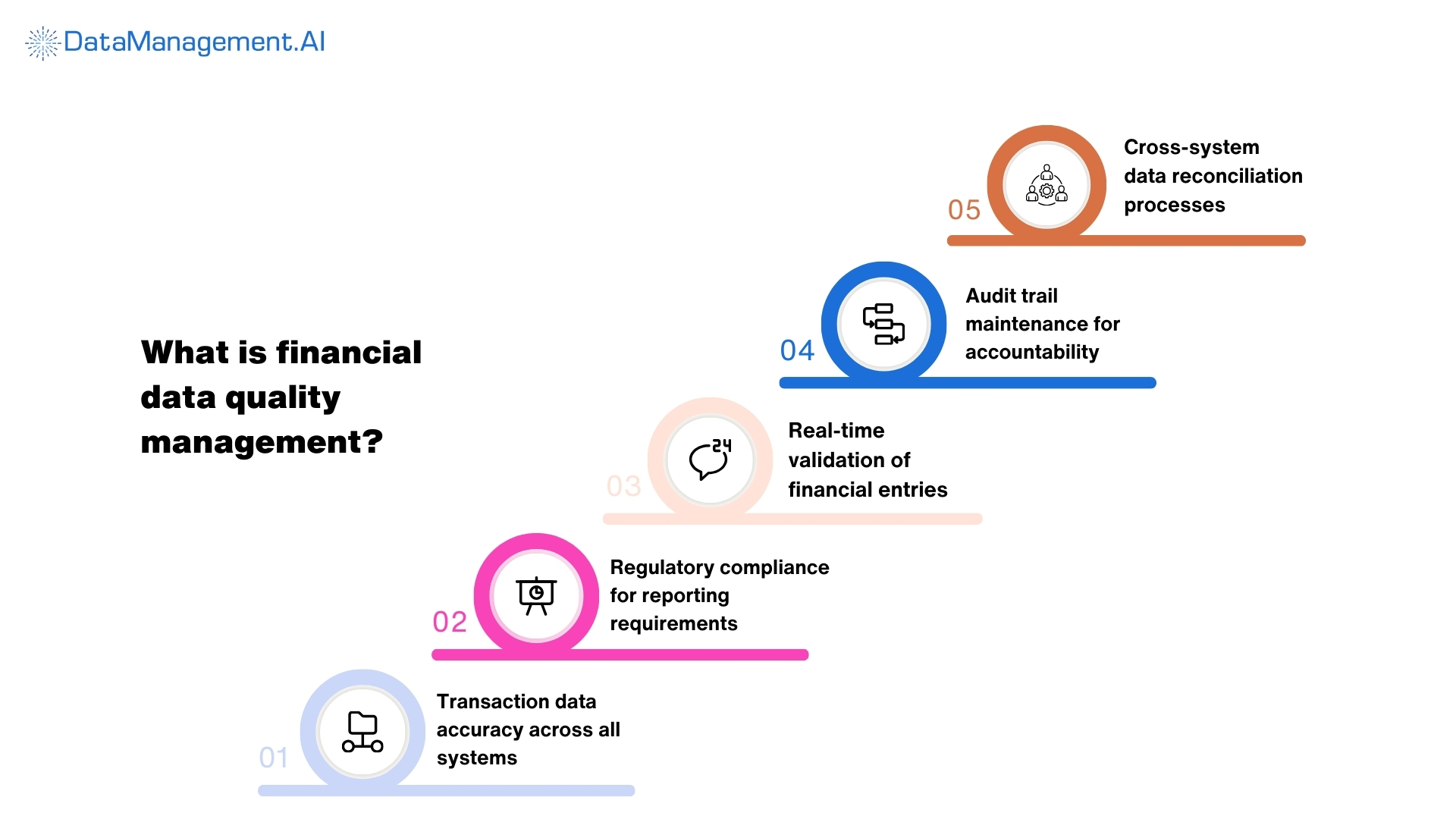
Financial data quality management covers the following:
- Cross-system data reconciliation processes
- Audit trail maintenance for accountability
- Real-time validation of financial entries
- Regulatory compliance for reporting requirements
- Transaction data accuracy across all systems
The stakes are high because according to Gartner, poor data quality costs organisations an average of USD 12.9 million annually.
And in financial services, this number skyrockets. We’re talking about compliance failures, regulatory fines, and reputation damage that sink decades of your trust building.
The hidden cost of bad financial data is massive
Your finance team runs month-end close. They pull data from your CRM, ERP, and payment processors. All looks good on the surface but suddenly you discover a discrepancy of USD 2.3 million.
Sounds familiar?
IBM confirms this by stating that 25% of revenue is impacted by poor financial data quality in any organization.
The cost of bad financial data quality management hurts you because of:
Revenue being lost
- Incorrect pricing data leads to margin erosion
- Billing errors result in revenue leakage
- Delayed invoicing impacts cash flow immediately
Compliance nightmares
- SEC reporting errors trigger investigations
- GDPR violations cost up to 4% of global revenue
- SOX compliance failures can result in criminal charges
Operational inefficiencies
- Finance teams waste 30% of time on data correction
- Manual reconciliation creates massive bottlenecks
- Delayed decision-making due to unreliable reporting
A famous example of this is that of JPMorgan and the ‘London Whale’ incident.
A landmark case where poor financial data quality management led to a loss of USD 6.2 billion.
A critical copy-paste error occurred when a staff member accidentally added two sets of data instead of averaging them (manual errors look away).
Adding to the manual error was a lack of data governance and validation by JPMorgan.
This allowed traders to use inconsistent inputs and manual overrides to hide volatility, thereby hiding losses as well,
JPMorgan was slapped with regulatory fines amounting to USD 900 million and a permanent shift in how the financial industry started handling user-defined tactics such as spreadsheets.
We have some procurement data management strategies for you, if it helps.
How does DataManagement.AI aid in financial data quality management?
Listen. I know I’ve been talking about meaning, importance, and problems that are faced due to financial data quality management.
Now, let’s talk about solutions.
At DataManagement.AI, we build solutions that are specifically suited for your financial institution.
The following pointers make DataManagent.AI the best financial data management tool.
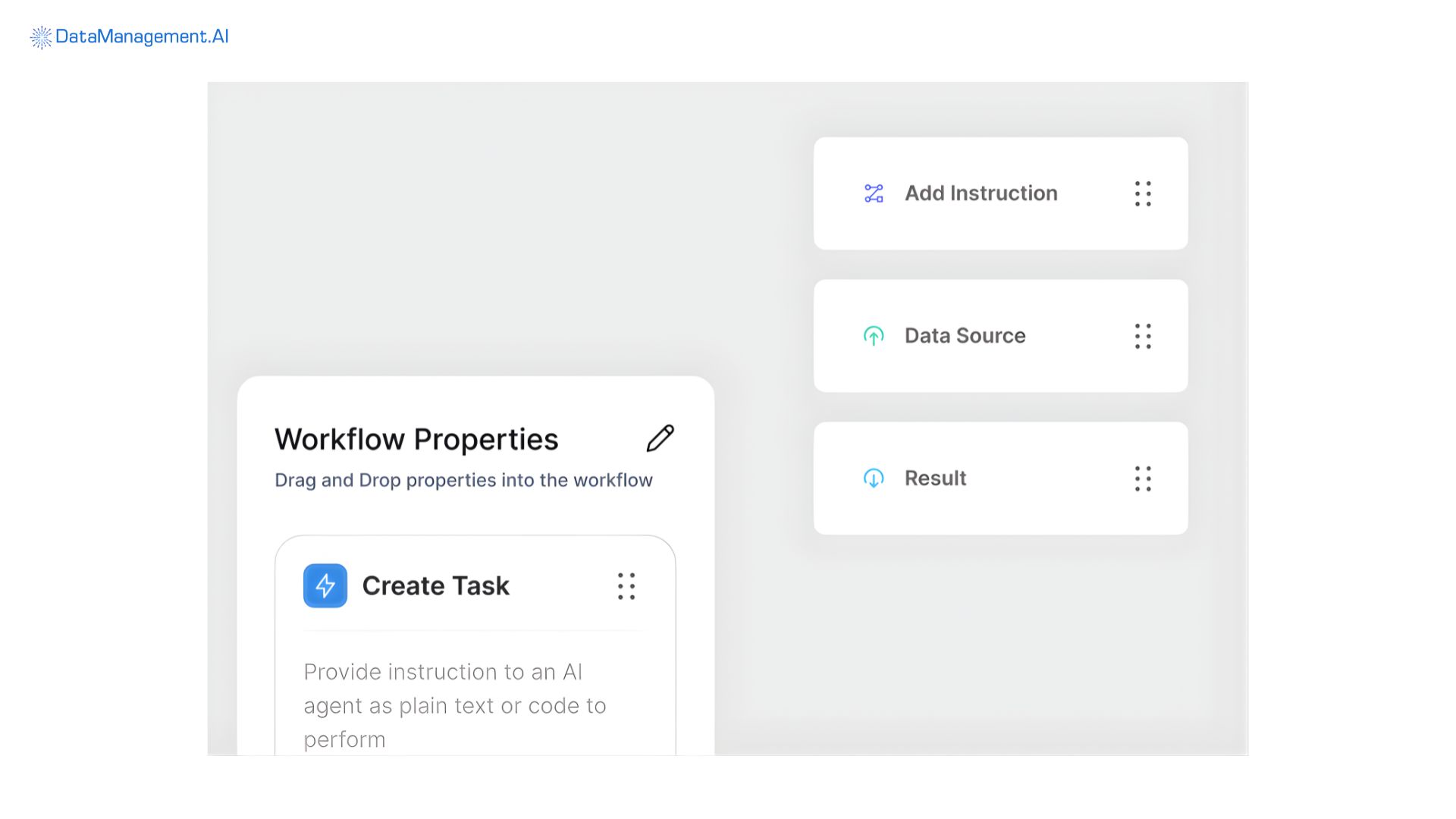
- AI-powered data validation – Our intelligent agents continuously monitor your financial data streams.
They catch errors before they surface. No more month-end surprises. Real-time alerts when something looks wrong. - Automated reconciliation – We connect every part of your financial data landscape. Your ERP talks to your CRM. Your payment processors sync with your data warehouse.
Everything reconciles automatically.
That 40-hour tracking exercise I mentioned earlier now takes 40 minutes.
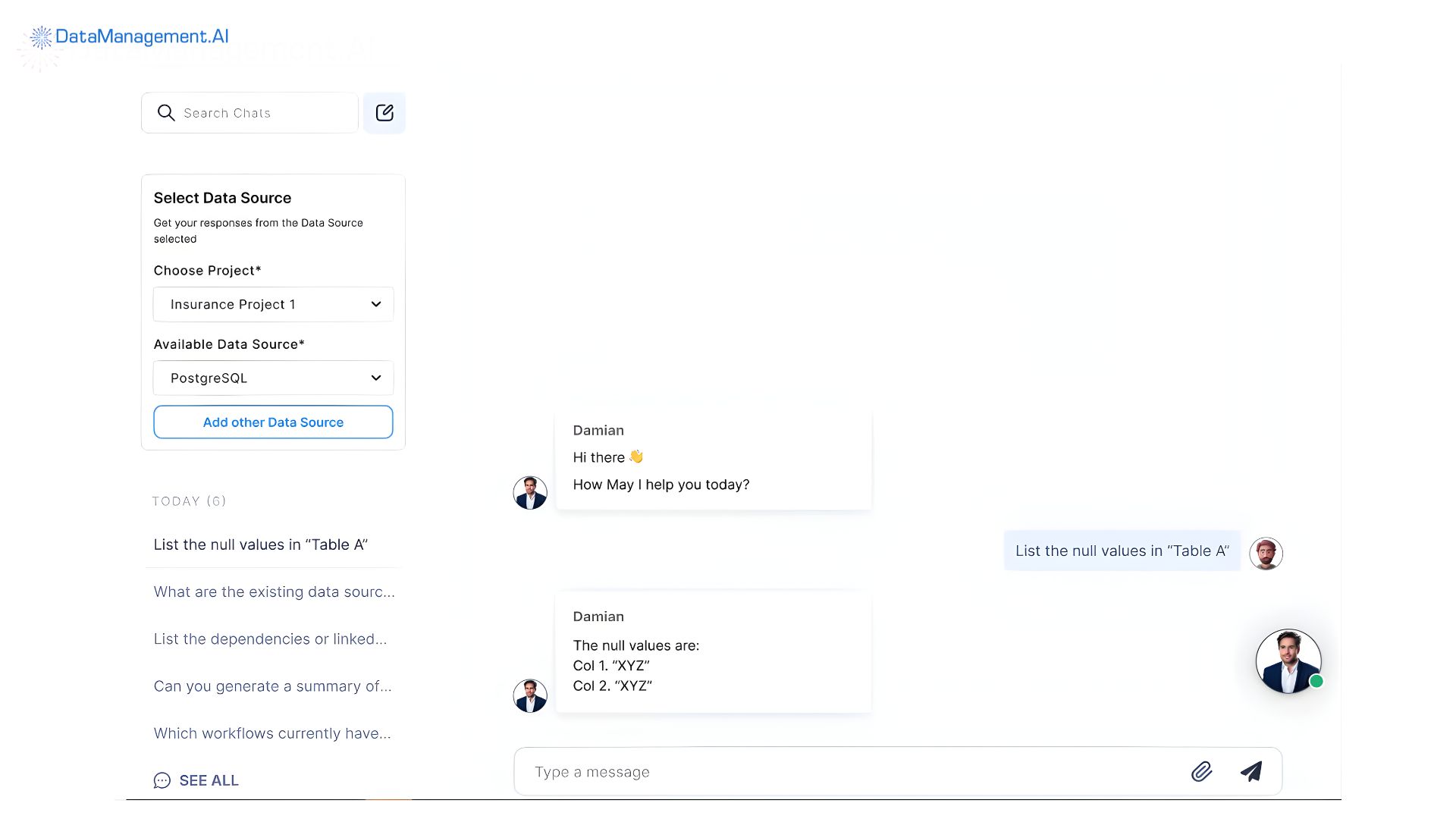
- Enterprise-grade governance – Your financial data quality management enterprise edition capabilities are built in. We build you complete audit trails, role-based access controls, and compliance reporting that actually makes your auditors happy.
- Integration that works – We’re not just another tool you have to babysit. We integrate with your existing systems seamlessly.
SAP, Oracle, Salesforce or NetSuite, we connect to them all. And we do it at 10x lower cost with 20x productivity gains.
Proven strategies to improve financial data quality management
Okay enough of the theory. I will get practical now.
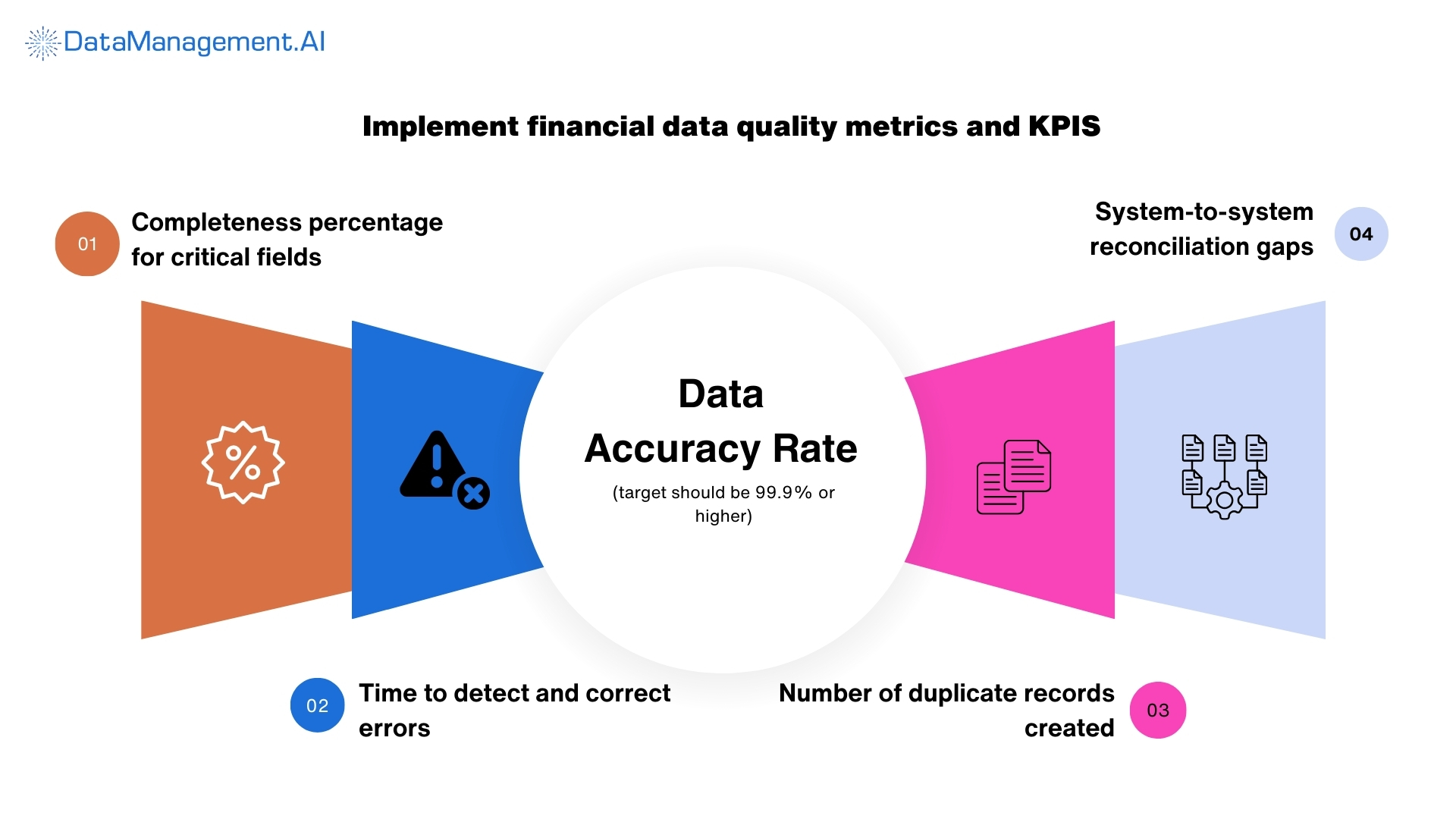
Strategy 1 – Implement financial data quality metrics and KPIS
You can’t improve what you don’t measure.
Start tracking the below metrics weekly:
- Data accuracy rate (target should be 99.9% or higher)
- Completeness percentage for critical fields
- Time to detect and correct errors
- Number of duplicate records created
- System-to-system reconciliation gaps
Set up dashboards that show the above metrics in real-time. Make them visible to your entire finance team.
Create accountability.
According to MIT Sloan, companies that measure data quality rigorously are three times more likely to outperform competitors.
Strategy 2 – Establish data governance frameworks
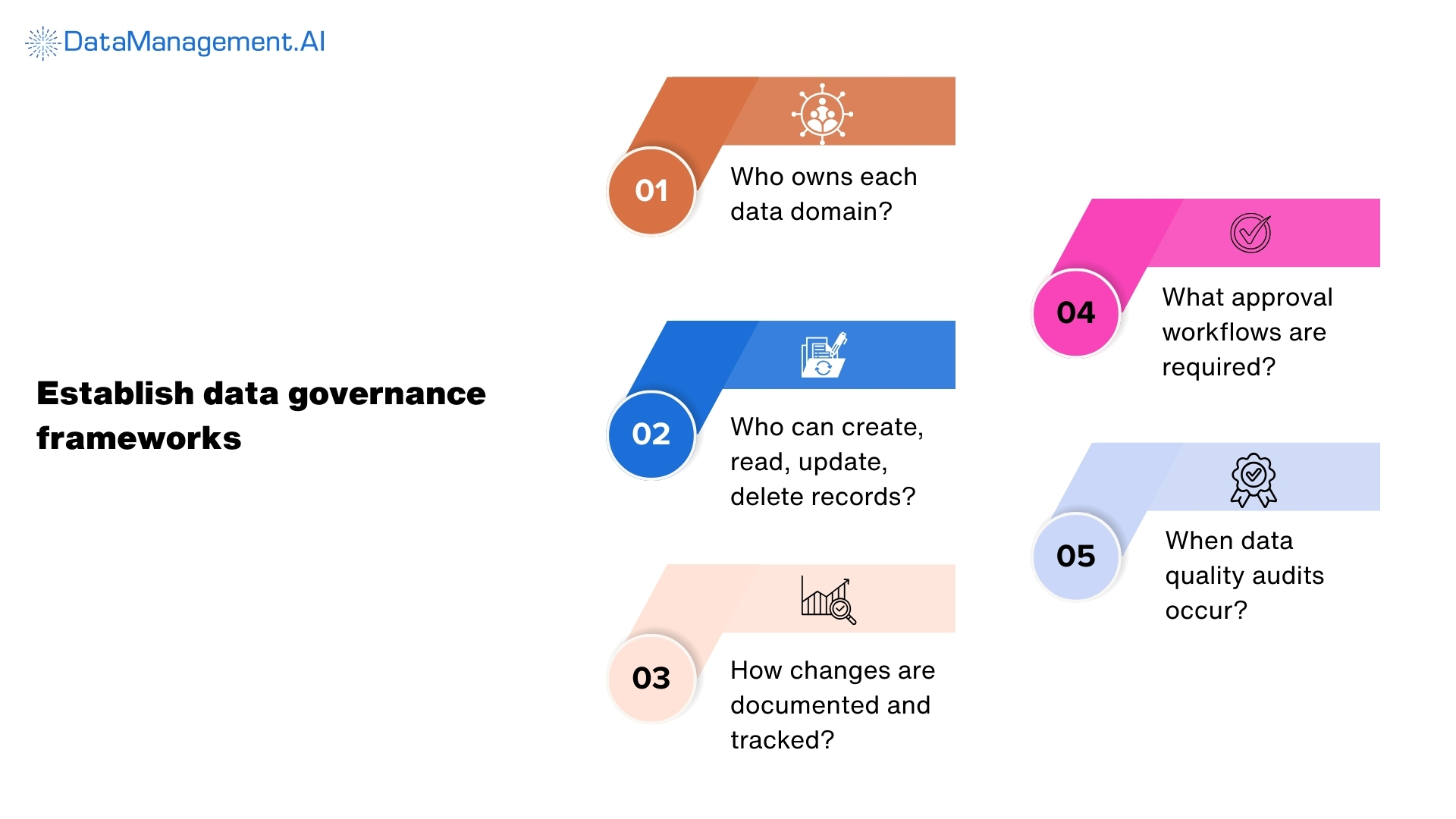
Data governance isn’t about bureaucracy. It’s simply protection.
Your financial data quality management framework should define the following:
- Who owns each data domain
- Who can create, read, update, delete records
- What approval workflows are required
- How changes are documented and tracked
- When data quality audits occur
For financial data, governance is non-negotiable.
You need clear ownership, defined processes, and accountability at every level.
“Data quality is not a project, it’s a discipline. Organizations that treat it as a one-time fix will always struggle. Those that embed it into their operational DNA will thrive in the age of AI and automation.”
— Thomas H. Davenport
Strategy 3 – Automate data quality checks
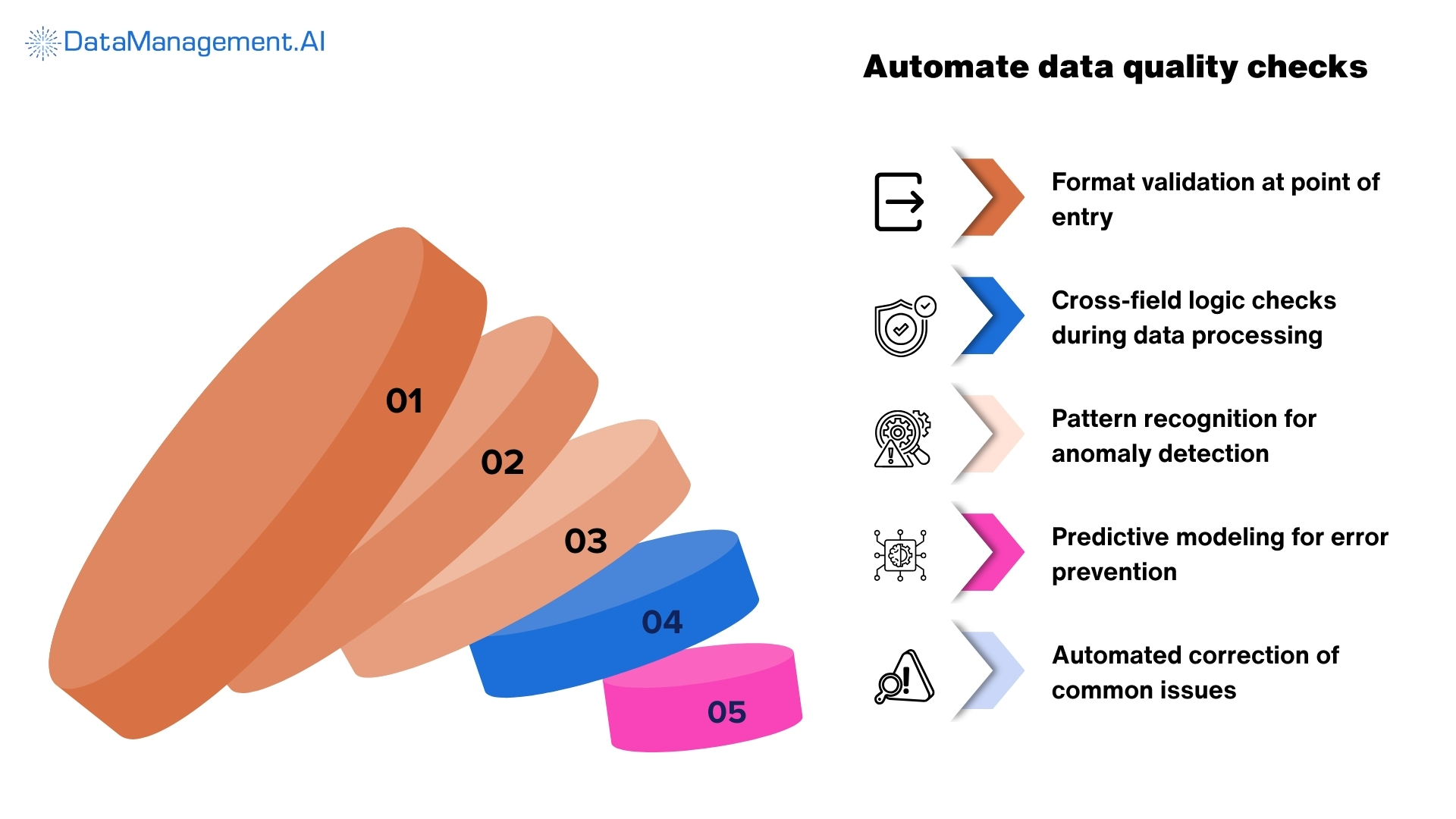
Manual data validation doesn’t scale.
Modern financial data quality management platforms, such as DataManagement.AI use AI to automate the following:
- Format validation at point of entry
- Cross-field logic checks during data processing
- Pattern recognition for anomaly detection
- Predictive modeling for error prevention
- Automated correction of common issues
Gartner predicts that by 2026, 70% of organizations will use AI-augmented data quality tools.
Strategy 4 – Create master data management protocols
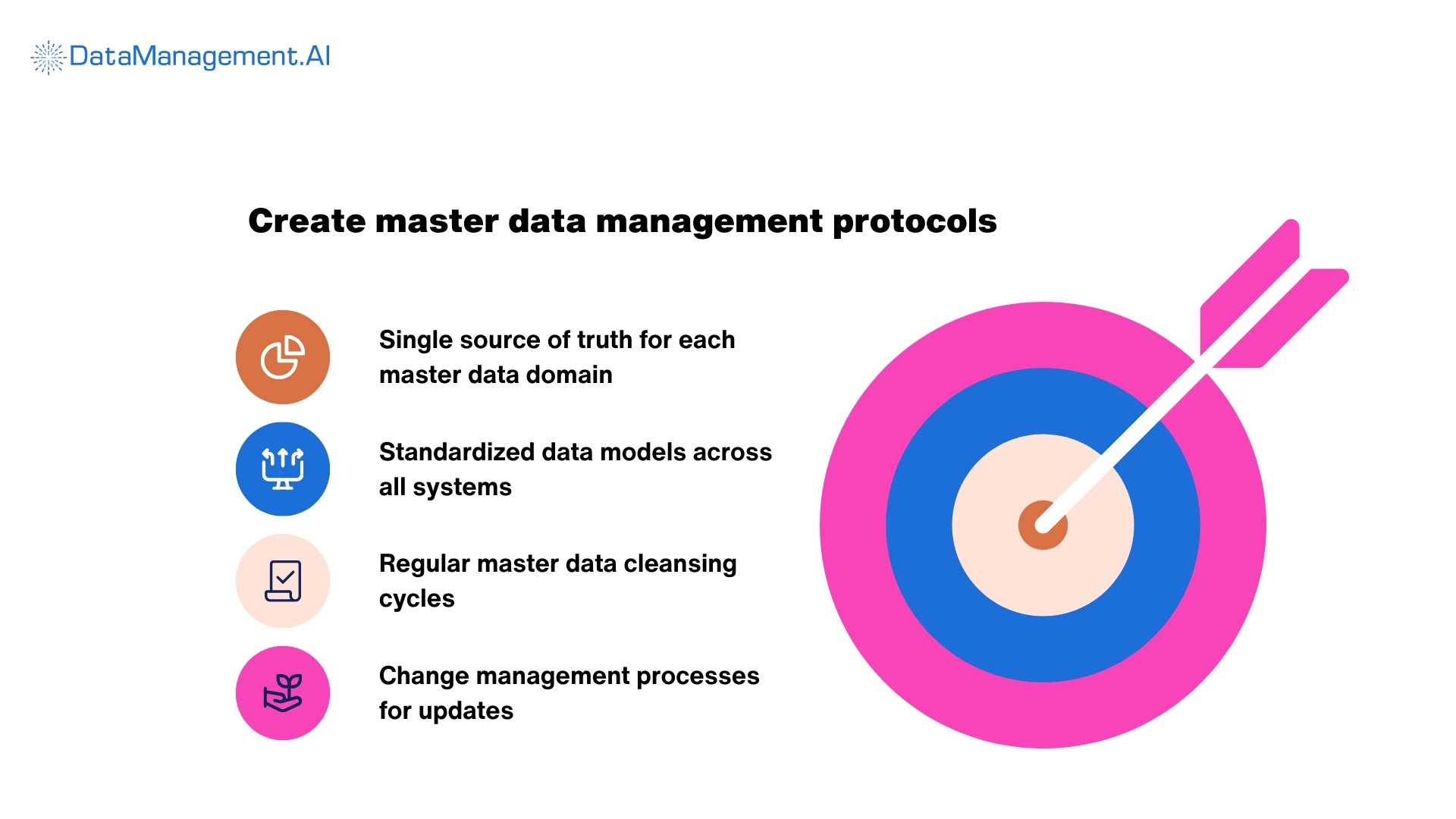
Your financial master data is the foundation to get a well set financial data quality management framework in place.
Customer data, vendor data, product data, and chart of accounts must be spot on.
Implement the following financial data quality management protocols:
- Single source of truth for each master data domain
- Standardized data models across all systems
- Regular master data cleansing cycles
- Change management processes for updates
Strategy 5 – Deploy real-time monitoring systems
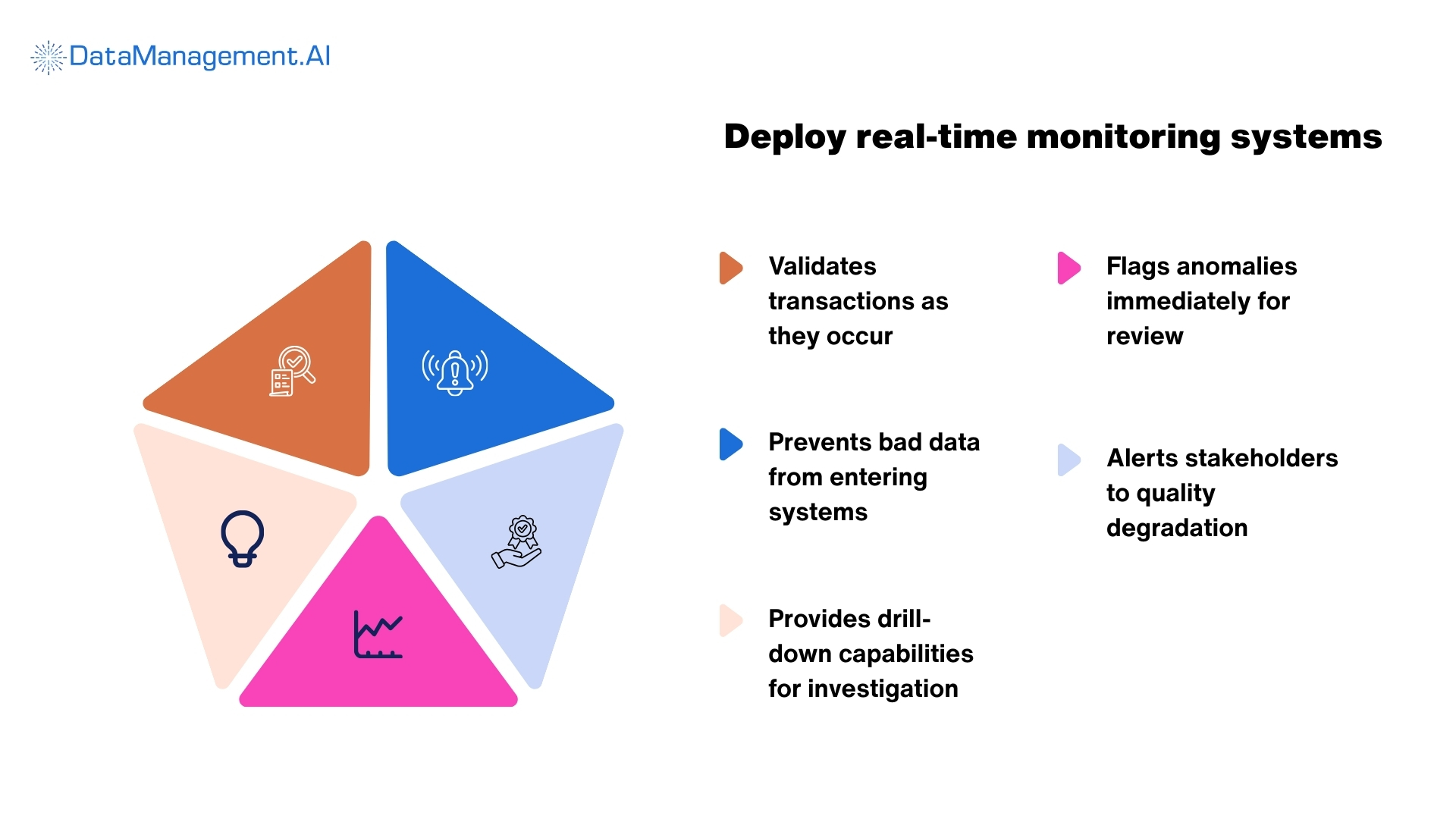
Batch processing is dead.
You need real-time monitoring from your financial data quality management that:
- Validates transactions as they occur
- Flags anomalies immediately for review
- Prevents bad data from entering systems
- Alerts stakeholders to quality degradation
- Provides drill-down capabilities for investigation
Think of this as a security system for your data that’s always watching, protecting, and never sleeping.
Your financial data quality management journey starts now
Here’s the truth that nobody wants to say out loud.
Your financial data quality won’t fix itself.
It will get worse over time as you add more systems.
Every day you wait, costs you money that’s real and measurable.
The good news is that you know exactly what financial data quality management is.
You have a roadmap and you have the strategies.
You also have examples to follow regarding poor financial data quality management.
What you need is action.
DataManagement.AI has helped dozens of financial institutions and banks transform their data quality from a liability to a strategic asset.
Schedule a demo to discover how your financial data quality management can make you save millions and reduce risks.
Frequently Asked Questions (FAQs) for Financial Data Quality Management
The following FAQs on financial data quality management will answer your most searched queries about them.
Q. How do financial data quality management software & solutions deliver ROI?
A. Financial data quality management software delivers a 3-5x return within one year by automating validation. These solutions boost revenue through accurate analytics while preventing costly errors and compliance penalties.
Q. What’s the best data quality management for large enterprises with complex requirements?
A. Large enterprises should select data quality management based on existing infrastructure and strategic goals. Native solutions like SAP or Microsoft suit platform-specific environments, while DataManagement.AI offers vendor independence.
Q. How do I compare data quality management tools effectively?
A. Evaluate data quality tools using six dimensions: integration breadth, automation levels, real-time validation, business user accessibility, three-year ownership costs, and vendor viability. Finally, develop a weighted scoring matrix tailored to your organizational needs instead of relying on generic charts to ensure strategic alignment.